Solar high mast lighting can provide an off-grid lighting option for projects where existing poles are already available but a solar-powered lighting system is required.
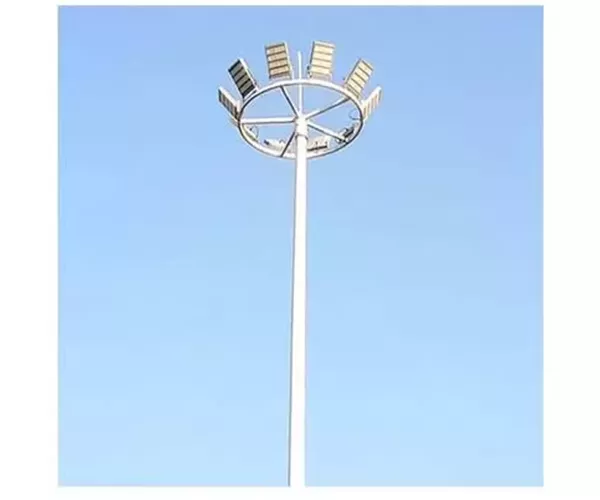
In one of Inbrit's latest projects in South Africa, the customer retained their own high mast poles while the lighting configuration was built around six fixtures per pole, 270W solar panels, and 48Ah 25.6V LiFePO4 batteries.
This project is a useful example of an important principle in solar lighting design: the lighting system should be configured around the actual project conditions rather than simply selecting a standard fixture by wattage.
Project Overview
The South Africa project used the following configuration:
| Project Item | Configuration |
| Location | South Africa |
| Pole | Customer-owned |
| Fixtures | 6 fixtures per pole |
| Solar Panel | 270W |
| Battery | 48Ah / 25.6V LiFePO4 |
| Power Source | Solar |
| Application | High mast outdoor lighting |
Instead of replacing the customer's existing poles, the project focused on configuring the solar lighting components around the available infrastructure.
This approach can be relevant for contractors, municipalities, developers and other project buyers who already have suitable poles and are evaluating how solar lighting can be incorporated into an existing site.
Why Use Solar Lighting With Existing High Mast Poles?
For some high mast lighting projects, the pole itself is not the main problem. The customer may already have usable poles but need to upgrade or change the lighting and power system.
In this situation, a project-specific solar configuration may offer an alternative to replacing the entire lighting structure.
The design process should therefore start by evaluating the existing pole, fixture arrangement, required illumination and available solar conditions.
For this South African project, six lighting fixtures were installed on each customer-owned pole, with the solar panel and battery configuration selected for the project requirements.
This is different from treating a solar street light as a simple standalone product.
Key Components of the Solar Lighting Configuration
1. Six Fixtures Per Pole
Each high mast pole in this project was equipped with six fixtures.
Multi-fixture arrangements can be considered where a project needs illumination distributed over a wider area. The appropriate number, output and optical distribution of fixtures should be determined according to the site and lighting requirements rather than copied from another project.
For high mast projects, buyers should consider factors such as:
Where available, a lighting layout or photometric analysis can help determine the appropriate configuration before finalizing the system.
2. 270W Solar Panel
The project configuration uses a 270W solar panel.
The solar panel is responsible for converting available solar energy during the day into electrical energy for the lighting system.
However, solar panel wattage should never be selected in isolation.
For a project-specific solar lighting system, panel sizing should be considered together with energy consumption, local solar conditions, battery capacity and the required nightly operating profile.
Inbrit's BRETT all-in-one solar street light range currently includes solar panel options up to 270W/36V, depending on configuration.
3. 48Ah 25.6V LiFePO4 Battery
Energy storage is another critical part of an off-grid solar lighting system.
For this project, the configuration uses a 48Ah 25.6V LiFePO4 battery.
During daylight hours, energy generated by the solar panel is stored in the battery. At night, the stored energy is used to operate the lighting system.
When evaluating battery requirements for a solar lighting project, buyers should consider more than battery capacity alone. The complete system needs to be evaluated according to the intended lighting schedule, energy consumption and project environment.
The BRETT product family includes 25.6V system configurations and LiFePO4 battery options, including a 48Ah/25.6V option within the published product range.
Why System Configuration Matters More Than Fixture Wattage
One of the most common mistakes in solar street lighting procurement is starting with a question such as:
“How many watts do I need?”
Wattage alone cannot define a complete solar lighting solution.
Two projects using similarly rated LED fixtures may require different solar panels, battery capacities, optics or operating schedules because their locations and project requirements are different.
For a high mast solar lighting project, the specification should ideally consider the complete relationship between:
Site Conditions → Lighting Requirement → Fixture Configuration → Energy Consumption → Solar Panel → Battery → Control Strategy
This system-level approach is particularly important for off-grid lighting because the energy must be generated, stored and consumed within the solar lighting system itself.
Can BRETT Be Used for Project-Based Solar Lighting?
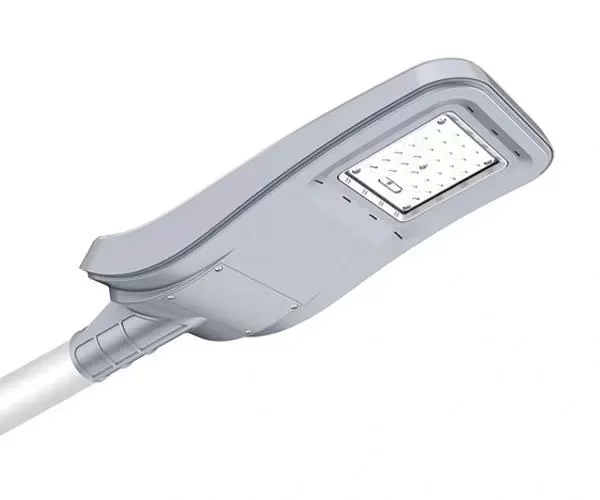
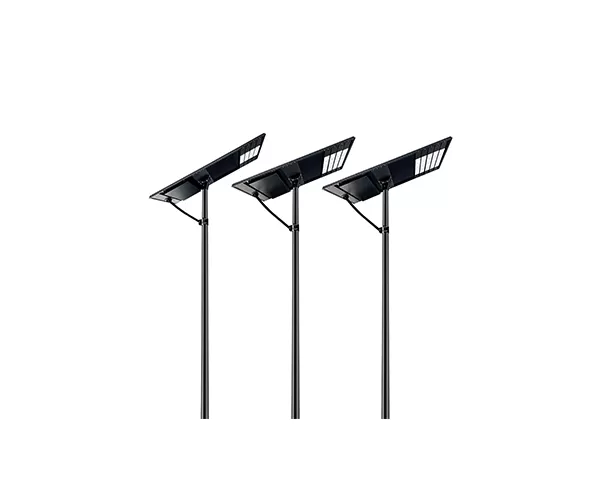
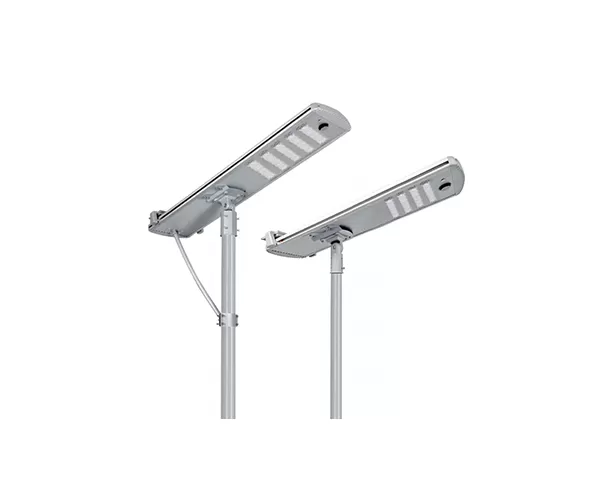
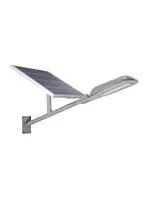
The BRETT All-in-One Solar Street Light is designed as an integrated solar lighting system combining the solar panel, LED lamp, battery and controller. Inbrit's published BRETT range includes multiple solar panel and LiFePO4 battery configurations and supports project-based configuration.
For contractors and project buyers, the appropriate BRETT configuration should therefore be selected according to the actual site rather than choosing a model based only on nominal wattage.
Related Product: BRETT All-in-One Solar Street Light
What Information Is Needed for a Solar High Mast Lighting Project?
If you are planning a solar high mast or solar street lighting project, providing the right information at the beginning makes system selection much more efficient.
Before requesting a configuration, prepare as much of the following information as possible:
Project country and location
Pole height
Existing pole details, if applicable
Number of fixtures required per pole
Road or illuminated-area dimensions
Required lighting level, if specified
Required operating hours per night
Project drawings or site photos
Quantity of lighting points
Any project-specific technical requirements
This information helps the lighting supplier evaluate the project as a complete system rather than recommending a fixture based on wattage alone.
Solar High Mast Lighting in South Africa
Solar-powered high mast lighting is already used in South Africa in public and community infrastructure contexts. Publicly documented projects include high-mast solar installations intended to provide lighting without depending entirely on conventional grid infrastructure.
For project developers, contractors and municipalities, solar lighting may therefore be worth evaluating where the site conditions and project requirements make an off-grid system appropriate.
The correct solution still depends on the individual project: pole arrangement, required illumination, solar resource, operating schedule and system sizing all need to be considered together.
Planning a Similar Solar Lighting Project?
Every solar lighting project has different site conditions.
If you already have poles, drawings or project specifications, send them to the Inbrit team for configuration review. Providing the location, pole height, road/site dimensions, fixture quantity, operating hours and required lighting level will help determine a more appropriate solar lighting configuration.
Request a Solar Lighting Solution
Send us your project location, pole details and lighting requirements to discuss a project-specific solar lighting configuration.
 English
 français
 Español
 العربية
 Pilipino
 ไทย
ไทย tiếng việt
 Malay
Malay русский