Cold-climate solar street lighting requires more than simply selecting a larger battery or solar panel. The complete system needs to be configured around local temperatures, available solar energy, operating hours and road lighting requirements.
For this large-scale road lighting project in Kyrgyzstan, Inbrit supplied 1,600 customized TRANSFO split solar street light systems.
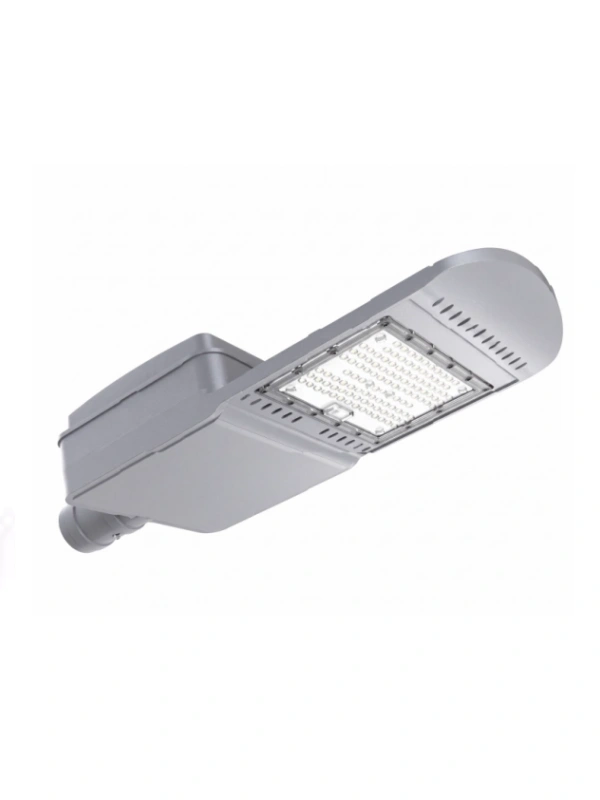
Each complete system was configured with an 80W LED street light, 360W monocrystalline solar panel, 11.1V 150Ah low-temperature-resistant lithium battery and 9-meter steel pole.
The project demonstrates how a split solar street lighting system can be configured for large road projects where cold-weather battery performance and independent component sizing are important considerations.
Project Configuration at a Glance
| Project Item | Configuration |
| Project Location | Kyrgyzstan |
| Total Quantity | 1,600 complete sets |
| Product Type | Split solar street light |
| Product Series | TRANSFO |
| LED Power | 80W |
| Pole Height | 9 meters |
| Solar Panel | 360W monocrystalline PV module |
| Battery | 11.1V 150Ah low-temperature-resistant lithium battery |
| Main Requirement | Reliable solar lighting configuration for cold-climate conditions |

Night-time view of Inbrit TRANSFO split solar street lights installed for the Kyrgyzstan road lighting project
Why Cold Climates Require a Different Solar Street Light Configuration
Battery performance is one of the key considerations when designing solar street lighting for cold regions.
A solar street light depends on stored energy to operate after sunset. When environmental temperatures fall significantly, battery charging and discharging characteristics can change, which means the battery system needs to be selected according to the actual project environment.
For the Kyrgyzstan project, Inbrit therefore used a customized 11.1V 150Ah low-temperature-resistant lithium battery rather than treating the battery as a standard component.
The battery was matched with a 360W monocrystalline solar panel and an 80W LED fixture as part of the complete project configuration.
Why a Split Solar Street Light Was Selected
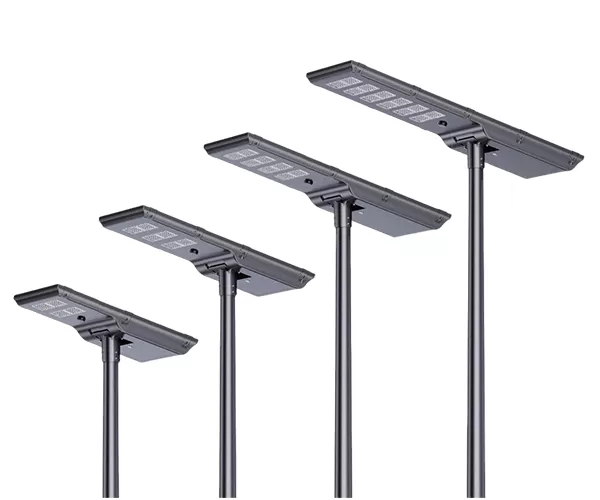
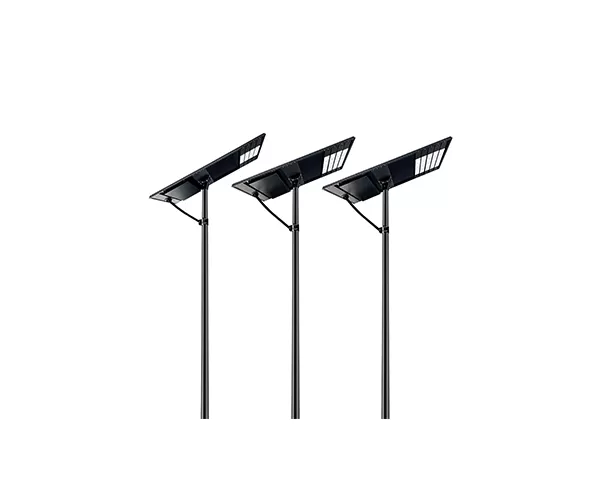
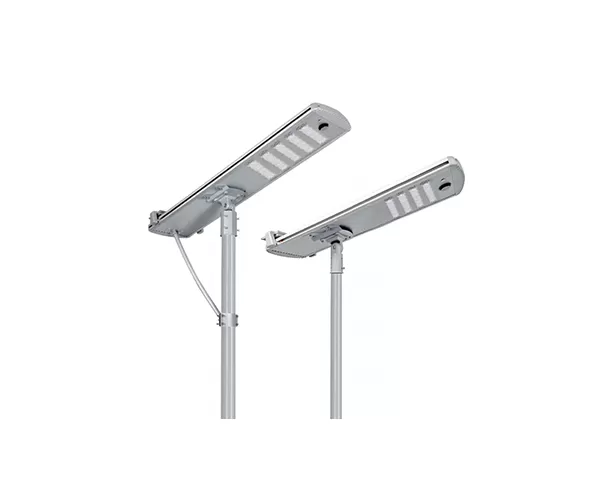
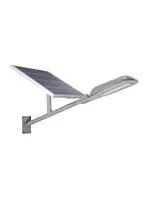
A split solar street light separates the LED fixture, solar panel and battery into individual components.
This structure provides greater flexibility when configuring the panel capacity, battery capacity and component placement for project-specific conditions.
For this 1,600-set installation, the system used:
80W LED Light + 360W Solar Panel + 150Ah Low-Temperature Battery + 9m Pole
The independent component design makes the system suitable for projects where standard integrated configurations may not provide the required flexibility.
Inbrit's TRANSFO product range supports customized solar street lighting configurations, with published options covering different lamp powers, battery capacities, solar panel capacities and installation heights.
For projects requiring flexible component sizing, explore the TRANSFO Split Solar Street Light.
80W LED Lighting on 9-Meter Poles
Each lighting point in this project uses an 80W LED fixture installed with a 9-meter light pole.
Pole height and lamp wattage should not be evaluated independently. For road lighting projects, engineers also need to consider factors such as:
A different road geometry may therefore require a different fixture, pole or spacing configuration even when the nominal lamp wattage is similar.
Inbrit's TRANSFO product range supports customized power configurations and a published suggested installation-height range of 6–15 meters.
Explore solar roadway lighting solutions.
Why a 360W Monocrystalline Solar Panel Was Used
The solar panel is responsible for generating the energy that the system stores for night-time lighting.
This project uses a 360W monocrystalline photovoltaic module for each complete solar street lighting system.
Panel sizing should be considered together with:
LED Load → Operating Hours → Solar Resource → System Losses → Battery Capacity → Required Backup
That means a 360W panel should not automatically be copied to another 80W solar street light project.
The correct PV capacity depends on the location and required operating profile.
This point is important because it gives the article genuine engineering value instead of turning it into a simple project announcement.
150Ah Low-Temperature Lithium Battery for Cold-Climate Operation
The energy storage configuration used in the project is an 11.1V 150Ah low-temperature-resistant lithium battery.
For solar street lighting projects in colder climates, battery selection needs to account for the expected environmental temperature as well as the system's energy demand.
This is particularly important because solar street lights need to both store daytime solar energy and release that energy during night-time operation.
What Does a 1,600-Set Solar Street Light Project Require?
A project involving 1,600 complete solar street lighting systems requires consistency across much more than the lamp itself.
The complete system includes multiple components that need to be coordinated according to the approved project configuration:
For large-scale projects, maintaining consistent technical specifications across all lighting points is important for installation, maintenance and system management.
From Custom Engineering to On-Site Road Lighting
The night-time project image provides direct evidence of the installed lighting system in operation.
Rather than showing only a product photographed in a factory, the project demonstrates the relationship between the configured components and the final road-lighting application.
For EPC contractors, municipalities, distributors and other project buyers, this type of real installation evidence can be more useful than relying only on catalog specifications.
Learn more about Inbrit’s TRANSFO solar street light system and available project configurations.
How Should Solar Street Lights Be Specified for Cold Regions?
When planning solar street lighting in a low-temperature environment, project buyers should provide as much site information as possible before selecting the final system.
Important inputs can include:
Project country and exact location
Minimum and maximum temperatures
Road width
Pole height
Pole spacing
Required illumination level
Required operating hours
Required autonomy or rainy-day backup
Project quantity
Applicable technical standards
Site drawings or lighting layouts
The final lamp, solar panel and battery configuration should then be evaluated as a complete system.
Frequently Asked Questions About Low-Temperature Solar Street Lights
How many solar street lights were supplied for this Kyrgyzstan project?
Inbrit supplied 1,600 complete split solar street light systems for the project. Each system was configured with an 80W LED fixture, 360W monocrystalline solar panel, 11.1V 150Ah low-temperature-resistant lithium battery and 9-meter pole.
Why are low-temperature batteries used in solar street lights?
Cold environments can affect battery charging and discharging performance. A low-temperature battery solution is selected to better match the climatic conditions of projects operating in colder regions.
Why use a split solar street light in a cold-climate project?
A split solar street light allows the LED fixture, solar panel and battery to be configured independently. This provides greater flexibility when sizing components for local solar conditions, operating requirements and environmental temperatures.
How large is the solar panel used in this project?
Each complete system uses a 360W monocrystalline solar panel. This specification belongs to this particular project and should not automatically be applied to other installations without project-specific sizing.
What pole height is used for the 80W solar street lights?
The project uses 9-meter poles with 80W LED street lights. The appropriate pole height for another project depends on road dimensions, pole spacing, optical distribution and required lighting performance.
Planning a Solar Street Lighting Project for a Cold Climate?
Every project has different solar conditions, temperatures, road dimensions and operating requirements.
If you are planning a large road-lighting project in a cold region, send Inbrit your project information for a customized system evaluation.
Request a Solar Street Light Configuration
Send us your project location, road dimensions, temperature range, pole height and operating requirements to discuss a project-specific solar street lighting solution.
 English
 français
 Español
 العربية
 Pilipino
 ไทย
ไทย tiếng việt
 Malay
Malay русский