Smart city infrastructure is no longer limited to roads, buildings, cameras, and public networks. Outdoor lighting is becoming one of the most practical entry points for urban digital management. In this change, the IoT solar street light is moving beyond basic illumination and becoming part of a connected city system. For governments, developers, contractors, and infrastructure companies, solar street lighting is now not only an energy-saving product but also a platform for data, control, safety, and long-term public service management.
Traditional solar street lights are designed to provide off-grid lighting through solar panels, batteries, LED modules, and controllers. They reduce grid dependence and lower operating costs. However, in smart city projects, lighting systems need to do more. City managers want to know whether each lamp is working, how much energy it consumes, when maintenance is needed, and how lighting schedules can be adjusted based on real conditions. This is where IoT technology becomes valuable.
An IoT solar street light connects the lighting system to a remote management platform. Through wireless communication, sensors, smart controllers, and cloud-based software, operators can monitor and control lighting assets from a central system. This helps cities reduce manual inspection, improve maintenance speed, and optimize energy use across large outdoor lighting networks.
What Is an IoT Solar Street Light?
An iot solar street light is a solar-powered LED street light integrated with communication and intelligent control functions. Instead of operating as an isolated light, each unit can send data to a management platform. The system may report battery status, solar charging performance, lamp working status, fault alerts, dimming schedules, and energy consumption.
For large outdoor lighting projects, this connected structure provides a major management advantage. A city may have thousands of street lights across roads, parks, public squares, and industrial zones. Without remote monitoring, maintenance teams often need to inspect lamps manually or wait for complaints. With IoT control, abnormal lamps can be identified quickly, and maintenance can be scheduled more efficiently.
Why Smart Cities Need Intelligent Solar Lighting
Smart city development depends on infrastructure that can collect data, reduce waste, and improve public services. Lighting is one of the most widely distributed public assets in any city. Because street lights are installed along roads and public areas, they can become an ideal foundation for smart urban networks.
An intelligent solar street light manufacturer can help project owners design lighting systems that support more than illumination. Depending on the project requirements, intelligent solar street lights may include motion sensors, remote dimming, energy monitoring, automatic fault reporting, and customized lighting strategies. These functions help cities improve management without building an entirely separate control network.
Remote monitoring reduces the need for frequent manual inspections.
Smart dimming helps save battery power and extend lighting autonomy.
Fault alerts allow faster maintenance response.
Energy data helps evaluate long-term system performance.
Centralized control supports better planning for roads, parks, and public spaces.
Beyond Lighting: The Smart Solar Street Light Project Value
A smart solar street light project should not be planned only as a lamp installation project. It should be designed as part of urban infrastructure. When solar street lights are connected through IoT, they can support public safety, energy management, maintenance planning, and future smart city expansion.
For example, in public roads and parks, intelligent dimming can reduce brightness during low-traffic hours and increase brightness when motion is detected. This helps save energy while maintaining safety. In industrial parks and logistics areas, remote monitoring helps facility managers check whether lights are working properly without sending teams across a large site. In municipal projects, centralized data allows decision-makers to compare performance across different districts.
This type of system also improves accountability. Project owners can track actual working conditions instead of relying only on product specifications. If a lamp has low battery performance, weak charging, or abnormal power consumption, the system can help identify the issue early.
Key Components of an IoT Solar Street Light System
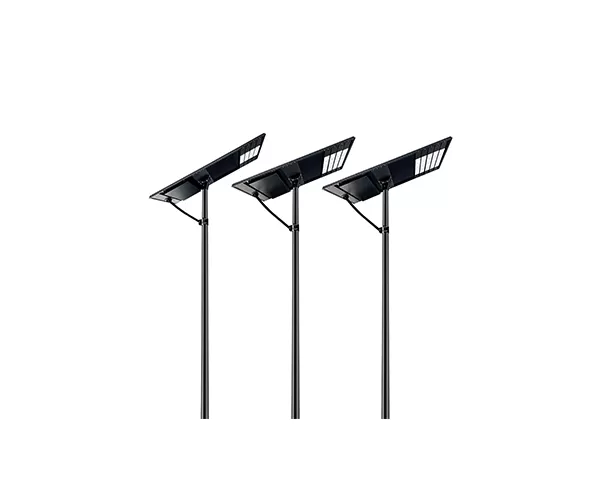
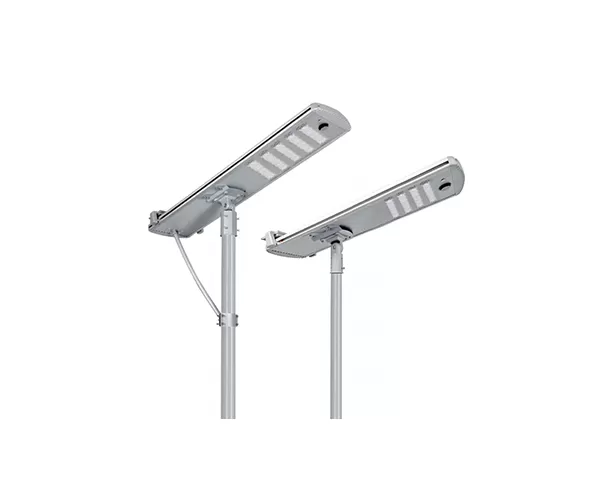
A complete IoT solar street light system usually includes several important components. For road projects using a solar street light with pole, the pole structure, equipment mounting position, and communication module installation should also be considered during system planning. The exact configuration depends on the project scale, site conditions, and required control functions.
Solar panel for daytime energy generation.
Battery system for nighttime power storage.
LED lighting module for efficient illumination.
Smart controller for charging, discharging, dimming, and protection.
Communication module for data transmission.
Sensors for motion detection, light detection, or environmental feedback.
Cloud platform or management software for remote control and monitoring.
The quality of each component affects system performance. For smart city projects, the controller and communication system are especially important because they determine how reliably data can be collected and commands can be executed.
How IoT Improves Maintenance Efficiency
Maintenance is one of the biggest challenges in outdoor lighting. In a traditional system, maintenance teams may not know a lamp has failed until residents report the problem or staff discover it during inspection. This creates delays and increases labor costs.
With IoT solar street lighting, the system can send alerts when faults occur. Operators can see whether the issue is related to the LED fixture, battery, solar charging, controller, or communication. This makes troubleshooting more accurate and reduces unnecessary site visits.
For large projects, this can create significant operational value. Instead of sending workers to inspect every lamp, managers can focus on specific locations where the system has detected problems. This improves response time and reduces maintenance waste.
Energy Management and Adaptive Lighting
One of the most important advantages of intelligent solar lighting is adaptive control. Different roads and public spaces do not need the same brightness at all times. A highway entrance, residential road, school zone, and park walkway may have different lighting patterns.
Through smart dimming schedules, a solar street light can reduce output during low-traffic hours and increase brightness when needed. Motion sensors can also help the system respond to pedestrians or vehicles. This reduces unnecessary energy consumption and helps extend battery life.
For solar-powered systems, energy management is especially important. Better control means better use of stored energy. In cloudy or rainy periods, smart dimming can help maintain lighting for more nights without fully draining the battery.
Choosing the Right Intelligent Solar Street Light Manufacturer
For a smart city project, choosing an intelligent solar street light manufacturer is not only about product price. Buyers comparing smart systems with all in one solar street light wholesale solutions should also evaluate lighting design, solar power configuration, communication technology, software management, and project implementation.
The manufacturer should provide suitable solar panel and battery sizing.
The lighting fixture should meet project brightness and distribution requirements.
The control system should support remote monitoring and smart dimming.
The software platform should be easy for project managers to use.
The supplier should offer technical support for installation, testing, and maintenance.
A reliable manufacturer should also help project owners avoid over-complicated systems. Not every project needs the same level of intelligence. Some projects may only require remote fault alerts and dimming control, while others may need full platform integration.
Conclusion
In 2026 smart city infrastructure, the IoT solar street light is becoming more than an energy-saving outdoor lamp. It is a connected lighting asset that can support remote monitoring, energy optimization, public safety, and maintenance efficiency. For governments, developers, and contractors, intelligent solar lighting offers a practical way to build smarter urban infrastructure without relying entirely on grid-based systems.
A successful smart solar street light project depends on proper planning, reliable hardware, stable communication, and a capable intelligent solar street light manufacturer. When designed correctly, IoT solar lighting can help cities move beyond simple illumination and create a more efficient, responsive, and sustainable public lighting network.















 English
 français
 Español
 العربية
 Pilipino
 ไทย
ไทย tiếng việt
 Malay
Malay русский