As outdoor lighting projects become more demanding, buyers are no longer choosing solar street lights only by wattage or battery capacity. In many municipal roads, industrial parks, rural highways, parking areas, and commercial outdoor spaces, project owners now need lighting systems that can work reliably through cloudy seasons, unstable weather, and long operating hours. This is why the hybrid solar street light has become an important option for projects that require higher stability than standard off-grid solar lighting.
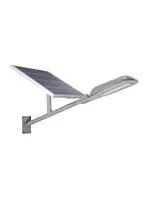
A traditional solar street light depends mainly on solar panels, batteries, LED fixtures, and controllers. During the day, the solar panel charges the battery. At night, the battery powers the LED light. This structure is simple, energy-saving, and easy to install. However, when the project location has long rainy seasons, heavy cloud cover, or high lighting requirements, the system may face power shortage if the battery is not fully charged for several consecutive days.
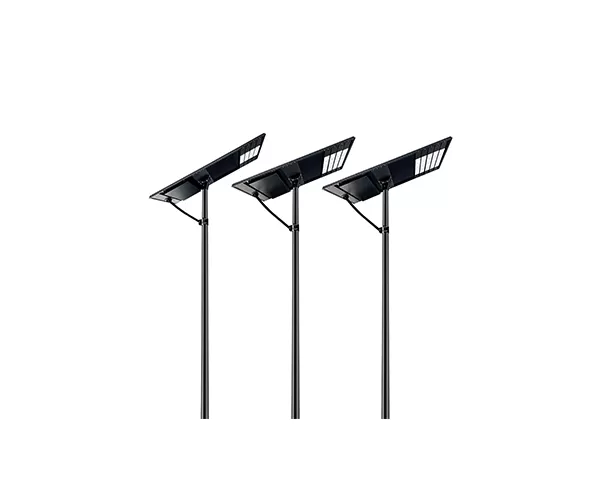
A hybrid solar street light is designed to solve this limitation. It can combine solar power with another energy source, such as grid electricity or wind power, depending on the project design. When solar energy is sufficient, the system runs mainly on solar power. When solar charging is not enough, the backup power source helps maintain lighting performance. This makes hybrid systems more suitable for critical roads, public safety areas, logistics yards, coastal zones, and locations where lighting interruption is not acceptable.
What Is a Hybrid Solar Street Light?
A hybrid street light is an outdoor lighting system that uses solar energy as the main power source while adding an auxiliary power option for improved reliability. In some projects, the backup source is grid power. In others, it may be wind energy or a customized energy management solution. The key difference is that the system does not rely on solar charging alone.
This structure allows the light to operate more consistently in challenging environments. For example, in areas with frequent rain or long cloudy periods, a traditional solar light may reduce brightness to save power. A hybrid model can maintain a more stable lighting level because it has backup energy support. For roads, public facilities, and security zones, this extra reliability can be valuable.
How Traditional Solar Street Lights Perform
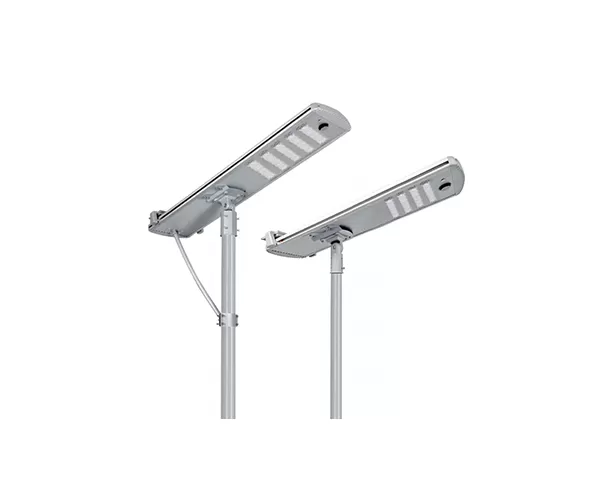
Traditional solar street lights are still a cost-effective solution for many projects. They are especially suitable for villages, residential roads, gardens, small parking lots, farm roads, and locations where grid wiring is expensive or unavailable. For buyers considering all in one solar street light wholesale solutions, their biggest advantages are simple installation, low electricity cost, and independent operation.
However, traditional solar street lights require careful configuration. The solar panel, battery, LED wattage, pole height, and lighting hours must match local sunlight conditions. If the system is undersized, the light may not perform well during rainy days. If the area has high lighting demand, the battery and solar panel must be larger, which increases the total project cost.
For many standard applications, traditional solar street lighting is enough. But for high-risk or high-traffic areas, the question is not only whether the light can turn on, but whether it can keep stable brightness every night.
Why Hybrid Solar Street Light Performance Is Higher
The main value of a hybrid solar street light is performance stability. Because it has an additional energy source, it can reduce the risk of lighting failure during poor weather. This is especially important for projects where lighting affects road safety, public security, or business operations.
It can provide better lighting continuity during long cloudy or rainy periods.
It can reduce pressure on the battery by using backup power when needed.
It can support higher brightness requirements for main roads and industrial areas.
It can improve project reliability in regions with unstable sunlight conditions.
It can be customized for smart control, remote monitoring, and energy-saving schedules.
For contractors and project owners, this means fewer complaints, lower failure risk, and better long-term lighting quality. The extra performance is not only about brightness; it is also about system dependability.
Understanding Hybrid Solar Street Light Price
The hybrid solar street light price is usually higher than that of a traditional solar street light. The reason is simple: a hybrid system includes more components, more advanced control logic, and sometimes additional wiring or backup power integration. The controller may need to manage multiple power sources, and the system design must be more precise.
However, buyers should not compare the price only by the initial purchase cost. A lower-cost system may be attractive at the beginning, but if it cannot meet lighting requirements during poor weather, the project may face maintenance costs, user complaints, and safety risks. In this case, a higher hybrid solar street light price may be justified because it reduces operational uncertainty.
For large projects, the price difference should be evaluated together with lighting hours, local climate, maintenance access, electricity cost, installation environment, and required service life. The best choice is not always the cheapest fixture, but the system that can meet the actual project conditions with lower long-term risk.
When Is the Extra Cost Worth It?
A hybrid solar street light is worth considering when the project has high reliability requirements. It is especially suitable for main roads, highways, ports, logistics parks, industrial areas, security zones, government projects, and public spaces where lighting failure can cause safety or management problems.
It is also suitable for regions with unstable sunlight. In tropical, coastal, or monsoon climates, solar charging conditions can change quickly. A traditional system may need a much larger battery to survive long rainy periods. A hybrid system can reduce this pressure by adding another power source.
For small decorative areas or low-traffic paths, the extra investment may not be necessary. A well-designed traditional solar street light can already provide enough performance. But for projects where stable lighting is more important than the lowest initial cost, hybrid technology can bring stronger value.
How to Choose Between Hybrid and Traditional Solar Lighting
Before choosing a lighting solution, project buyers should evaluate the actual site conditions. The decision should be based on climate, road type, lighting standard, installation cost, maintenance ability, and expected service life. For sites with an existing and reliable electricity supply, buyers may also compare the hybrid system with an ac led street light solution before making the final selection.
Choose traditional solar street lights for low-to-medium traffic roads, parks, villages, and areas with stable sunlight.
Choose hybrid solar street lights for high-traffic roads, public safety areas, industrial sites, and regions with long rainy seasons.
Compare total lifecycle cost instead of only the product price.
Check whether the supplier can provide lighting simulation, pole design, battery configuration, and project support.
Confirm whether the system supports smart control if the project requires remote management.
Conclusion
A hybrid solar street light is not always necessary for every project, but it can be a better choice when lighting reliability is critical. Compared with traditional solar lighting, it offers stronger performance during poor weather, better power security, and more flexible energy management. Although the hybrid solar street light price is higher, the added cost can be reasonable for roads, industrial sites, public projects, and areas with unstable sunlight.
For buyers, the right decision depends on project risk. If the site only needs basic lighting and has good sunlight, traditional solar street lights may be enough. If the project requires stable brightness, lower failure risk, and stronger long-term performance, a hybrid solar street light can be worth the extra investment.







 English
 français
 Español
 العربية
 Pilipino
 ไทย
ไทย tiếng việt
 Malay
Malay русский