In high-wind regions, outdoor lighting projects require more than bright LED fixtures and efficient solar panels. The structure must also withstand strong wind pressure, vibration, corrosion, and long-term outdoor exposure. For coastal roads, mountain highways, open industrial areas, bridges, ports, and rural roads with little wind protection, choosing the right solar LED street light with pole is critical to project safety and service life.
Many buyers focus first on lamp wattage, battery capacity, and solar panel size. These are important, but they are not enough. A solar lighting system installed in a high-wind environment must be treated as a complete engineering structure. The pole, foundation, mounting bracket, panel angle, fixture weight, arm design, and connection points all affect durability. If the structure is not designed properly, the system may bend, shake, loosen, or fail during extreme weather.
A durable solar LED light with pole should combine lighting performance with structural strength. It should provide stable illumination while maintaining safe installation under local wind conditions. For contractors and project owners, this means the selection process must include both electrical configuration and mechanical design.
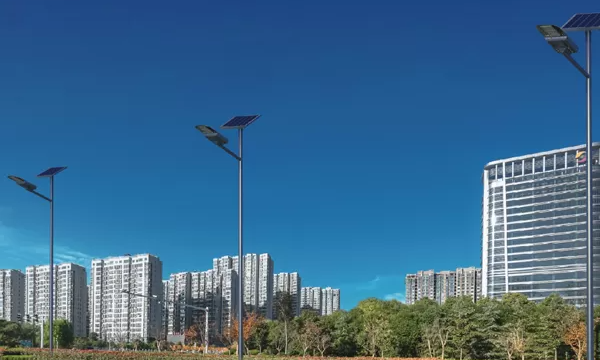
Why High-Wind Regions Need Special Solar Street Light Design
Solar street lights are different from ordinary grid-powered street lights because they usually include a solar panel mounted near the top of the pole. The panel increases the surface area exposed to wind. In strong winds, this creates extra pressure on the pole and foundation. If the pole diameter, wall thickness, base plate, anchor bolts, or foundation size is not suitable, the whole system may become unstable.
High-wind regions may include coastal cities, islands, open plains, desert roads, elevated bridges, and mountain areas. In these locations, a standard pole mounted solar street lights design may not be enough. The structure must be evaluated based on local wind speed, installation height, lighting arm length, solar panel size, and soil condition.
For long-term safety, project owners should not simply buy the cheapest pole and lamp combination. The correct design can reduce maintenance risks, protect public safety, and extend the service life of the entire solar lighting system.
Main Components of a Solar LED Street Light with Pole
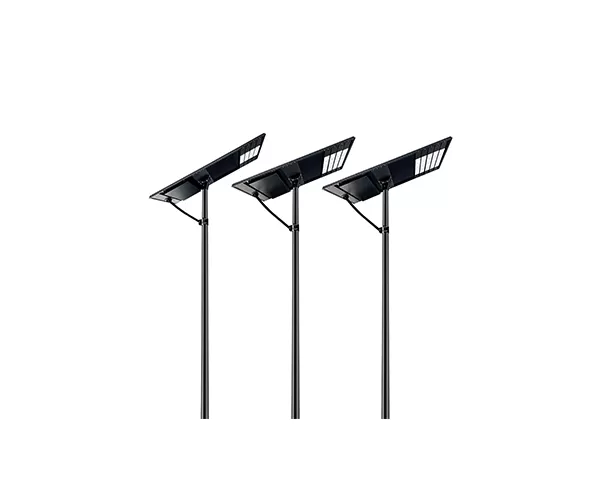
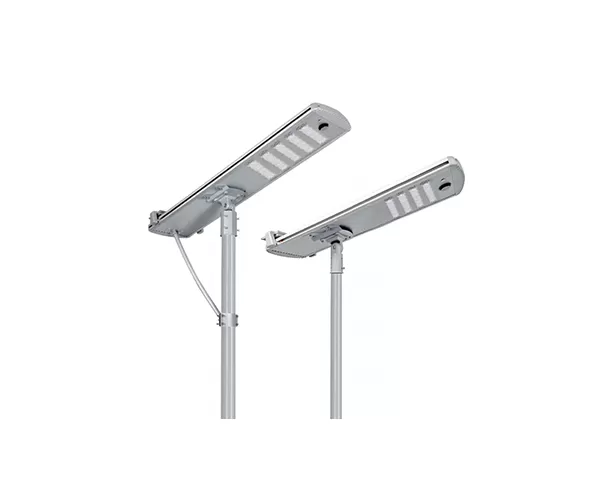
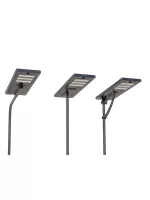
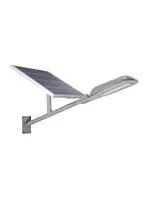
A complete solar led street light with pole usually includes an LED fixture, solar panel, battery, controller, pole, mounting brackets, foundation parts, and cables. In some designs, the battery is integrated into the lamp body. In other designs, the battery may be installed inside the pole or underground.
Each part affects the final performance. The LED fixture determines brightness and light distribution. The solar panel determines charging capacity. The battery determines backup time. The controller manages charging and discharging. The pole supports all components and keeps the system stable under outdoor conditions.
For high-wind applications, the pole and mounting structure deserve special attention. A strong pole is not only a vertical support; it is the backbone of the system.
How Pole Height Affects Wind Resistance
Pole height is one of the most important design factors. A higher pole can provide wider lighting coverage, but it also increases wind load. The taller the pole, the greater the force acting on the base during strong wind. This is why pole height should match road width, lighting requirement, and wind condition.
For small pathways or rural roads, a lower pole may be sufficient. For main roads or wider areas, a taller pole may be required. However, in high-wind regions, the engineer may need to increase pole diameter, wall thickness, base plate size, or foundation depth to maintain stability.
When selecting a solar street light pole, buyers should avoid choosing height based only on appearance or general practice. The pole height should be selected through a balance of illumination needs and structural safety.
Solar Panel Position and Wind Load
The solar panel is a major source of wind resistance. A larger panel can improve charging performance, but it also increases the area exposed to wind. In high-wind regions, the panel mounting angle, bracket strength, and connection method must be carefully designed.
If the panel angle is too steep, it may catch more wind. If the bracket is weak, vibration may loosen bolts over time. If the panel size is too large for the pole, the system may become unstable during storms. A reliable solar LED light with pole should use a panel size and mounting structure that match the pole design.
For large-scale road lighting, municipal, and infrastructure projects, buyers should also request a wind load test report or wind resistance rating report before placing an order. The report should clearly identify the applicable pole height, solar panel dimensions and mounting angle, pole wall thickness, bracket configuration, and rated design wind speed. It is important to confirm that the report corresponds to the actual solar street light configuration being supplied, rather than a different standard model. Inbrit can provide wind load test reports for light poles and other project compliance documents as required, helping project owners evaluate structural safety and support technical approval.
For areas with strong seasonal winds, adjustable or reinforced panel brackets may be considered. Stainless steel fasteners, hot-dip galvanized components, and anti-loosening designs can also improve durability.
Material Selection for Poles
Most solar street light poles are made from steel or aluminum. Steel poles are widely used because they offer strong structural performance and are suitable for many road lighting projects. Hot-dip galvanized steel poles are especially common for outdoor installations because they provide corrosion resistance.
Aluminum poles are lighter and have good corrosion resistance, but the design must still meet wind load requirements. In coastal environments, corrosion resistance is especially important because salt air can damage metal parts over time. Protective coatings, galvanizing, and proper material thickness help improve service life.
For pole mounted solar street lights in demanding environments, buyers should confirm pole material, surface treatment, wall thickness, and anti-corrosion performance before purchasing.
Foundation and Anchor Bolt Design
A strong pole still needs a strong foundation. The foundation transfers wind force into the ground and prevents tilting. In high-wind regions, foundation size and anchor bolt design should match the pole height, soil condition, and wind load.
Common problems include shallow foundations, weak concrete, undersized anchor bolts, and poor installation alignment. These issues may not appear immediately, but they can cause serious failure after repeated wind exposure.
Before installation, contractors should evaluate soil conditions and prepare proper foundation drawings. For large projects, the supplier should provide foundation recommendations based on pole height and system configuration.
Choosing the Right Solar Street Pole Light Supplier
When selecting a solar street pole light supplier, project owners should look beyond product photos and basic specifications. This is especially important for buyers evaluating all in one solar street light wholesale options, because integrated systems still require careful evaluation of pole structure, solar panel mounting, fixture weight, and wind resistance. A reliable supplier should be able to provide complete system design support, including pole structure, lighting layout, solar configuration, and installation guidance.
Ask for pole height, diameter, wall thickness, and material details.
Confirm the wind resistance level or design standard.
Check solar panel mounting structure and bracket material.
Request foundation guidance for the selected pole height.
Evaluate anti-corrosion treatment for coastal or humid environments.
Confirm whether the supplier can customize pole design for project conditions.
For high-wind regions, customization is often necessary. A standard model may not be suitable for every location, especially when the project involves tall poles, large solar panels, or exposed installation sites.
Conclusion
Selecting the right solar LED street light with pole for high-wind regions requires a complete engineering approach. Buyers must consider not only LED wattage and battery capacity, but also pole strength, solar panel wind load, foundation design, mounting brackets, and corrosion resistance.
A durable solar LED light with pole can improve lighting reliability, reduce maintenance costs, and protect public safety. For roads, coastal areas, industrial sites, and exposed outdoor spaces, a properly designed solar street pole light is a long-term investment. By working with a supplier that understands structural design and solar lighting performance, project owners can build safer and more reliable pole mounted solar street lights for demanding environments.

 English
 français
 Español
 العربية
 Pilipino
 ไทย
ไทย tiếng việt
 Malay
Malay русский