Remote communities, mining roads, construction camps, border stations, islands, farms, clinics, and communication sites often require outdoor lighting where grid electricity is unavailable or expensive to extend. Solar street lights can provide independent illumination without long cable routes, transformers, or continuous fuel delivery.
However, remote-area lighting presents demanding operating conditions. Maintenance teams may need to travel several hours to reach a failed light, replacement parts may not be locally available, and seasonal weather can reduce solar charging for several consecutive days.
A successful project must therefore coordinate lighting performance, solar resources, battery storage, pole design, environmental protection, installation logistics, security, and long-term maintenance.
Where Remote-Area Solar Lighting Is Commonly Used
Remote-area projects cover many applications with different lighting requirements. Buyers should divide the site into functional zones before choosing products.
| Remote Application | Main Lighting Need | Important Design Factor |
|---|
| Village and community roads | Pedestrian and vehicle visibility | Road width, pole spacing, and nightly operating hours |
| Mining and quarry access roads | Safe movement of trucks and equipment | Dust, vibration, heavy vehicles, and maintenance access |
| Construction camps | Temporary or semi-permanent illumination | Fast installation and possible relocation |
| Remote clinics and schools | Safe access to essential public facilities | Reliable all-night operation and backup autonomy |
| Farms and agricultural routes | Access, security, and equipment movement | Shading, animals, irrigation, and uneven terrain |
| Islands and coastal sites | Independent outdoor lighting | Salt corrosion, wind loading, and transport restrictions |
| Telecommunication stations | Security and maintenance access | Low traffic, remote monitoring, and anti-theft protection |
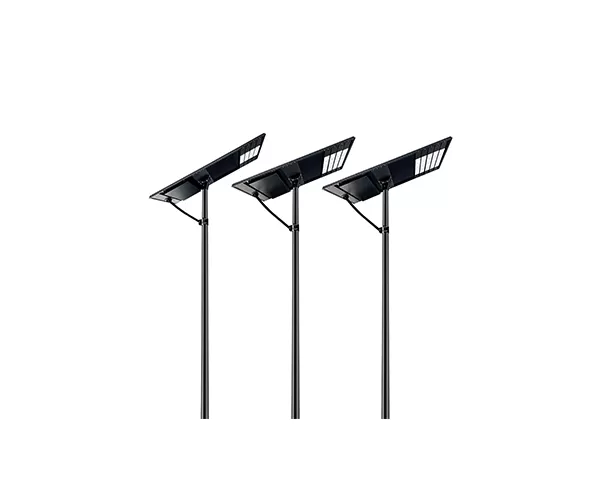
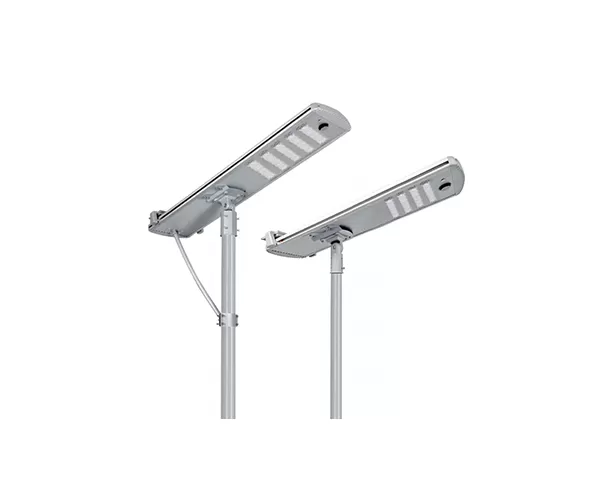
An all in one solar street light wholesale system can simplify distributed projects because the LED module, solar panel, battery, and controller are combined in a compact structure. This reduces external wiring and can shorten installation time at scattered locations.
Evaluate Solar Resources at the Exact Location
Solar street lights should be sized according to the weakest charging period rather than the annual average. A location may receive strong sunlight for most of the year but experience several weeks of rain, cloud, dust, snow, or seasonal shading.
Buyers should provide the supplier with the installation coordinates and confirm:
Average daily solar irradiation
Worst-month solar irradiation
Seasonal cloud and rainfall patterns
Maximum and minimum temperatures
Nearby mountains, trees, and buildings
Dust, sand, snow, or leaf accumulation
Required panel direction and tilt angle
The Global Solar Atlas, provided by the World Bank Group and supported by ESMAP, offers solar-resource and photovoltaic-potential data that can support preliminary site assessment. Final system sizing should still consider local measurements and actual installation conditions.
Select the Right Solar Street Light Structure
Integrated Systems
Integrated lights are practical for narrow roads, pathways, community centres, and projects requiring quick deployment. Their compact design reduces component quantities and visible cables.
The pole and luminaire position must allow the integrated panel to receive direct sunlight. If the road is shaded or faces an unsuitable direction, the panel position may not be optimal.
All-in-Two Systems
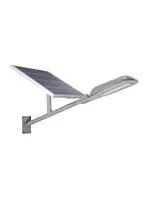
All-in-two designs separate the panel from the luminaire while keeping the battery and controller integrated with the light body. The panel can be oriented toward stronger sunlight without changing the luminaire direction.
Split Systems
Split systems install the panel, battery, controller, and luminaire separately. They support larger batteries, customized panel arrays, easier individual component replacement, and greater flexibility for high-output or long-autonomy projects.
Remote roads requiring larger panels or several backup nights may benefit from a split configuration, although additional brackets, cables, enclosures, and waterproof connections increase installation complexity.
Calculate Battery Capacity and Backup Autonomy
Battery storage is critical because a remote project may not receive immediate maintenance or temporary grid support during poor weather.
The battery calculation should include:
LED power at every programmed brightness level
Total nightly operating hours
Controller and driver losses
Required cloudy or rainy backup nights
Allowable battery depth of discharge
Charging and discharging efficiency
Low-temperature capacity reduction
Battery aging allowance
Emergency minimum-lighting requirements
Buyers should request the battery voltage, ampere-hour capacity, watt-hour capacity, usable energy, battery chemistry, cycle-life conditions, and low-voltage protection settings.
The supplier should also explain whether the stated autonomy is based on full brightness or a reduced-output schedule. A claim of five backup nights may be misleading if the luminaire operates at minimum brightness for most of that period.
Match Pole Height, Wattage, and Road Conditions
Remote roads vary from narrow village paths to wide mining and industrial access routes. Pole height and LED output should be selected according to the actual illuminated area.
| Application | Possible Pole Height | Possible LED Range |
|---|
| Footpath or small public area | 4–5 m | 20W–40W |
| Narrow community road | 5–6 m | 30W–60W |
| Remote access road | 6–8 m | 50W–80W |
| Mining or industrial road | 8–10 m | 80W–120W |
These ranges are initial references only. Road width, pole spacing, luminaire optics, vehicle speed, terrain, and required illumination must be verified through a lighting layout.
When selecting solar powered street lights with pole, buyers should confirm the complete structure, including the steel grade, pole diameter, wall thickness, lamp arm, solar panel bracket, base plate, anchor bolts, and foundation.
Design for Harsh Environmental Conditions
Remote lighting equipment may face stronger environmental exposure than products installed in a maintained urban street.
The technical specification should address:
Rain and humidity
High or low temperatures
Sand and dust
Salt spray in coastal locations
Strong wind and storms
Snow and ice loading
Insects and animals
Flooding and poor drainage
Vibration from heavy vehicles
Luminaires, controllers, batteries, cables, connectors, and enclosures should have suitable outdoor protection. Galvanizing, compatible fasteners, sealed electrical connections, and correctly designed foundations are particularly important where inspection intervals are long.
Use Smart Controls to Reduce Maintenance Travel
Maintenance is often one of the largest lifetime costs in a remote lighting project. A technician may spend more time travelling to the site than repairing the equipment.
A smart solar street light can support functions such as:
Remote on/off status monitoring
Battery-voltage reporting
Solar charging information
Scheduled brightness adjustment
Low-battery alarms
Luminaire or controller fault alerts
Communication-loss notifications
Remote schedule updates

The system may use cellular, LoRa, NB-IoT, or another communication method. Before ordering, buyers should confirm network coverage, gateway requirements, software fees, data storage, user permissions, and local operation when communication is unavailable.
Plan Installation, Security, and Spare Parts
Remote installation teams may have limited cranes, concrete equipment, electricity, water, or technical support. The system should therefore be prepared for practical site assembly.
The supplier should provide:
Numbered components and packing lists
Pole and foundation drawings
Anchor-bolt templates
Wiring diagrams
Controller programming information
Installation instructions
Commissioning checklists
Troubleshooting procedures
Batteries, access doors, controllers, cables, and removable components may require anti-theft bolts, locked enclosures, concealed wiring, or elevated mounting.
Buyers should order practical spare parts with the initial shipment, especially controllers, LED drivers, sensors, connectors, fuses, and communication modules. Standardized components can reduce future downtime.
Why Off-Grid Solar Matters for Remote Communities
The World Bank reported that off-grid solar could provide first-time electricity access to almost 400 million people globally by 2030. The organization identified off-grid solar as the most cost-effective option for 41% of people expected to remain without electricity access by that year. See the World Bank off-grid solar report.
Street lighting represents only one part of remote energy access, but dependable public lighting can improve access around roads, clinics, schools, transport points, markets, and community facilities after sunset.
Remote-Area Solar Lighting Procurement Checklist
Before requesting a quotation, provide:
Installation coordinates
Site layout and road dimensions
Vehicle and pedestrian activity
Required lighting hours
Proposed pole height and spacing
Required rainy-day autonomy
Worst-month weather conditions
Wind, temperature, dust, and corrosion exposure
Communication coverage
Available installation equipment
Maintenance and spare-parts plan
Project quantity and delivery destination
The supplier should provide a photometric layout, solar-energy calculation, battery configuration, pole drawing, foundation reference, operating schedule, bill of materials, and itemized quotation.
FAQ
Can Solar Street Lights Work in Very Remote Locations?
Yes. Each lighting point can operate independently when the panel, battery, controller, and luminaire are correctly sized for the local environment.
How Many Rainy Days Should the Battery Support?
The required autonomy depends on local weather, site importance, acceptable dimming, maintenance response time, and project budget. Critical locations may require a more conservative backup period.
Are Integrated Lights Suitable for Remote Areas?
They are suitable where fast installation and low wiring complexity are priorities. Split systems may be better where larger batteries, flexible panel positioning, or easier component replacement are required.
How Can Maintenance Costs Be Reduced?
Use standardized replaceable components, provide spare parts, document the installation, enable remote fault monitoring, and ensure batteries and controllers can be accessed safely.
Can Solar Street Lights Operate Without a Communication Network?
Yes. The controller should store its operating schedule locally. Network connectivity is required only for remote monitoring, reporting, or control functions.
Conclusion
Solar street lights for remote areas must be designed for limited infrastructure, difficult maintenance, variable weather, and long service intervals.
Buyers should evaluate worst-month solar resources, battery autonomy, luminaire performance, pole structure, environmental protection, communications, anti-theft measures, installation logistics, and spare-parts availability as one coordinated system.
A project-specific lighting layout, energy calculation, structural proposal, and maintenance plan provide a stronger basis for procurement than nominal wattage or generalized claims about operating time.

 English
 français
 Español
 العربية
 Pilipino
 ไทย
ไทย tiếng việt
 Malay
Malay русский