Solar street lights can illuminate park pathways, garden entrances, greenways, plazas, seating areas, playground surroundings, small parking zones, and public recreation spaces without extensive underground electrical work.
Unlike highway or industrial lighting, park and garden lighting must balance visibility with visual comfort, landscape appearance, wildlife protection, and preservation of the nighttime environment. Excessive brightness may create glare, disturb nearby residents, and reduce the natural character of the site.
Municipalities, landscape contractors, developers, resorts, and distributors should therefore select the lighting system according to the site layout, pedestrian activity, operating hours, shading conditions, required atmosphere, and local solar resources.
Why Park and Garden Lighting Requires a Different Approach
Park users normally move at lower speeds than road users, but the site may contain steps, curves, bridges, benches, water features, uneven surfaces, and changes in elevation. Lighting should help visitors identify these features without making the entire landscape unnecessarily bright.
A park lighting design should address:
Continuous visibility along main pedestrian routes
Clear illumination at stairs, bridges, and intersections
Low glare near seating and recreation areas
Controlled light near residential boundaries
Suitable visibility for security personnel and cameras
Protection of trees, wildlife habitats, and natural darkness
Reliable operation during cloudy or rainy weather
The required lighting level may differ between a busy entrance plaza and a quiet garden pathway. Dividing the site into functional zones helps avoid both underlighting and unnecessary overlighting.
Identify the Main Lighting Zones
Before selecting fixtures, the project team should prepare a site plan showing the areas that require nighttime illumination.
| Park or Garden Zone | Main Lighting Objective | Important Design Factor |
|---|
| Main pathways | Support continuous pedestrian movement | Uniformity, pole spacing, and glare control |
| Entrances and plazas | Improve orientation and visual recognition | Higher activity and wider coverage |
| Stairs and bridges | Make level changes and edges visible | Focused light and shadow control |
| Playground surroundings | Support supervision and safe access | Operating hours and nearby residences |
| Seating areas | Create comfortable ambient lighting | Low glare and warm light appearance |
| Small parking areas | Support vehicle and pedestrian visibility | Broader optics and security coverage |
| Natural or ecological zones | Provide only essential illumination | Light spill, operating time, and wildlife impact |
Trees, sculptures, buildings, and seasonal vegetation should also be marked because they may shade solar panels or block the light distribution.
Selecting the Solar Street Light Structure
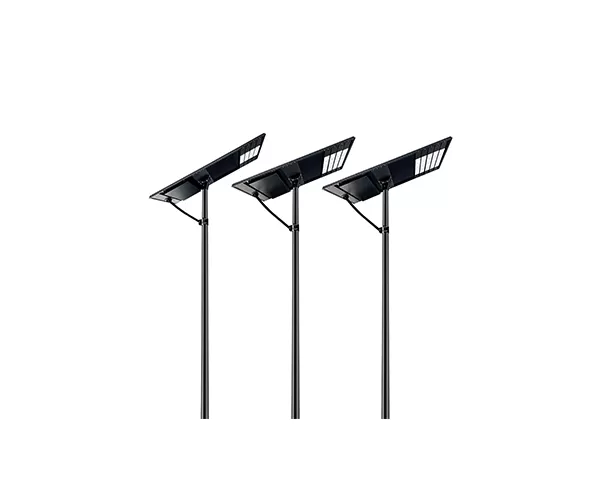
Park and garden projects can use integrated, semi-integrated, or split solar lighting structures.
All-in-One Solar Street Lights
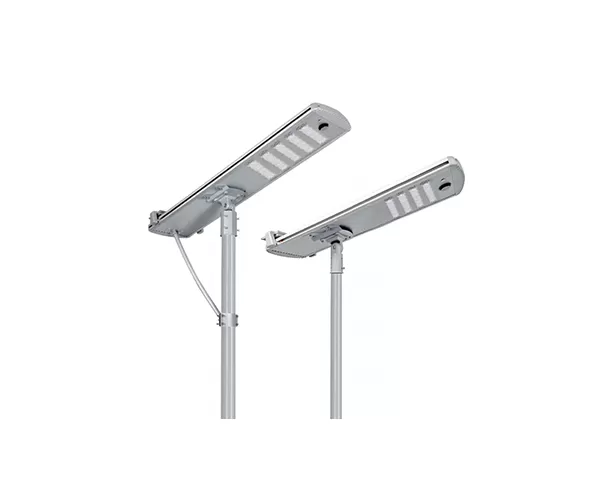
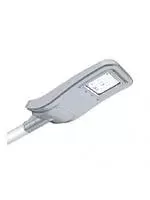
An all in one solar street light wholesale system combines the solar panel, lithium battery, controller, and LED module in a compact housing.
This structure is suitable for distributed pathways, village parks, community gardens, and projects where reducing external wiring and installation time is important. The pole position must still allow the integrated solar panel to receive sufficient direct sunlight.

All-in-Two Solar Street Lights
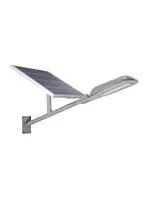
An all-in-two system separates the solar panel from the lighting body while integrating the battery and controller with the luminaire. The panel can be oriented toward better sunlight even when the pathway or luminaire faces another direction.
Split Solar Street Lights
Split systems install the panel, battery, controller, and luminaire separately. They provide greater flexibility for shaded sites, longer lighting schedules, larger batteries, and individual component replacement.
The additional brackets, enclosures, cables, and waterproof connections should be included in installation and maintenance planning.
How to Select Pole Height and LED Output
Lower mounting heights are generally suitable for pedestrian-scale environments because they provide focused illumination and maintain a more comfortable visual relationship with the landscape.
| Application | Possible Pole Height | Possible LED Range |
|---|
| Small garden pathway | 3–4 m | 10W–20W |
| Main park pathway | 4–6 m | 20W–40W |
| Park entrance or plaza | 5–7 m | 30W–60W |
| Small park parking area | 6–8 m | 40W–80W |
These ranges are preliminary references rather than fixed specifications. A 20w solar street light may be suitable for a garden path or low-traffic pedestrian route, but the final result depends on lumen output, optics, pole height, spacing, and site geometry.
Installing poles too far apart may create alternating bright and dark areas. Placing poles too close together can increase equipment and foundation costs while making the landscape brighter than necessary.
Control Glare, Spill Light, and Color Temperature
Park lighting should direct light toward paths and activity areas rather than into the sky, nearby homes, trees, or water features.
The U.S. National Park Service recommends that responsible outdoor lighting be “useful, targeted, low light levels, controlled, and warm-colored.” Its outdoor lighting principles provide a practical framework for reducing light pollution while maintaining necessary nighttime visibility.
Project designers should consider:
Fully shielded or controlled optical distribution
Low mounting angles that prevent upward light
Warm or moderate color temperatures where appropriate
Minimum brightness needed for the activity
Dimming after visitor activity decreases
Reduced lighting near ecological zones
Screening or careful aiming near residential boundaries
Decorative appearance should not replace optical control. A visually attractive fixture can still cause discomfort if the LED source is directly visible from normal viewing positions.
Solar Panel and Battery Sizing
The solar panel and battery should be calculated according to the actual operating schedule and the weakest seasonal sunlight conditions.
The calculation should include:
LED power at each brightness level
Hours of operation per night
Controller and driver losses
Battery depth of discharge
Required rainy-day autonomy
Battery aging and temperature effects
Worst-month solar irradiation
Tree and building shading
Dust, leaves, and maintenance frequency
Mature trees can create substantial seasonal shading. A panel that receives good sunlight during winter may become shaded after leaves develop, while newly planted trees may gradually affect charging conditions as they grow.
The supplier should state the solar panel wattage, battery watt-hour capacity, lighting schedule, backup period, and low-battery protection logic.
Using Smart Controls in Parks and Gardens
A smart solar street light can adjust its output according to time, movement, battery condition, or remote commands.
A practical operating schedule may include:
High output during busy evening hours
Moderate output after the park closes
Low standby brightness on quiet pathways
Temporary brightness increase after motion detection
Reduced output during low-battery conditions
Remote override for events or emergencies
Motion sensors can be useful on quiet garden routes and secondary paths. They may be less effective at busy entrances where continuous movement keeps the lights at full output.
Brightness changes should be gradual where possible so that visitors are not distracted by abrupt transitions.
Pole, Foundation, and Installation Considerations
Park lighting poles should be coordinated with the landscape design, maintenance equipment, underground utilities, drainage, and visitor routes.
Buyers should confirm:
Pole height, shape, and surface finish
Steel grade and wall thickness
Luminaire and solar panel mounting method
Local wind-load requirement
Base-plate and anchor-bolt dimensions
Foundation position and concrete requirements
Access-door and cable-routing design
Protection against vandalism or theft
Pole locations should avoid tree roots, irrigation systems, drainage channels, vehicle routes, and areas where visitors may collide with the structure.
Park and Garden Solar Lighting Procurement Checklist
Before requesting a quotation, provide:
Installation country, city, or coordinates
Dimensioned park or garden site plan
Path widths and activity zones
Required operating hours
Preferred pole height and appearance
Areas requiring dimming or motion detection
Tree and building shading conditions
Required rainy-day autonomy
Local wind and temperature conditions
Estimated quantity and delivery destination
The supplier should provide a lighting layout, energy calculation, pole drawing, foundation reference, operating schedule, bill of materials, and itemized quotation.
FAQ
Are Solar Street Lights Suitable for Park Pathways?
Yes. They are especially useful for distributed pathways where underground electrical installation would be disruptive or expensive. Solar access and tree shading must be evaluated first.
What Wattage Is Suitable for a Garden Path?
Many garden paths can use approximately 10W to 30W luminaires, but the correct output depends on pole height, spacing, lumen output, optics, and required visibility.
Should Park Lights Stay at Full Brightness All Night?
Not always. Busy periods may require higher output, while late-night hours can use controlled dimming where safety and local requirements allow.
Can Solar Panels Work Under Trees?
Heavy or prolonged shading can significantly reduce charging. The panel should be moved to a sunnier position or configured separately from the luminaire when necessary.
What Color Temperature Is Suitable for Parks?
Warm or moderate color temperatures are commonly preferred because they can create a more comfortable landscape atmosphere and reduce harsh visual contrast. Local requirements and application needs should still be considered.
Conclusion
Solar street lights for parks and gardens should provide safe movement without sacrificing visual comfort, landscape character, or natural darkness.
The final system should coordinate functional zones, pole height, optical distribution, brightness, color temperature, solar access, battery autonomy, smart controls, structural design, and maintenance access.
A site-specific lighting layout and energy calculation allow buyers to compare suppliers using measurable requirements and avoid dark pathways, excessive glare, unsuitable panel locations, or insufficient backup capacity.

 English
 français
 Español
 العربية
 Pilipino
 ไทย
ไทย tiếng việt
 Malay
Malay русский