Solar street lights can provide independent outdoor illumination for factory roads, loading zones, employee parking areas, warehouses, perimeter routes, entrances, and remote production facilities. Because each lighting point generates and stores its own energy, factories can reduce trenching, underground cabling, and dependence on distant grid connections.
However, factory lighting conditions vary significantly. A pedestrian walkway does not require the same output as a truck-loading yard, while a security perimeter may need different optics and control settings from an internal transport road.
Factory buyers should therefore evaluate lighting zones, operating shifts, vehicle activity, pole positions, solar resources, battery autonomy, structural loading, maintenance access, and security requirements before selecting a system.
Where Solar Street Lights Can Be Used in Factory Areas
A factory site usually contains several outdoor zones with different operating requirements. Lighting should be planned according to the activity and risk level of each area rather than applying one product configuration across the complete facility.
| Factory Area | Main Lighting Requirement | Key Design Consideration |
|---|
| Internal roads | Vehicle and pedestrian visibility | Road width, traffic direction, pole spacing, and glare |
| Loading bays | Clear visibility around trucks and goods | Higher activity levels, shadows, and equipment movement |
| Employee parking | Uniform illumination and pedestrian safety | Entrances, walkways, vehicles, and security cameras |
| Warehouse surroundings | Access and security lighting | Building shadows and door activity |
| Storage yards | Broad-area visibility | Material stacks, forklifts, and changing layouts |
| Factory perimeter | Security monitoring | Fence lines, cameras, and low-traffic operation |
| Emergency routes | Reliable orientation and access | Minimum operating level and backup autonomy |
Project teams should identify critical routes first, including gatehouses, fire lanes, pedestrian crossings, emergency assembly points, loading areas, and locations where vehicles reverse or turn.
Define Lighting Requirements by Operational Zone
Outdoor workplace lighting should support safe movement, visual recognition, security, and task performance. The official ISO/CIE 8995-3:2018 standard specifies lighting requirements intended to contribute to the visual needs for safety and security in outdoor workplaces.
The project specification should identify:
Average and minimum required lighting levels
Lighting uniformity
Operating hours for each zone
Pedestrian and vehicle activity
Forklift and heavy-truck routes
Security-camera requirements
Areas requiring continuous lighting
Areas suitable for dimming or motion control
Local workplace and electrical standards
A loading area operating throughout the night may require continuous high output, while a rarely used perimeter road may operate at a lower standby brightness and increase output when movement is detected.
Selecting the Solar Street Light Structure
Factory lighting projects can use all-in-one, all-in-two, or split systems. The most suitable structure depends on the required power, solar panel position, maintenance access, battery capacity, and installation conditions.
All-in-One Systems
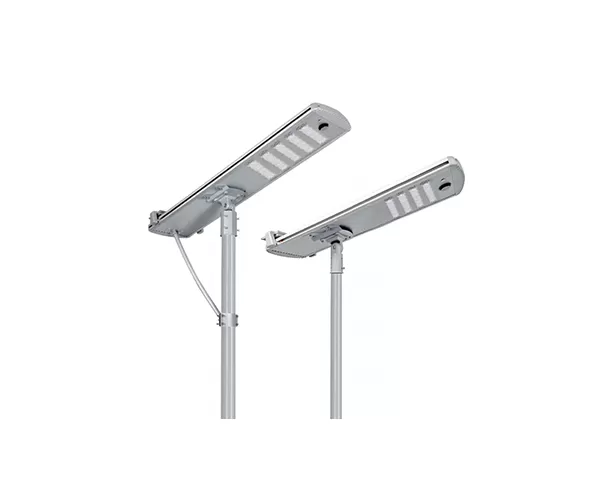
All-in-one models integrate the panel, battery, controller, and LED module into one compact unit. They are practical for pedestrian routes, small parking areas, gatehouses, and factory zones requiring fast installation.
All-in-Two Systems
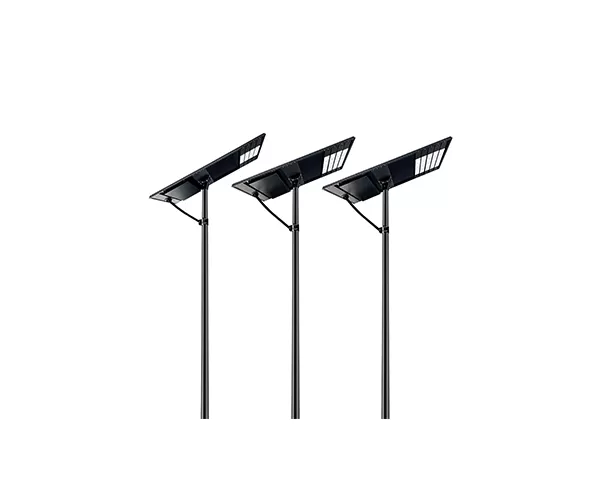
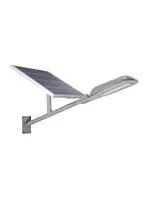
All-in-two models separate the solar panel from the luminaire while keeping the battery and controller integrated with the light. This allows the panel to face a suitable solar direction independently of the road or luminaire orientation.
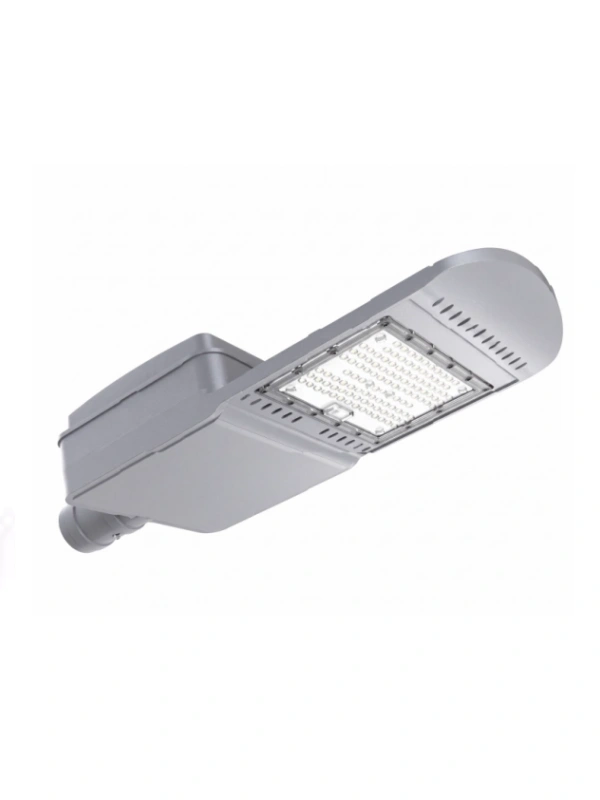
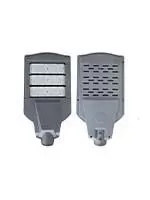
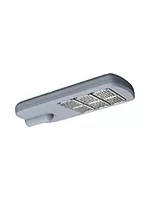
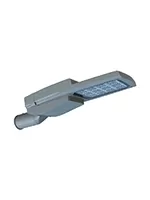
Configurable commercial solar street lights are suitable for factory roads, industrial parking areas, warehouse surroundings, and other B2B projects requiring flexible panel positioning and controlled roadway illumination.

Split Systems
Split systems install the solar panel, battery, controller, and luminaire as separate components. They support larger energy configurations and more flexible maintenance but require additional wiring, brackets, enclosures, and waterproof connections.
They may be suitable for loading yards, wide internal roads, remote factories, and facilities requiring high output or several nights of backup operation.
How to Select Pole Height and Light Output
Pole height and LED output should be selected together. Higher poles can provide wider coverage but may require greater lumen output and stronger structural support. Lower poles concentrate light over a smaller area and may require shorter spacing.
| Factory Application | Possible Pole Height | Possible LED Range |
|---|
| Pedestrian path | 4–6 m | 20W–50W |
| Employee parking area | 6–8 m | 40W–80W |
| Internal factory road | 6–9 m | 50W–100W |
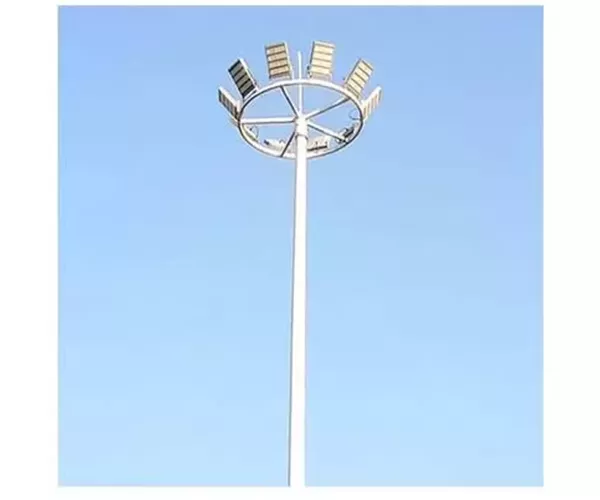
| Loading and logistics area | 8–12 m | 80W–120W |
| Large storage yard | Project-specific | Project-specific |
These ranges are initial references only. A 100w solar street light may be suitable for a wide internal road or loading area, but its performance depends on actual lumen output, pole height, spacing, mounting angle, and optical distribution.
The supplier should provide a photometric layout showing pole positions, average illuminance, minimum illuminance, uniformity, and possible dark areas caused by buildings, containers, trees, or stored materials.
Battery Capacity and Factory Operating Hours
Battery capacity must be calculated from the factory’s actual nighttime schedule. Facilities operating one daytime shift have different requirements from plants running continuously for 24 hours.
The energy calculation should include:
LED power at each brightness level
Full-output operating hours
Dimming periods
Controller and driver losses
Required rainy-day autonomy
Allowable battery depth of discharge
Battery aging and temperature effects
Worst-month solar irradiation
Panel shading and dust accumulation
Factories operating overnight should not rely on aggressive dimming that reduces visibility around active roads or loading zones. The quotation should state the exact hourly output schedule and the battery capacity used to support it.
Smart Controls for Different Factory Shifts
A smart solar street light can adjust its brightness based on time, movement, battery condition, or remote commands.
A possible factory schedule may include:
| Operating Period | Possible Lighting Mode |
|---|
| Shift change | Full output around roads, gates, and parking areas |
| Normal production hours | High or moderate output according to activity |
| Low-activity period | Reduced standby brightness |
| Movement detected | Temporary increase in selected zones |
| Emergency or security event | Remote full-output command |
| Low battery | Controlled energy-saving mode |
Motion sensors are useful for perimeter roads, storage zones, and low-traffic access routes. They may offer less benefit in loading areas or production facilities where vehicles and workers remain active throughout the night.
Remote monitoring can help maintenance teams identify battery alarms, charging problems, communication failures, abnormal energy consumption, or luminaires that fail to switch on.
Pole, Foundation, and Wind-Load Requirements
A factory lighting pole may support the LED luminaire, solar panel, battery enclosure, controller box, motion sensor, antenna, or security camera. The structural design must include the total weight and projected wind area of all mounted equipment.
When purchasing a solar street light with pole, buyers should confirm:
Pole height and shape
Steel grade and wall thickness
Top and bottom diameter
Lamp-arm length and angle
Solar panel dimensions and weight
Local design wind speed
Base-plate dimensions
Anchor-bolt diameter and length
Hot-dip galvanizing requirements
Foundation reference drawing
Pole positions should avoid truck turning paths, loading equipment, crane operating zones, underground pipelines, drainage channels, and areas where stored materials may block sunlight.
Dust, Heat, Corrosion, and Harsh Environments
Factory environments may expose lighting equipment to dust, fumes, heat, salt, chemicals, vibration, and frequent vehicle movement.
Buyers should evaluate:
Luminaire and controller ingress protection
Battery operating-temperature range
Corrosion protection for poles and brackets
Resistance to industrial dust
Connector and cable protection
Solar panel cleaning frequency
Suitability for coastal or chemical environments
Facilities containing flammable gases, vapours, or combustible dust may require certified hazardous-location lighting equipment. Standard solar street lights should not be installed in classified hazardous areas without a suitable engineering and regulatory review.
Factory Solar Lighting Procurement Checklist
Before requesting a quotation, provide:
Factory site drawing and installation coordinates
Dimensions and functions of each outdoor zone
Vehicle, forklift, and pedestrian routes
Factory shift and operating hours
Required lighting levels
Proposed pole positions and mounting heights
Dimming, sensor, and remote-control requirements
Required rainy-day autonomy
Local wind, temperature, dust, and corrosion conditions
Security-camera requirements
Project quantity and delivery destination
Required certificates, warranty, and installation support
The technical proposal should include a lighting layout, energy calculation, operating schedule, pole drawing, foundation reference, bill of materials, and itemized quotation.
FAQ
Are Solar Street Lights Suitable for Factory Areas?
Yes. They can illuminate internal roads, parking areas, warehouses, loading zones, entrances, and perimeter routes when the system is designed for the factory’s operating conditions.
What Wattage Is Suitable for a Factory Road?
Factory roads may use approximately 50W to 100W systems, but the correct output depends on road width, pole height, spacing, optics, traffic activity, and required lighting performance.
Can Factory Solar Lights Operate During Night Shifts?
Yes. The solar panel, battery, controller, and lighting schedule must be sized for the full shift duration and local worst-month solar conditions.
Should Motion Sensors Be Used in Factory Areas?
They are useful in low-traffic zones such as perimeter roads and storage areas. Continuously active roads and loading bays may require time-based or continuous lighting.
How Often Should Factory Solar Lights Be Maintained?
The maintenance frequency depends on dust, pollution, weather, operating hours, and component design. Solar panels, batteries, luminaires, wiring, poles, and foundations should be inspected regularly.
Conclusion
Solar street lights for factory areas should be designed according to the activities within each outdoor zone. Internal roads, loading bays, parking areas, storage yards, pedestrian routes, and security perimeters may require different outputs, controls, pole heights, and operating schedules.
Buyers should evaluate lighting performance, shift hours, solar resources, battery autonomy, smart controls, environmental exposure, structural loading, and maintenance access as one coordinated system.
A site-specific lighting layout, energy calculation, pole drawing, and itemized quotation provide the technical information needed to compare suppliers and develop a reliable factory solar lighting project.


 English
 français
 Español
 العربية
 Pilipino
 ไทย
ไทย tiếng việt
 Malay
Malay русский