A galvanized street light pole is a steel lighting structure protected by a zinc coating to reduce corrosion during outdoor service. It is commonly used for municipal roads, highways, industrial parks, residential communities, parking areas, solar lighting projects, and other locations exposed to rain, humidity, dust, and changing temperatures.
However, the word “galvanized” does not by itself confirm the quality of a pole. Buyers should also evaluate the steel grade, wall thickness, pole shape, welding, galvanizing method, zinc-coating thickness, base plate, anchor bolts, wind-load design, and foundation requirements.
For contractors, distributors, municipal buyers, and project developers, the correct approach is to compare complete technical specifications rather than selecting a pole according to height and price alone.
What Is a Galvanized Street Light Pole?
A galvanized street light pole is normally manufactured from steel plate or steel tube and protected with a zinc coating after the required forming, welding, and component fabrication have been completed.

A typical pole system may include:
Tapered or straight steel pole body
Single or double lamp arm
Base plate and reinforcement ribs
Access door and internal cable space
Anchor bolts, nuts, washers, and installation template
Luminaire mounting connection
Solar panel bracket where required
Hot-dip galvanized surface treatment
Optional powder-coated finish
The zinc coating protects the underlying steel by separating it from the outdoor environment. Long-term performance still depends on coating continuity, coating thickness, pole design, handling, installation quality, and the corrosiveness of the project location.
How Hot-Dip Galvanizing Works
Hot-dip galvanizing is generally carried out after the pole body, base plate, access door, lamp arm, and other steel components have been fabricated.
A typical production sequence includes:
Removal of oil and surface contamination
Cleaning of rust and mill scale
Flux treatment
Immersion of the fabricated steel in molten zinc
Withdrawal and controlled zinc drainage
Cooling and visual inspection
Coating-thickness measurement
Repair of permitted local coating defects where necessary
Because the complete fabricated component is immersed, accessible external and internal surfaces can receive zinc protection when the structure includes suitable venting and drainage openings.
The official ASTM A123/A123M-24 specification covers hot-dip galvanized zinc coatings on iron and steel products, including structural steel fabrications and large tubes that have been bent or welded before galvanizing. The international ISO 1461:2022 standard specifies general properties and test methods for hot-dip galvanized coatings applied to fabricated iron and steel articles.
Buyers should state the required standard in the purchase specification instead of accepting a quotation that only says “galvanized surface.”
Hot-Dip Galvanizing vs Other Zinc-Coating Methods
Not every zinc-coated pole has been processed in the same way. The supplier should identify the exact protection method in the quotation and technical drawing.
| Coating Method | General Characteristics | What Buyers Should Confirm |
|---|
| Hot-dip galvanizing | The fabricated steel structure is immersed in molten zinc | Applicable standard, coating thickness, and inspection report |
| Electrogalvanizing | Zinc is applied through an electrochemical process | Coating thickness and suitability for the outdoor environment |
| Pre-galvanized steel | Steel sheet or tube is galvanized before pole fabrication | Protection of cut edges, drilled areas, and welded joints |
| Zinc-rich coating | A paint containing zinc particles is applied to the steel surface | Coating system, surface preparation, and dry-film thickness |
| Duplex coating | Paint or powder coating is applied over hot-dip galvanizing | Surface preparation, coating compatibility, color, and adhesion |
These methods should not be treated as interchangeable without checking the project environment and required service conditions.
Why Zinc-Coating Thickness Matters
Coating thickness is one of the main inspection items for a galvanized lighting pole. The required value may depend on the specified standard, steel thickness, pole component, project environment, and tender requirements.
Buyers should request:
Applicable galvanizing standard
Required minimum coating thickness
Measurement method
Number and location of measurement points
Minimum and average recorded values
Measuring instrument information
Production batch covered by the report
Repair procedure for damaged coating areas
A single measurement does not represent the complete structure. Inspection points should cover different areas of the pole body, lamp arm, base plate, reinforcement components, and other galvanized accessories.
Steel Material and Structural Design
Galvanizing protects the steel surface, but it does not determine the structural strength of the pole.
The pole specification should also define:
Steel grade
Pole height
Top and bottom diameter
Wall thickness
Taper rate
Octagonal, round, square, or customized shape
Lamp-arm length and angle
Luminaire weight and projected area
Solar panel size where applicable
Base-plate dimensions
Anchor-bolt configuration
Required design wind speed
Two poles of the same height may have very different structural capacities because of differences in steel grade, diameter, thickness, taper, welding, flange design, equipment load, and foundation configuration.
A description such as “8 m galvanized pole” is therefore not sufficient for a technical comparison. Buyers should request a dimensioned drawing and clearly defined loading conditions.
Common Galvanized Street Light Pole Shapes
Octagonal Poles
An octagonal street light pole is generally formed from steel plate using bending equipment. Its tapered structure is widely used for municipal roads, highways, industrial access roads, and solar street lighting projects.
Octagonal poles may be manufactured in one section or multiple sections depending on pole height, transportation limits, installation requirements, and structural calculations.
Round Conical Poles
Round conical poles provide a smooth tapered appearance and are commonly selected for urban streets, campuses, residential developments, parks, and commercial projects.
Square Poles
Square poles are frequently used in parking areas, architectural lighting projects, public spaces, and sports facilities. Buyers should confirm the tube dimensions, corner condition, wall thickness, base plate, and equipment loading.
High Mast Poles
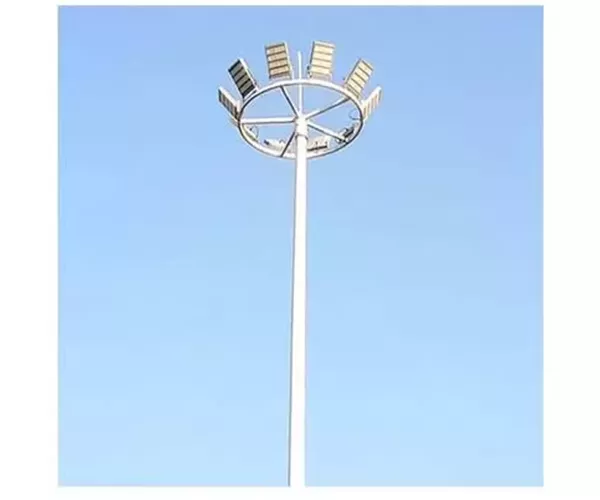
A high mast pole is used for large-area lighting in airports, ports, interchanges, logistics yards, stadiums, industrial facilities, and public squares.
High mast structures require additional evaluation of sectional connections, floodlight loads, head frames, lifting systems, safety devices, maintenance access, wind loading, anchor bolts, and foundation design.
Why Venting and Drainage Design Is Important
A hollow pole or bracket should be designed for galvanizing before production begins. Air, cleaning solutions, flux, and molten zinc must be able to enter and leave hollow sections safely.
Important design details include:
Vent holes near enclosed high points
Drainage openings near low points
No completely sealed hollow sections
Suitable openings around reinforcement plates
Clear flow paths for cleaning solutions and zinc
Removal of welding slag before galvanizing
Suitable lifting and suspension positions
Balanced fabrication to reduce distortion
The American Galvanizers Association venting and drainage guidance explains that fabricated steel must allow cleaning solutions, flux, and molten zinc to flow into, through, and out of the structure.
Improper drainage can contribute to bare areas, excessive zinc accumulation, poor surface appearance, incomplete internal coating, and production safety risks.
How to Inspect the Galvanized Surface
A galvanized surface may not have the uniform decorative appearance of painted steel. Differences in brightness, surface texture, or zinc pattern do not automatically indicate inadequate corrosion protection.
However, the pole should be inspected for:
Bare or uncoated areas
Sharp zinc projections
Excessive zinc runs
Ash or flux deposits
Blocked threaded holes
Blocked vent or drainage openings
Pole-body distortion
Uneven or damaged flange surfaces
Damage caused during lifting or transportation
Areas affecting component assembly
Surface acceptance should be based on the agreed standard, coating measurements, intended application, and appearance requirements rather than photographs alone.
Galvanizing and Powder Coating
Some municipal, residential, commercial, or architectural projects require a colored pole. In these cases, powder coating can be applied over the hot-dip galvanized surface.
This combined protection is commonly described as a duplex coating system.
The specification should confirm:
The official ASTM D7803-25 practice describes methods for preparing hot-dip galvanized iron and steel surfaces for powder coating and applying powder-coating materials.
Powder coating should not be applied over an unprepared galvanized surface because contamination, zinc salts, or unsuitable surface conditions may affect coating adhesion.
Matching Galvanized Poles with Solar Street Lights
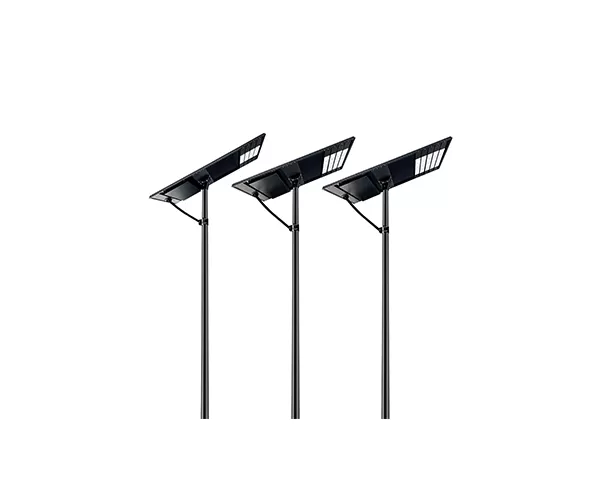
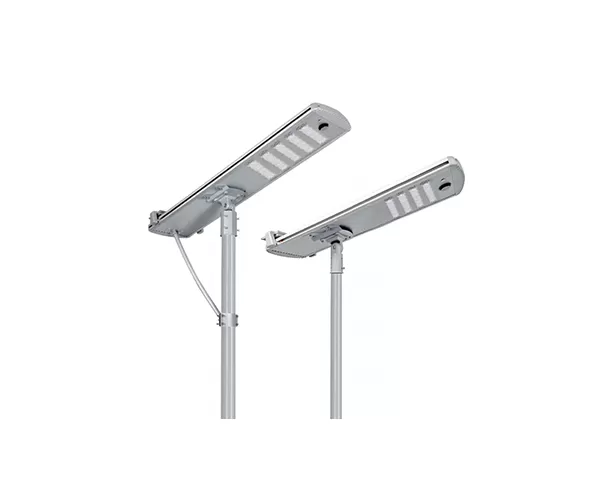
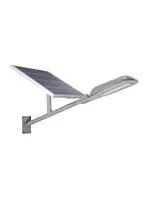
A solar lighting pole may support more equipment than a conventional AC street light pole. In addition to the LED luminaire and lamp arm, it may carry a solar panel, panel bracket, battery enclosure, controller box, motion sensor, antenna, or camera.
A complete solar led street light with pole configuration should define:
Solar panel dimensions and weight
Panel tilt angle
Panel-bracket projected area
Luminaire weight and mounting diameter
Lamp-arm length and elevation angle
Battery-box mounting position
Controller-box position
Internal cable-routing method
Access-door dimensions
Wind-load assumptions
The solar panel adds a significant wind-exposed area. The pole diameter, thickness, flange, anchor bolts, welds, and foundation should therefore be checked against the complete solar lighting assembly.
Foundation and Anchor-Bolt Requirements
A correctly galvanized pole can still become unstable if the anchor system or concrete foundation is unsuitable.
Foundation design depends on:
Pole height and weight
Design wind speed
Luminaire, arm, and solar panel load
Base-plate dimensions
Anchor-bolt diameter and embedment length
Soil-bearing capacity
Groundwater conditions
Concrete strength
Drainage around the pole base
The pole manufacturer should provide a reference foundation drawing showing the anchor-bolt arrangement, bolt-circle diameter, template, conduit opening, and proposed concrete dimensions.
The final foundation should be reviewed by a qualified project engineer according to local soil conditions, structural requirements, and construction regulations.
Transportation and Installation Protection
Galvanized surfaces can be damaged by unsuitable packing, lifting, unloading, storage, or installation.
Recommended handling measures include:
Separating pole bodies with protective spacers
Avoiding direct steel-to-steel impact
Using suitable lifting straps
Protecting base plates and threaded components
Keeping stored poles dry and ventilated
Avoiding prolonged exposure to trapped moisture
Not dragging poles across the ground
Repairing coating damage according to the approved procedure
Buyers should confirm the packaging method before shipment, particularly for long poles, powder-coated surfaces, export containers, and projects involving multiple pole accessories.
What Affects Galvanized Street Light Pole Price?
The galvanized street light pole price depends on the complete structural and supply scope rather than pole height alone.
| Cost Factor | Details to Confirm |
|---|
| Steel material | Steel grade, plate thickness, and total weight |
| Pole dimensions | Height, top diameter, bottom diameter, and taper |
| Pole shape | Octagonal, round, square, straight, or customized |
| Lamp arm | Single arm, double arm, length, and angle |
| Equipment loading | Luminaire, solar panel, bracket, and additional devices |
| Structural requirement | Design wind speed, flange, anchor bolts, and foundation |
| Galvanizing | Process, standard, coating thickness, and inspection |
| Additional finish | Powder coating, paint, or decorative treatment |
| Accessories | Anchor cage, template, nuts, washers, and cable components |
| Documentation | Drawings, calculations, certificates, and inspection reports |
| Packaging | Wrapping, spacers, bundles, frames, and container loading |
| Transportation | Pole length, section design, container type, and destination |
A lower quotation may use thinner steel, smaller diameters, simplified base plates, fewer accessories, or less detailed inspection. Buyers should compare every offer against the same approved drawing and technical scope.
Galvanized Pole Procurement Checklist
Before approving an order, confirm:
Pole height and shape
Steel grade
Top and bottom diameter
Wall thickness
Lamp-arm dimensions
Luminaire and accessory loads
Solar panel dimensions where applicable
Design wind speed
Base-plate dimensions
Anchor-bolt specification
Galvanizing method
Applicable galvanizing standard
Required zinc-coating thickness
Coating inspection report
Optional powder-coating requirements
Foundation reference drawing
Steel material certificate
Dimensional inspection report
Welding inspection requirements
Packaging and loading method
Warranty and claim procedure
FAQ
What Is the Difference Between Galvanized and Hot-Dip Galvanized Poles?
“Galvanized” is a general description indicating that zinc protection has been applied to the steel. “Hot-dip galvanized” identifies a specific process in which the fabricated steel component is immersed in molten zinc. Buyers should request the exact process and applicable standard.
Can a Galvanized Street Light Pole Be Powder Coated?
Yes. Powder coating can be applied over hot-dip galvanizing when suitable surface preparation, compatible coating materials, and controlled curing procedures are used.
Is a Thicker Zinc Coating Always Better?
The zinc coating should meet the applicable standard and project requirement. Excessive or uneven zinc accumulation may interfere with threads, connection surfaces, drainage openings, or product appearance.
Can Galvanized Poles Be Used in Coastal Areas?
Galvanized poles can be used in coastal environments, but salt exposure, corrosion category, fasteners, coating system, maintenance plan, foundation drainage, and possible duplex coating requirements should be evaluated for the specific site.
Does Galvanizing Make a Weak Pole Stronger?
No. Galvanizing provides corrosion protection but does not replace structural engineering. Pole strength depends on steel grade, wall thickness, diameters, taper, welding, base plate, anchor bolts, foundation, and equipment loading.
What Documents Should Be Supplied with Galvanized Poles?
Common documents include the approved pole drawing, material certificate, dimensional inspection report, galvanizing report, foundation drawing, packing list, and installation instructions. Larger tender projects may also require structural calculations and welding records.
Conclusion
A galvanized street light pole should be evaluated as both a structural component and a corrosion-protected outdoor product. Steel material, pole dimensions, welding, wind loading, galvanizing method, coating thickness, foundation compatibility, inspection, packaging, and installation all affect long-term performance.
Buyers should define the applicable coating standard, provide complete equipment and site information, and compare suppliers using the same structural, coating, accessory, and documentation requirements.
Inbrit provides galvanized street light poles, solar street lights with poles, and high mast structures for municipal roads, industrial facilities, parking areas, residential developments, highways, sports fields, and other outdoor lighting applications.


 English
 français
 Español
 العربية
 Pilipino
 ไทย
ไทย tiếng việt
 Malay
Malay русский