Selecting the correct solar street light wattage is not simply a matter of choosing the highest number available. Wattage measures the electrical power consumed by the LED luminaire, but it does not directly indicate how bright the road will be. Buyers must also consider lumen output, optical distribution, pole height, road width, operating hours, battery capacity, solar panel size, and local sunlight conditions.
For distributors, contractors, and municipal project buyers, the correct wattage should be determined by the lighting application rather than by price or wattage alone.
What Does Solar Street Light Wattage Mean?
Solar street light wattage usually refers to the rated power of the LED luminaire. A 60W model therefore consumes more electrical power at full output than a 20W model.
However, two luminaires with the same wattage may produce different levels of usable light. The U.S. Department of Energy explains that lighting performance should also be evaluated through luminous efficacy, expressed in lumens per watt. A more efficient luminaire can generate more light from the same amount of power. Read the DOE exterior-lighting guidance.
Buyers should therefore review:
Rated LED power
Total lumen output
Luminous efficacy
Beam angle and light distribution
Average and minimum illuminance
Lighting uniformity
Power reduction or dimming schedule
Wattage is an important starting point, but it cannot replace a project-specific lighting calculation.
20W to 40W Solar Street Lights
Lower-wattage solar street lights are commonly considered for locations where the illuminated area is relatively narrow and traffic levels are limited.
Typical applications include:
Pedestrian pathways
Residential communities
Garden roads
Small parking areas
Village paths
Campus walkways
Building entrances
A 20W system may be sufficient for basic pathway or low-level area lighting when installed at an appropriate height. A 40w solar street light can provide stronger coverage for wider community roads, access lanes, and small commercial areas.
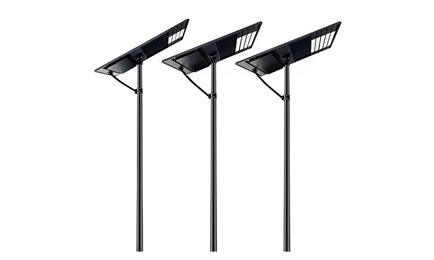
The final selection still depends on LED efficiency, pole spacing, installation height, and the required lighting level. A poorly distributed 40W light may not perform as well as a lower-wattage luminaire with suitable road optics.
60W to 80W Solar Street Lights
Medium-wattage systems are commonly used for roads and outdoor areas requiring a balance between illumination, system cost, and battery capacity.
A 60w solar street light may be considered for:
An 80W system may be more appropriate when the road is wider, the pole is higher, or longer spacing is required.
At this wattage level, battery and solar panel sizing become especially important. Operating a 60W or 80W luminaire at full power throughout the night requires considerably more stored energy than using a programmed dimming schedule.
Buyers should ask suppliers to show the operating mode clearly. For example, a system may operate at full output during early evening traffic hours and reduce power after midnight to extend battery autonomy.
100W to 120W Solar Street Lights
Higher-wattage systems are generally considered for demanding outdoor lighting projects, including:
Major municipal roads
Wide industrial roads
Large logistics yards
Highway access areas
Ports and transport facilities
Large public parking areas
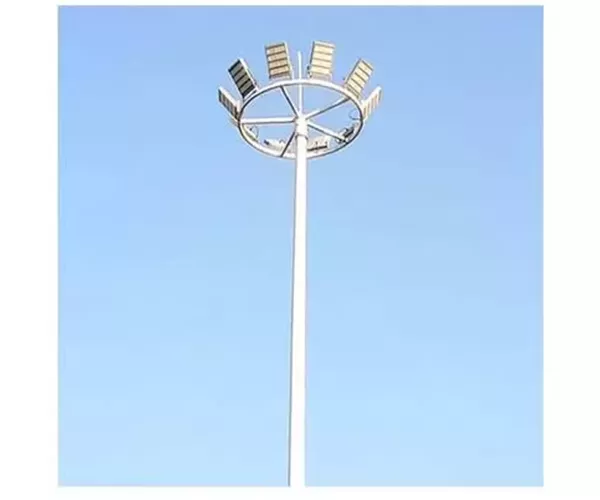
High-mounted roadway lighting
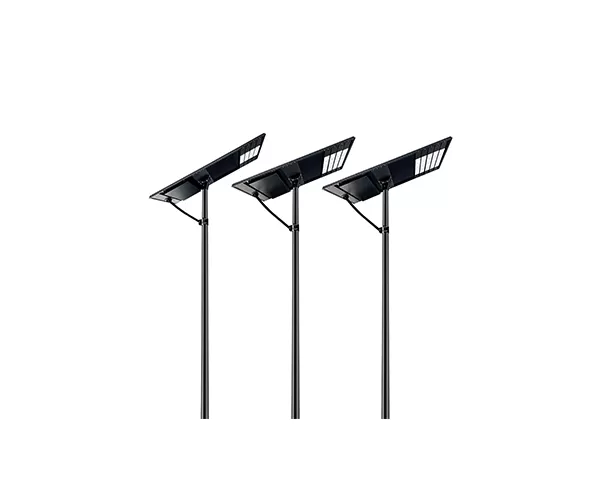
A 100w solar street light normally requires a larger solar panel and battery than a lower-wattage model when operating hours and backup requirements remain the same.
However, buyers should not automatically select 100W or 120W simply because the road is important. Excessive wattage can increase the battery, panel, pole, and transportation cost without necessarily improving lighting uniformity.
High-power projects should be supported by a photometric layout showing pole positions, mounting height, road width, average illuminance, minimum illuminance, and uniformity.
How Pole Height Affects Wattage Selection
Pole height affects both the illuminated area and the light intensity reaching the ground.
A higher pole can distribute light across a wider area, but the luminaire may require greater lumen output and appropriate optics. A lower pole concentrates the light over a smaller area but may require closer pole spacing.
A simplified project comparison may look like this:
| General Application | Common Pole Range | Possible Wattage Range |
|---|
| Pathways and gardens | 3–5 m | 20W–40W |
| Residential and village roads | 5–7 m | 30W–60W |
| Secondary roads and parking lots | 6–9 m | 60W–80W |
| Wide roads and industrial areas | 8–12 m | 80W–120W |
These ranges are only initial references. The correct configuration must be verified according to the project’s road dimensions, lighting targets, optics, and local standards.
How Sunlight Conditions Affect the System
The same LED wattage may require different solar panel and battery configurations in different countries.
A 60W system installed in a location with strong and stable solar irradiation may need a different design from a 60W system installed in an area with long winters, frequent clouds, or an extended rainy season.
The Global Solar Atlas can be used to review location-specific solar-resource information before system sizing.
Important design inputs include:
Peak sun hours
Seasonal solar variation
Shading from buildings or trees
Required operating hours
Number of rainy backup days
Battery depth of discharge
Solar panel installation angle
Buyers should provide the installation city or GPS coordinates when requesting a quotation.
Questions to Ask Before Selecting Wattage
Before confirming a solar street light model, provide the supplier with:
Road width and total project length
Pole height and expected pole spacing
Required illumination level
Operating hours per night
Full-power and dimming schedule
Required rainy-day autonomy
Installation location
Quantity and project type
Wind-load requirements
Pole and foundation requirements
The supplier should then recommend the LED wattage together with the matching solar panel, battery, controller, pole, and lighting mode.
FAQ
Is a Higher-Wattage Solar Street Light Always Brighter?
Not necessarily. Brightness also depends on lumen output, LED efficiency, optical design, and light distribution. Buyers should compare photometric performance rather than wattage alone.
Is 40W Enough for a Street?
It may be suitable for residential roads, village roads, access lanes, or narrow streets. Road width, pole height, spacing, and required illumination must be checked before selection.
What Wattage Is Suitable for a Parking Lot?
Small parking areas may use 40W or 60W systems, while larger commercial or industrial parking lots may require 60W to 100W. A lighting layout is recommended for determining pole positions and uniformity.
Does Higher Wattage Require a Larger Battery?
Generally, yes. When operating hours and dimming settings remain unchanged, a higher-power LED consumes more energy and normally requires greater battery and solar panel capacity.
Can Wattage Be Customized for a Project?
Yes. Solar street light systems can be configured according to road dimensions, solar conditions, operating schedules, battery autonomy, pole height, and project standards.
Conclusion
Solar street light wattage should be selected according to the required lighting result, not simply by choosing the largest available model. A complete evaluation should consider lumen output, pole height, road width, optics, operating hours, local solar resources, battery capacity, and rainy-day autonomy.
For an accurate project configuration, buyers should provide detailed installation and lighting requirements before requesting a quotation. Inbrit can support distributors, contractors, industrial buyers, and municipal projects with wattage selection, system configuration, pole matching, and lighting-layout assistance.

 English
 français
 Español
 العربية
 Pilipino
 ไทย
ไทย tiếng việt
 Malay
Malay русский