The solar street light price can vary significantly even when two products are advertised with the same LED wattage. One quotation may cover only the lighting fixture, while another may include the solar panel, lithium battery, controller, pole, mounting accessories, foundation components, transportation, and commissioning support.
For distributors, contractors, municipalities, and project developers, comparing prices only by wattage can therefore lead to an incorrect purchasing decision. A lower-priced system may use a smaller battery, an undersized solar panel, a lighter pole, or a simplified lighting program that cannot meet the actual operating requirements of the project.
A reliable price comparison should begin with the project location, road dimensions, required illumination, operating schedule, rainy-day autonomy, pole configuration, installation scope, and expected service life. These details allow suppliers to design comparable systems and provide quotations based on the same technical scope.
What Determines the Solar Street Light Price?
A solar street light is a complete energy generation, storage, control, and illumination system. Its price is mainly influenced by the following components:
LED luminaire power and luminous efficacy
Solar panel type, wattage, and conversion efficiency
Battery chemistry, voltage, and usable capacity
MPPT or PWM solar charge controller
Pole height, wall thickness, surface treatment, and arm design
Required operating hours and dimming schedule
Number of backup rainy days
Wind-load requirements
Foundation cage and mounting accessories
Packaging, shipping, installation, and commissioning
The LED wattage is only one part of the quotation. For example, two 60W systems may have different solar panel sizes and battery capacities because they are designed for different solar conditions, operating hours, or autonomy requirements.
The price may also change according to certification, warranty terms, customization, project quantity, spare-parts requirements, and documentation such as photometric reports, pole drawings, battery data sheets, and installation manuals.
How System Type Affects Solar Street Light Cost
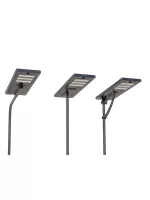
Solar street lights are commonly supplied in all-in-one, all-in-two, split, and hybrid configurations. Each structure has a different material scope, installation method, maintenance process, and price level.
All-in-One Solar Street Lights
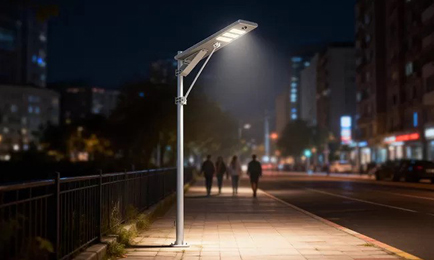
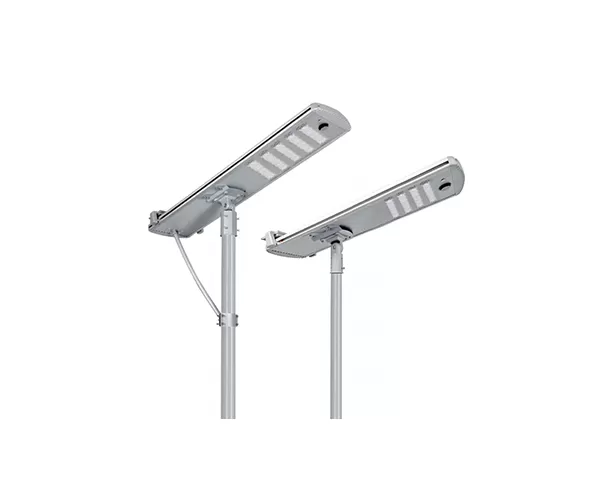
An all-in-one system integrates the LED luminaire, solar panel, battery, and controller into a compact unit. It usually requires less wiring and fewer separate mounting components, helping reduce installation time.
For distributors evaluating all in one solar street light wholesale options, the quotation should clearly state the battery capacity, solar panel wattage, lighting mode, mounting diameter, and recommended pole height. Compact construction does not automatically mean that every all-in-one product has the same performance.
All-in-one products are often suitable for residential roads, pathways, parks, campuses, villages, and projects requiring quick deployment.
All-in-Two Solar Street Lights
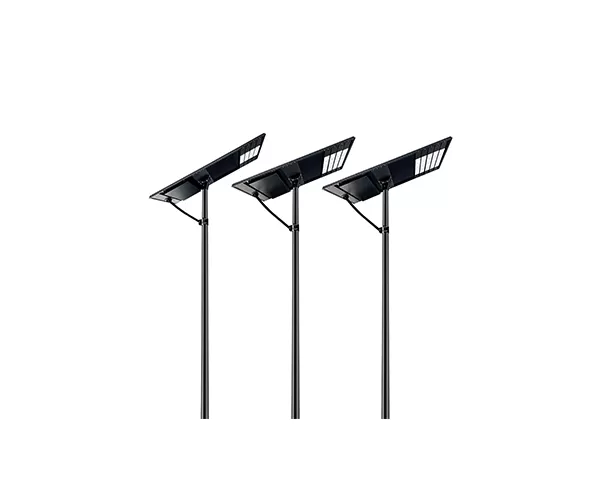
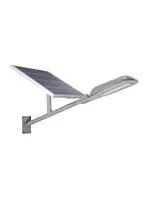
An all-in-two system normally combines the battery, controller, and LED luminaire while keeping the solar panel separate. The adjustable panel can be positioned for better sunlight exposure, while the integrated lighting body keeps installation simpler than a fully split system.
This structure can support larger panels and batteries than some compact all-in-one designs. It is commonly considered for public roads, industrial areas, parking lots, and projects requiring stronger illumination or longer operating time.
Split Solar Street Lights
A split system installs the solar panel, battery, controller, and luminaire as separate components. It provides greater flexibility for system sizing, solar panel orientation, battery placement, and component replacement.
However, the quotation may include more brackets, cables, enclosures, connectors, and installation work. Buyers should compare the complete bill of materials rather than assuming that a split light is automatically more or less expensive than an integrated model.
Hybrid Solar Street Lights
A hybrid system combines solar power with another energy source, such as the AC grid or wind power. A hybrid street light may have a higher initial cost because it requires additional power-management equipment, wiring, and control functions. The additional investment can be justified in locations where uninterrupted lighting is critical or where long rainy seasons make a fully off-grid design impractical. Typical applications include major roads, public facilities, industrial entrances, transport areas, and municipal projects with strict uptime requirements.
How Battery Capacity and Rainy-Day Autonomy Affect Price
The battery is one of the most important cost components in a solar street lighting system. Its required capacity depends on the LED load, operating hours, dimming schedule, system voltage, allowable depth of discharge, controller efficiency, and required backup days.
A light operating at full output for twelve hours every night requires considerably more stored energy than a system that reduces output after midnight or uses motion-based dimming.
Rainy-day autonomy also has a direct effect on price. A system designed for one backup night may use a smaller battery and solar panel than a system designed for three or five consecutive low-sunlight days.
Buyers should therefore ask suppliers to state:
Nominal battery capacity
Usable battery capacity
Battery chemistry
Expected depth of discharge
Designed operating hours
Dimming schedule
Backup autonomy under the stated load
A quotation listing only “lithium battery” without voltage, ampere-hours, watt-hours, or operating assumptions is not detailed enough for an accurate comparison.
Does Higher Wattage Always Mean a Higher Price?
Higher LED wattage usually increases the required battery and solar panel capacity, but wattage alone does not determine the final system cost.
A well-designed 40W luminaire with high luminous efficacy and suitable optical distribution may provide better road illumination than a poorly designed product marketed at a much higher wattage. Pole height, road width, pole spacing, mounting angle, and light distribution should be evaluated together.
The project location is equally important. The Global Solar Atlas provides solar-resource information that can help project teams assess the available photovoltaic potential at a proposed location. A site with lower solar irradiation may require a larger panel or a more conservative operating schedule than a site with strong and consistent sunlight.
For meaningful price comparisons, buyers should request photometric calculations or lighting layouts based on the actual road dimensions instead of selecting products according to advertised wattage alone.
How Poles, Foundations, and Installation Change the Total Price
Some suppliers quote only the solar lighting unit, while others provide a complete system that includes the pole and foundation accessories. This difference can create a large gap between quotations.
When reviewing a solar street light with pole price, confirm whether the following items are included:
| Cost Item | Details to Confirm |
|---|
| Street light pole | Height, material, wall thickness, and pole shape |
| Surface treatment | Hot-dip galvanizing, powder coating, or both |
| Lamp arm | Single arm, double arm, length, and angle |
| Solar panel bracket | Material, tilt angle, and wind-load design |
| Foundation cage | Anchor bolts, nuts, washers, and template |
| Installation | Civil work, lifting equipment, wiring, and testing |
| Transportation | Packing method, inland delivery, and international freight |
| Documentation | Pole drawing, foundation drawing, and installation guide |
Pole specifications must be matched to the installation environment. Coastal areas, high-wind regions, corrosive industrial zones, and locations with heavy solar panels may require stronger structural designs, which can increase the material and manufacturing cost.
Purchase Price vs Total Cost of Ownership
The lowest purchase price does not always represent the lowest project cost. Buyers should also consider installation labor, maintenance frequency, battery replacement, spare-part availability, warranty response, system downtime, and the cost of replacing incompatible components.
The U.S. Department of Energy recommends evaluating exterior lighting through life-cycle cost rather than initial purchase price alone. Its procurement guidance also notes that lighting controls can improve operating efficiency by adjusting lighting levels according to actual conditions.
Although solar street lighting has a different energy structure from grid-connected lighting, the same purchasing principle applies: the complete lifetime cost matters more than the fixture price alone. See the DOE exterior-lighting procurement guidance.
A slightly higher initial quotation may deliver better value when it includes a properly sized battery, efficient LEDs, durable pole treatment, replaceable components, technical documentation, and dependable project support.
Information Needed for an Accurate Solar Street Light Quotation
To receive comparable quotations, buyers should send each supplier the same project information:
Installation country, city, or GPS coordinates
Road type, width, and total project length
Required pole height and spacing
Target illumination or lighting standard
Operating hours per night
Full-power and dimming requirements
Required rainy-day autonomy
Installation environment and wind conditions
Quantity and delivery destination
Pole, foundation, and installation scope
Required certifications and warranty
Tender documents or technical specifications
Suppliers can then calculate the required luminaire, solar panel, battery, controller, pole, and mounting configuration. This produces a project-specific quotation that is more useful than a generic price based only on product wattage.
FAQ
What Is Included in a Typical Solar Street Light Price?
A basic quotation may include the LED luminaire, solar panel, battery, controller, and mounting brackets. Poles, foundation cages, freight, installation, and commissioning may be quoted separately. Buyers should always request a detailed bill of materials.
Why Do Two Solar Street Lights with the Same Wattage Have Different Prices?
They may use different battery capacities, solar panel sizes, LED efficiencies, controllers, housing materials, lighting programs, waterproof designs, and warranty terms. The system with the lower price may not provide the same operating hours or rainy-day autonomy.
Is an All-in-One Solar Street Light Cheaper Than a Split System?
It may have lower installation and wiring costs, but the final price depends on wattage, battery capacity, solar panel size, product construction, and project requirements. System type alone cannot determine which option is cheaper.
How Can Buyers Obtain an Accurate Project Quotation?
Provide the installation location, road dimensions, lighting requirements, pole height, operating schedule, backup days, quantity, delivery destination, and required accessories. The supplier should then provide a configured system proposal and itemized quotation.
Conclusion
A useful solar street light price comparison must cover the complete lighting system, not only LED wattage or fixture cost. Battery capacity, solar panel sizing, autonomy, pole specifications, controls, installation scope, shipping, warranty, and long-term maintenance all influence the final project budget.
Before placing an order, prepare a consistent technical scope and ask suppliers to quote against the same requirements. Inbrit can provide project-based solar street lighting configurations, product specifications, pole solutions, and itemized quotations for distributor, contractor, industrial, and municipal lighting projects.



 English
 français
 Español
 العربية
 Pilipino
 ไทย
ไทย tiếng việt
 Malay
Malay русский