IoT solar street light monitoring connects individual lighting systems to a central management platform. Instead of inspecting every light manually, authorized operators can review operating status, change lighting schedules, identify faults, and analyze system data remotely.
This technology is particularly useful for municipal roads, industrial parks, campuses, parking areas, and remote projects containing many lighting points. It can reduce unnecessary site inspections and help maintenance teams locate abnormal lights more efficiently.
However, IoT monitoring does not automatically improve lighting performance. The solar panel, battery, controller, LED luminaire, communication network, and management platform must be designed as one coordinated system.
What Is an IoT Solar Street Light?
An iot solar street light combines an off-grid solar lighting system with sensors, a communication module, and remote management software.
A typical system includes:
Solar panel
Lithium battery
MPPT solar controller
LED street light
Light or motion sensor
4G, LoRa, NB-IoT, or another communication module
Gateway where required
Cloud-based or locally hosted management platform
Inbrit’s smart lighting technology uses 4G or LoRa communication modules to support remote monitoring, control, alarm reporting, and operating-data analysis. The available functions depend on the selected controller and project configuration.

How IoT Solar Street Light Monitoring Works
An IoT lighting system generally has four main layers.
1. Field Equipment
The field equipment installed on or inside the street light collects operating data. This may include the solar controller, battery management system, LED driver, sensors, and communication module.
Each lighting point should have a unique identification number so that operators can locate and manage it through the platform.
2. Communication Network
The communication module transfers data between the street light and the central platform.
Common options include:
| Communication Method | General Application |
|---|
| 4G or cellular | Remote projects with mobile network coverage |
| LoRa or LoRaWAN | Large lighting networks requiring long-range, low-power communication |
| NB-IoT | Low-data-volume IoT applications using cellular infrastructure |
| Zigbee | Local mesh networks with relatively short distances |
| Wi-Fi | Projects with reliable existing network coverage |
| RS485 | Wired local control and equipment integration |
The best communication method depends on the number of lights, project area, terrain, signal coverage, data frequency, gateway requirements, and ongoing network costs.
3. Gateway and Server
Some systems send data directly through a cellular network. Others use a local gateway that collects information from multiple street lights before transmitting it to a server.
The management platform may be hosted in the cloud or installed on the buyer’s own server. Tender documents should state which option is required and who is responsible for hosting, software updates, cybersecurity, and data storage.
4. Central Management Platform
Authorized users access the central platform through a computer or mobile device. The platform presents the location, status, alarms, and operating data of connected lights.
The U.S. Department of Energy’s Model Specification for Networked Outdoor Lighting Control Systems separates a connected lighting system into central management software, communication networks, and field devices. It also recommends clearly defining commissioning, system requirements, and multi-vendor procurement responsibilities. Read the DOE model specification.
What Data Can Be Monitored?
The exact data depends on the controller, battery management system, sensors, and communication platform.
A smart solar street light may report:
LED on/off status
Current brightness level
Battery voltage
Estimated battery state of charge
Solar charging voltage and current
Daily energy generation
Nightly energy consumption
Controller temperature
LED or driver faults
Battery protection events
Communication status
Motion-sensor activity
Lighting operating hours
The platform should distinguish between measured values, estimated values, and configured settings. For example, battery state of charge may be calculated by the controller rather than measured directly.
Remote Control and Lighting Schedules
IoT monitoring can allow operators to change lighting schedules without visiting every pole.
Typical remote-control functions include:
Switching an individual light on or off
Adjusting brightness
Changing time-based dimming schedules
Activating holiday or event lighting modes
Grouping lights by road or project area
Setting low-battery protection modes
Updating controller parameters
Testing a light after maintenance
Remote commands should include authorization controls and an operating record. This helps project managers identify who changed a setting and when the change occurred.
The energy-management function should also coordinate with battery charging. The related article MPPT Controller for Solar Street Lights explains how the controller manages photovoltaic charging, battery protection, and nighttime operation.
Fault Detection and Maintenance Management
One of the main benefits of IoT monitoring is the ability to identify abnormal lighting points without waiting for a public complaint or manual inspection.
Possible alerts include:
LED luminaire failure
Battery undervoltage
Battery overtemperature
Abnormally low solar charging
Controller communication loss
Unexpected daytime lighting
Light failing to switch on
Excessive energy consumption
Sensor malfunction
The TALQ Consortium states that smart outdoor lighting systems can automatically identify and report lamp failures and other lighting or electrical issues. TALQ also provides an interface framework allowing central management software to control and monitor outdoor device networks from different suppliers. See TALQ’s smart outdoor lighting overview.
Fault alerts do not replace technical diagnosis. Maintenance teams still need clear procedures for checking the solar panel, battery, controller, wiring, LED driver, and communication equipment.
IoT Monitoring for Different Lighting Structures
IoT functions can be integrated into different solar street light designs.
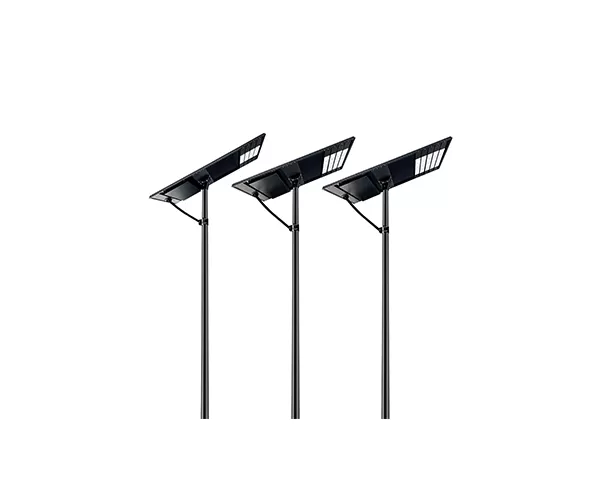
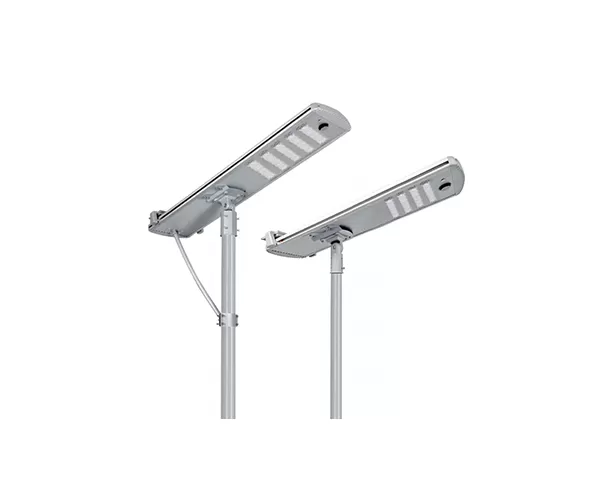
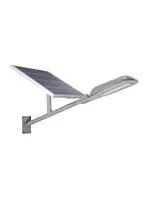
An all in one solar street light wholesale system can combine the panel, battery, LED module, and smart controller in one compact housing. This simplifies installation, although the communication module and antenna position must still provide reliable signal transmission. Inbrit’s OWL product specifications list MPPT IoT control as an available system option.
Split systems provide more flexibility for locating the battery, controller, panel, and communication equipment separately. However, they require more wiring and additional waterproof connections.
A smart light pole may also support communication devices, cameras, environmental sensors, information displays, or other smart-city equipment. Before adding these devices, engineers must verify pole loading, electrical interfaces, communication requirements, maintenance access, and local regulations.
What Buyers Should Check Before Ordering
A smart lighting quotation should clearly state what is included. Buyers should confirm:
Controller manufacturer and model
Communication method
Required gateway quantity
SIM card or network requirements
Cloud or local server arrangement
Platform account limits
Remote-control functions
Available monitoring data
Fault and alarm types
Data storage period
Software or subscription fees
Map and asset-management functions
User permission levels
Cybersecurity and password controls
Commissioning and training scope
Warranty and technical support
Buyers should also ask whether the system can export operating data and whether the platform can continue functioning if the original supplier changes its software or service arrangements.
Why Interoperability Matters
A city or contractor may purchase lighting equipment from more than one supplier over the life of a project. If every supplier requires a separate platform, management becomes more complicated.
Interoperability allows a central management platform to exchange data with compatible outdoor lighting networks and devices from different vendors.
The DOE model specification recommends separating requirements for central management software, communication networks, and field devices. TALQ similarly focuses on enabling one central management system to control and monitor heterogeneous outdoor device networks.
For public tenders, buyers should define interoperability, data ownership, API access, replacement-device compatibility, and long-term software support before selecting a supplier.
FAQ
Can IoT Solar Street Lights Be Monitored in Real Time?
Many systems can report operating data at scheduled intervals or after specific events. The update speed depends on the communication network, controller settings, and platform design.
Does Every Smart Solar Street Light Require a Gateway?
No. Cellular devices may communicate directly with a server, while LoRa or mesh networks commonly use one or more gateways to collect data from multiple lights.
Can Operators Adjust Brightness Remotely?
Yes, when remote control is supported by the controller and platform. Users may adjust individual lights, groups, schedules, or temporary lighting modes.
What Happens When Communication Is Lost?
The street light should continue operating according to its locally stored schedule. The platform may display a communication-loss alarm until the connection is restored.
Does IoT Monitoring Reduce Maintenance Costs?
It can reduce unnecessary inspections and help teams locate faults more efficiently. Actual savings depend on project size, network reliability, maintenance procedures, and software costs.
Conclusion
IoT solar street light monitoring connects field controllers, communication networks, and central management software to support remote control, operating-data collection, fault alerts, and maintenance planning.
A successful system requires more than adding a wireless module. Buyers should verify the communication method, controller functions, data platform, interoperability, cybersecurity, commissioning, and long-term service costs.
By defining these requirements before procurement, municipalities, contractors, and industrial buyers can build a smart lighting system that provides useful operational information instead of unnecessary technical complexity.




 English
 français
 Español
 العربية
 Pilipino
 ไทย
ไทย tiếng việt
 Malay
Malay русский