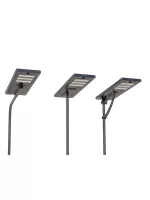
Solar street lights are generally available in all-in-one, all-in-two, and split configurations. Although all three systems use solar panels, batteries, controllers, and LED luminaires, the placement of these components affects installation, solar charging, battery capacity, maintenance, transportation, and project suitability.
There is no single structure that is best for every project. Buyers should select a system according to road width, pole height, required illumination, local sunlight, backup days, installation conditions, maintenance access, and project budget.
What Is an All-in-One Solar Street Light?
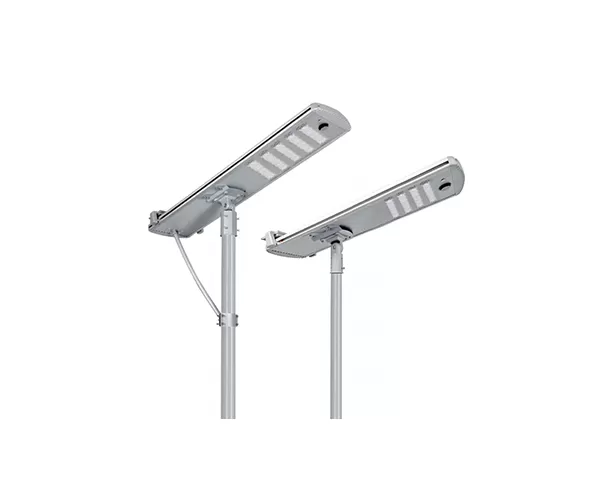
An all in one solar street light integrates the solar panel, lithium battery, controller, and LED luminaire into one compact lighting unit. This reduces the number of separate components installed on the pole.
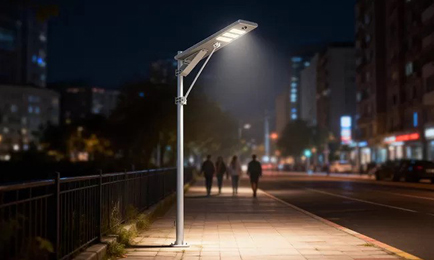
All-in-one systems are commonly used for roads, pathways, parking areas, campuses, residential communities, and industrial zones.
The integrated design offers several practical advantages:
Fewer separate components
Less external wiring
Faster on-site assembly
Compact packaging and transportation
Lower risk of exposed battery theft
Cleaner visual appearance
All-in-one systems are often suitable for projects requiring quick installation, particularly where trenching and grid connection are unavailable or unnecessary.
However, the solar panel angle and size may be limited by the integrated structure. Buyers should check whether the panel can receive sufficient sunlight at the project location and whether the battery can support the required operating hours and rainy-day autonomy.
What Is an All-in-Two Solar Street Light?
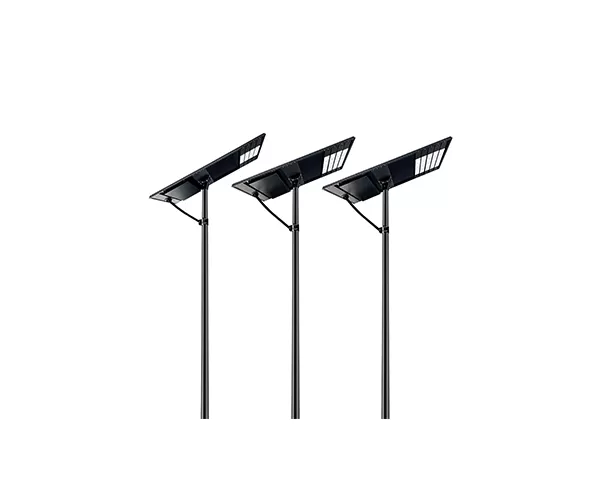
An all in two solar street light normally separates the solar panel from the lighting body while integrating the battery, controller, and LED luminaire together.
Because the panel is installed independently, contractors can adjust its direction and angle to improve sunlight exposure. This is useful where road direction, surrounding buildings, trees, or pole position make an integrated panel less effective.

The main advantages of an all-in-two system include:
Flexible solar panel orientation
Reduced shading restrictions
Larger panel options
Battery protected inside the luminaire
Less wiring than a fully split system
Good balance between integration and flexibility
An all-in-two system can be a practical middle option when an all-in-one light is too limited but a fully split system is more complex than the project requires.
What Is a Split Solar Street Light?
A split solar street light installs the solar panel, battery, controller, and LED luminaire as separate components.
This structure gives project designers greater freedom to select the size and installation position of each component. A larger solar panel can be mounted at the most suitable angle, while the battery can be installed in a separate box, underground enclosure, or another project-specific position.
Split systems are generally used for projects requiring flexible configurations, larger batteries, high-output lighting, or complex installation arrangements.
Typical applications include:
Highways
Ports
Logistics areas
Industrial zones
Mining areas
Large parking facilities
The main advantages include:
Maximum system-sizing flexibility
Independent solar panel positioning
Larger battery capacity
Easier individual component replacement
Support for higher-output luminaires
Adaptability to complex road conditions
The trade-off is that a split system requires more mounting components, cables, connectors, and installation work. Exposed batteries or controller boxes may also require additional anti-theft and waterproof protection.
All-in-One vs All-in-Two vs Split Solar Street Light Comparison
| Comparison Item | All-in-One | All-in-Two | Split |
|---|
| Solar panel | Integrated with light | Installed separately | Installed separately |
| Battery | Integrated | Integrated with luminaire | Installed separately |
| Controller | Integrated | Integrated | Usually separate |
| Installation | Simplest | Moderate | More complex |
| External wiring | Minimal | Limited | More wiring required |
| Panel orientation | Less flexible | Flexible | Most flexible |
| Battery capacity | Generally more limited | Medium to large | Highly configurable |
| Maintenance | Replace integrated modules | Moderate accessibility | Individual components accessible |
| Transportation | Compact | Moderate | More separate packages |
| Typical applications | Paths, communities, rural roads | Public roads, factories, parking areas | Highways, ports, large industrial projects |
This comparison should be used as an initial reference. Actual product performance depends on component quality, system sizing, lighting design, environmental protection, and installation quality.
Which System Is Easier to Install?
All-in-one solar street lights normally require the least installation work because most components arrive as one assembled unit.
Installers mainly need to mount the light on the pole, adjust the unit, and complete commissioning.
All-in-two systems require a separate panel bracket and cable connection between the panel and luminaire. Installation remains relatively straightforward, but the panel direction and tilt angle must be checked carefully.
Split systems require the most site work because the panel, battery, luminaire, and controller may all have separate mounting positions.
For large projects, installation cost should be included in the total cost comparison rather than evaluating the equipment price alone.
Which System Offers Better Solar Charging?
Solar charging performance depends on panel wattage, conversion efficiency, orientation, shading, temperature, local solar resources, and controller efficiency.
All-in-two and split systems provide more flexibility because their solar panels can be positioned independently of the luminaire.
This can be important when the lighting arm must face the road but the optimal solar direction is different.
An all-in-one product can still provide reliable charging when the installation location has good sunlight and the panel angle is suitable. Buyers should verify the project location before selecting the final structure.
Which System Is Better for High-Power Projects?
Split systems generally offer the greatest flexibility for high-power projects because larger panels and batteries can be installed separately.
This makes them suitable for wide roads, large industrial areas, ports, logistics yards, and projects requiring long operating hours.
All-in-two systems can also support relatively large panels and batteries while reducing the installation complexity of a fully split design.
All-in-one systems are more compact, but buyers should check the actual battery watt-hours, panel wattage, LED efficacy, and lighting program rather than relying only on advertised LED power.
The U.S. Department of Energy defines luminaire efficacy as the ratio of light output to electrical input, measured in lumens per watt. Higher efficacy means more usable light is produced from the same electrical power. See the DOE exterior-lighting procurement guidance.
Which Solar Street Light Structure Should You Select?
Choose an All-in-One System When:
Installation speed is a priority
The project uses moderate lighting power
The site has good solar exposure
Minimal wiring is preferred
The lights are used for paths, communities, campuses, or rural roads
Choose an All-in-Two System When:
The solar panel requires independent orientation
Trees or buildings may cause shading
A larger panel or battery is needed
The project requires a balance between flexibility and simple installation
The application includes public roads, parking areas, or industrial facilities
Choose a Split System When:
High illumination output is required
The system needs a large battery
Several rainy backup days are required
Components must be individually replaceable
The project includes highways, ports, mining areas, or large industrial roads
What Buyers Should Compare Before Ordering
LED rated power and lumen output
Luminaire efficacy
Solar panel wattage
Battery voltage and watt-hour capacity
Battery chemistry and usable depth of discharge
Controller type and protection functions
Operating and dimming schedule
Designed rainy-day autonomy
Pole height and spacing
Waterproof and corrosion-protection design
Warranty scope
Installation and maintenance requirements
Suppliers should quote systems based on the same road dimensions, operating hours, solar conditions, and lighting targets.
FAQ
Is an All-in-One Solar Street Light Better Than a Split Solar Street Light?
It is better for projects prioritizing compact construction and simple installation. A split system is usually more suitable when larger batteries, flexible panel placement, or high-output lighting is required.
What Is the Main Difference Between All-in-One and All-in-Two Solar Street Lights?
An all-in-one light integrates the solar panel with the luminaire, while an all-in-two system installs the panel separately and integrates the battery with the lighting body.
Which Solar Street Light Is Easiest to Maintain?
Split systems allow individual components to be accessed and replaced separately. All-in-one systems have fewer external components, but maintenance may involve replacing an integrated module.
Which Structure Is Suitable for Areas with Limited Sunlight?
All-in-two or split systems may be more suitable because the solar panel can be independently positioned and enlarged. The battery and panel must still be calculated according to local solar conditions.
Are Split Solar Street Lights Always More Expensive?
Not always. They may involve more components and installation work, but final cost depends on system power, battery capacity, panel size, pole specifications, project quantity, and installation scope.
Conclusion
All-in-one, all-in-two, and split solar street lights differ mainly in component arrangement, installation complexity, panel flexibility, battery capacity, and maintenance requirements.
All-in-one systems support fast and compact installation, all-in-two systems balance integration with flexible solar charging, and split systems provide the greatest freedom for high-power or complex projects.
Buyers should make the final decision according to road conditions, lighting targets, local sunlight, backup requirements, installation cost, and long-term maintenance.




 English
 français
 Español
 العربية
 Pilipino
 ไทย
ไทย tiếng việt
 Malay
Malay русский