A 25-meter high mast pole is not simply an oversized street light pole. It is a large structural lighting system that must coordinate the pole body, lifting mechanism, luminaire mounting structure and project-specific engineering requirements.
Inside Inbrit’s workshop, 25m high mast poles are manufactured and prepared for real outdoor lighting projects.
The factory photos below show actual pole sections, structural assemblies and lifting-system components—not showroom samples. They provide a closer look at the scale and manufacturing details behind a complete high mast lighting system.

What Is a 25m High Mast Pole?
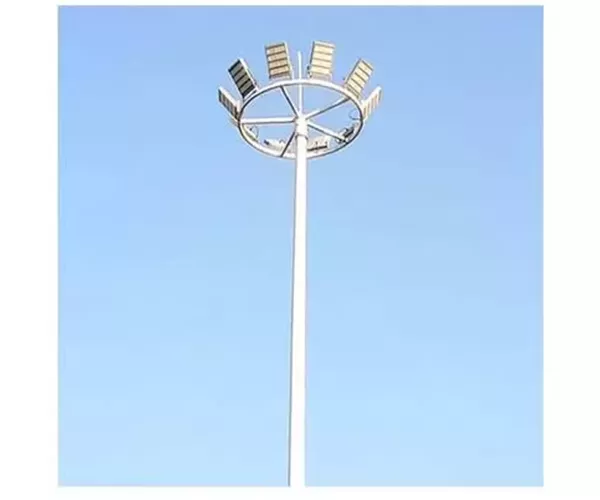
A 25m high mast pole is a tall lighting structure designed to mount multiple luminaires at an elevated height for large-area illumination.
Inbrit’s published high mast pole range includes heights from 15m to 40m, including a standard 25m configuration. The 25m specification supports different wall-thickness combinations and can be supplied with a lifting system for maintenance access.
Typical high mast applications include:
Ports and docks
Airports
Sports fields
Large squares
Highway service areas
Large industrial sites
Major intersections
These applications require lighting to cover a much larger area than a conventional street light pole can normally serve. High mast systems are often selected for large-scale outdoor lighting applications where elevated mounting and broad-area coverage are required.
25m High Mast Pole Specifications
According to Inbrit’s current published product specifications, a 25m high mast pole can be configured with the following parameters:
| Item | Published 25m Configuration |
| Height | 25 meters |
| Upper / Lower Diameter | 240–550 mm |
| Pole Thickness | 6-6-8 / 6-8-8 / 6-8-10 mm |
| Flange | 900 × 900 × 25 mm |
| Lifting System | Available |
| Recommended Drive System | Small / Mid system depending on configuration |
Inbrit also lists a 25m recommended configuration with a 240–500 mm diameter range and an 800 × 800 × 25 mm flange. Final dimensions should follow the approved project specification rather than treating one published configuration as universal.
Need more technical information? Download Inbrit product catalogs and specifications.
Large Structural Components Require Project-Level Manufacturing
The factory photos illustrate the physical scale of a 25m high mast system.
Unlike a standard street light pole, a high mast typically consists of multiple large pole sections and additional structural components that must work together after assembly.
The images show:

Pole Sections and Base Flange Construction
One of the most visible features in these workshop photos is the size of the pole sections and base assemblies.
The pole body uses a tapered polygonal structure, while large flange plates form part of the lower connection and installation system.
For a high mast project, the pole body and base configuration must be coordinated with the approved structural design, foundation and project environment.

High Mast Lifting System Components
One of the key differences between a high mast pole and a conventional lighting pole is the use of a lifting and lowering system.
Inbrit’s current product page states that its high mast poles can use automatic lifting and lowering systems to make luminaire maintenance easier. For 15–25m poles, the published drive-system table lists a small system with a weight capacity of 350 kg and 0.75 kW motor power; higher configurations may use different systems.
The lifting system allows the luminaire ring or lighting assembly to be lowered from the top of the mast to a more accessible working height.
This can reduce the need to perform every maintenance operation directly at the top of a 25-meter structure.

From Pole Fabrication to Surface Treatment
Inbrit’s published manufacturing process for high mast poles includes several stages:
Forming and Rolling → Submerged Arc Welding → Grinding → Hot-Dip Galvanizing → Powder Coating → Inspection
The current product page describes the poles as being produced from steel plates that are molded and rolled, then welded and finished for outdoor use. It also identifies hot-dip galvanizing combined with powder coating as part of the surface-finishing system.
These processes help transform fabricated steel sections into finished pole components ready for assembly and project use.

Why Real Factory Evidence Matters to Project Buyers
For B2B buyers, evaluating a high mast pole supplier should involve more than looking at a finished rendering or product brochure.
Factory evidence can help buyers understand whether the supplier is handling real structural components and project-scale production.
The photos in this article show actual high mast sections, large flanges, lifting frames and finished components inside the production workshop.
This gives project buyers a clearer view of the manufacturing reality behind the product before installation.

Where Are 25m High Mast Poles Commonly Used?
A 25m mast is generally selected when a project needs to illuminate a broad outdoor area from fewer elevated lighting points.
Potential applications can include:
container yards;
seaport areas;
airport aprons;
logistics hubs;
sports fields;
large parking areas;
industrial zones;
large intersections.
The final mast height and luminaire arrangement should be determined according to the site layout, target lighting performance and structural requirements.
Inbrit’s published high mast pole page lists large squares, sports facilities, airports, highway service areas and city intersections among typical application scenarios.
How Should a 25m High Mast Pole Be Specified?
A high mast project should not begin with the pole height alone.
Project buyers should normally provide information such as:
project location;
mast height;
required luminaire quantity;
luminaire power;
lifting-system requirement;
site layout;
foundation or structural drawings;
environmental conditions;
wind-load requirement;
required finish;
applicable project standards.
The pole, lifting system, luminaire ring and foundation should then be coordinated as one project system.
Frequently Asked Questions About 25m High Mast Poles
What is the standard height of the high mast shown in this factory project?
The high mast featured in this factory production content is 25 meters tall.
Does a 25m high mast pole use a lifting system?
Inbrit offers high mast poles with lifting systems. The lifting mechanism allows the lighting assembly to be lowered for inspection or maintenance. The exact system configuration depends on the mast and project requirements.
What thickness is used for a 25m high mast pole?
Inbrit’s published 25m high mast specifications list several thickness combinations, including 6-6-8 mm, 6-8-8 mm and 6-8-10 mm. The final configuration should follow the approved structural design for the project.
Are Inbrit high mast poles galvanized?
Inbrit’s current product information states that its high mast poles use hot-dip galvanizing combined with powder coating as part of the finishing process. The exact surface-treatment specification for an individual project should be confirmed in the applicable technical documentation.
Where can 25m high mast lighting be used?
25m high mast lighting can be considered for large outdoor spaces such as ports, airports, sports areas, industrial sites, logistics yards and large intersections. Final selection depends on the required illuminated area and engineering conditions.
Looking for a 25m High Mast Lighting Solution?
Every high mast project has different structural, lighting and installation requirements.
If you are planning a 25m high mast lighting project, send Inbrit your drawings, mast height, luminaire requirements and site information for project evaluation.
Discuss Your High Mast Project
Send us your mast height, site drawings, fixture configuration and project requirements to discuss a suitable high mast lighting solution.
Explore Inbrit High Mast Poles

 English
 français
 Español
 العربية
 Pilipino
 ไทย
ไทย tiếng việt
 Malay
Malay русский