Choosing the right solar street light wattage is one of the most important decisions in an outdoor lighting project. If the wattage is too low, the road or public area may not be bright enough. If the wattage is too high, the system may require a larger battery, larger solar panel, stronger pole, and higher project budget. For buyers comparing a 20w solar street light, 30w solar street light, 40w solar street light, 60w solar street light, 80w solar street light, and 100w solar street light, the best choice depends on road width, pole height, lighting hours, application type, and local sunlight conditions.
Many buyers assume that higher wattage always means a better product. In reality, solar street lighting must balance brightness and energy consumption. A properly designed 40W system may perform better than a poorly configured 80W system. LED efficiency, optical lens design, battery capacity, solar panel size, and controller settings all affect the final result.
This guide explains how different wattage levels are commonly used and how project owners can choose the right configuration for roads, gardens, parking areas, public spaces, and commercial outdoor projects.
Why Wattage Matters in Solar Street Lighting
Wattage indicates how much power the LED fixture consumes. In general, higher wattage can produce higher brightness, but it also consumes more energy. Because solar street lights depend on stored battery power at night, wattage directly affects battery size and solar panel requirements.
For example, a 100w solar street light needs much more energy than a 20w solar street light if both operate for the same number of hours. This means the 100W system requires a larger battery and stronger solar charging capacity. If the solar panel and battery are not properly matched, a high-wattage lamp may not work reliably through cloudy days.
Therefore, wattage selection should not be separated from the full system design. The right wattage is the one that provides enough illumination while maintaining stable operation.
20W Solar Street Light: Small Roads and Basic Area Lighting
A 20w solar street light is usually suitable for small-scale lighting applications. It can be used for garden paths, walkways, small residential lanes, courtyards, farm roads, and low-traffic areas. Its biggest advantage is low power consumption, which makes it easier to support with a smaller solar panel and battery.
Because the energy demand is lower, a 20W system can be more cost-effective for simple lighting needs. It is also easier to install on lower poles. However, it is not suitable for wide roads, high-traffic streets, or areas requiring strong brightness.
Best for pathways, gardens, courtyards, and small rural roads.
Usually suitable for lower pole heights.
Lower system cost and lower battery demand.
Not recommended for main roads or large public areas.
30W Solar Street Light: A Flexible Entry-Level Option
A 30w solar street light provides a step up from 20W and can be used for slightly wider paths, residential roads, small parking areas, and community spaces. It offers better brightness while still keeping energy consumption relatively low.
For projects that need more visibility than garden lighting but do not require high-intensity road lighting, 30W can be a balanced option. It is often used where moderate brightness and cost control are both important.
Buyers should still check the battery capacity and lighting schedule. If the light needs to operate all night at high brightness, the system should be sized carefully.
40W Solar Street Light: Residential and Community Roads
A 40w solar street light is commonly used for residential roads, village streets, community lanes, small public areas, and secondary paths. It provides stronger illumination than 20W or 30W models while remaining energy-efficient.
This wattage level is often a practical choice for projects that need reliable road visibility without the cost of higher-wattage systems. When combined with good optics and proper pole spacing, a 40W light can deliver comfortable illumination for many low-to-medium traffic areas.
Suitable for community streets and village roads.
Good balance between brightness and energy saving.
Works well with moderate pole heights.
Requires proper solar panel and battery matching for rainy seasons.
60W Solar Street Light: Medium-Duty Road and Public Lighting
A 60w led street light is one of the most widely used options for medium-duty outdoor lighting. It can support wider roads, parking lots, factory areas, school roads, public spaces, and commercial outdoor areas. Compared with 40W, it provides higher brightness and better coverage when properly installed.
For many road lighting projects, 60W is a practical middle point. It is strong enough for many public applications but does not consume as much energy as 80W or 100W systems. This makes it easier to balance brightness, cost, and battery backup time.
However, a 60W system must be designed carefully for rainy or cloudy regions. The solar panel and battery should be large enough to support the expected lighting hours and backup days.
80W Solar Street Light: Wider Roads and Higher Brightness Needs
An 80w solar street light is suitable for wider roads, larger parking areas, industrial roads, logistics yards, and sites that require stronger illumination. It can provide higher brightness and broader coverage than 60W, especially when used with suitable pole height and optical design.
Because energy consumption is higher, the battery and solar panel configuration becomes more important. If the project is located in an area with frequent cloudy weather, the system may need a larger battery or smart dimming strategy to maintain reliable operation.
For commercial and industrial projects, 80W can be a strong option when safety, visibility, and area coverage are important.
100W Solar Street Light: Main Roads and Large Outdoor Areas
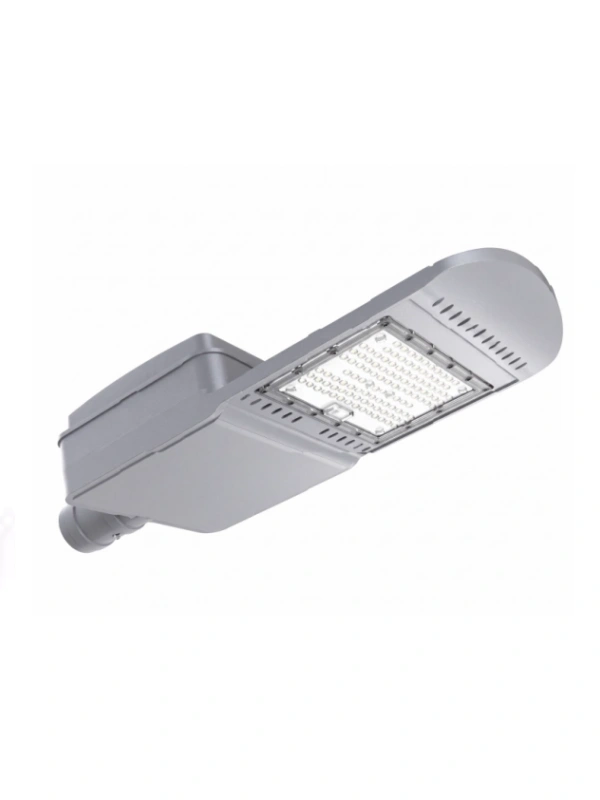
A 100w solar street light is designed for higher brightness applications. It can be used for main roads, large factory zones, wide parking lots, public squares, logistics centers, and security-sensitive areas. This wattage level is suitable when the project requires strong illumination and wider coverage.
However, higher wattage also means higher system requirements. A 100W light needs a larger solar panel, larger battery, stronger controller, and sometimes a taller or stronger pole. If the system is not properly configured, the light may be bright at first but fail to maintain performance through long nights or rainy seasons.
For this reason, a 100W system should be selected based on project lighting standards and site conditions, not only the desire for maximum brightness.
How to Compare Different Wattage Options
When comparing solar street light wattage, buyers should consider the full project environment. The same wattage can perform differently depending on LED quality, pole height, lens design, road width, and installation spacing. Buyers evaluating all in one solar street light wholesale options should also confirm that the integrated solar panel and battery configuration matches the selected LED wattage.
Use 20W for paths, gardens, and very small roads.
Use 30W for small community areas and low-traffic residential lighting.
Use 40W for village streets and community roads.
Use 60W for medium roads, parking lots, and public areas.
Use 80W for wider roads and industrial outdoor spaces.
Use 100W for main roads, large areas, and high-brightness applications.
These are general references. For professional projects, lighting simulation and technical configuration are recommended to ensure the final design meets visibility and safety requirements.
Other Factors Besides Wattage
Wattage is important, but it should not be the only selection factor. A high-quality solar street light system depends on multiple components working together. For sites with an existing and reliable electricity supply, buyers may also compare the solar configuration with an ac led street light based on installation conditions and long-term operating requirements.
LED efficiency affects actual brightness.
Optical lens design affects light distribution.
Battery capacity affects working hours and backup days.
Solar panel size affects charging performance.
Controller quality affects energy management and system protection.
Pole height and spacing affect lighting uniformity.
Local sunlight conditions affect long-term reliability.
A lower-wattage lamp with good optical design may provide better road visibility than a higher-wattage lamp with poor light distribution. This is why buyers should request complete technical data instead of comparing wattage alone.
Conclusion
Selecting the right wattage for solar street lighting requires a balance between brightness, energy consumption, installation cost, and project conditions. A 20w solar street light is suitable for small paths and basic lighting. A 30w solar street light can serve small community areas. A 40w solar street light is practical for residential and village roads. A 60w solar street light works well for medium-duty public lighting. An 80w solar street light is suitable for wider roads and industrial spaces. A 100w solar street light is best used for high-brightness applications such as main roads and large outdoor areas.
For contractors, distributors, and project owners, the best choice is not always the highest wattage. The right system should match the road width, pole height, lighting hours, battery backup needs, and local solar conditions. With proper configuration, solar street lights can deliver reliable, energy-saving, and cost-effective illumination for a wide range of outdoor projects.

 English
 français
 Español
 العربية
 Pilipino
 ไทย
ไทย tiếng việt
 Malay
Malay русский