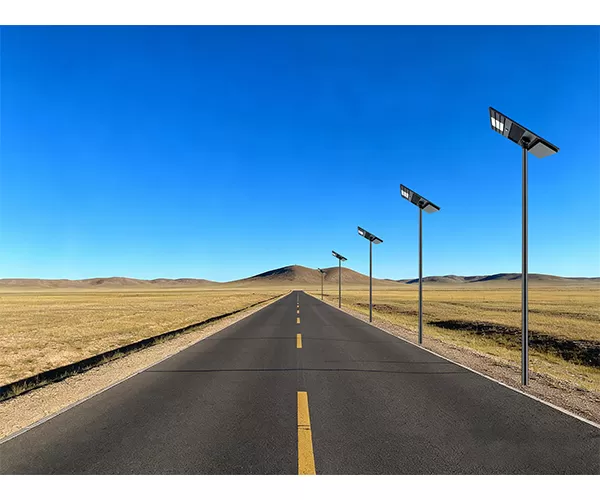
Introduction: When Solar Street Lights Fail in Extreme Heat
In regions such as Saudi Arabia, the UAE, Qatar, and North Africa, summer surface temperatures frequently exceed 50°C. For solar lighting projects deployed in highways, industrial zones, and municipal roads, this is not an exception—it is the operating baseline.
However, standard solar street lights are rarely engineered for such conditions. Within months of deployment, contractors often face:
rapid battery capacity degradation
system shutdown during peak heat hours
unexpected maintenance visits and replacement costs
For EPC contractors, the real risk is not just technical failure—it is project acceptance failure and delayed milestone payments.
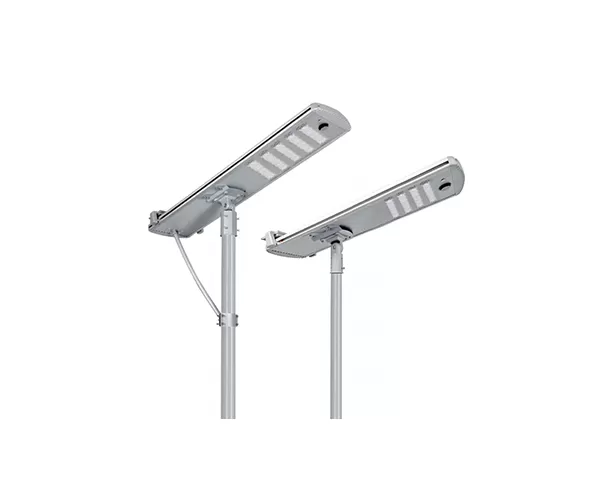
This article explains how properly engineered standalone solar street lights for high temperatures are designed, tested, and validated to survive extreme desert environments.
The Twin Threats in MENA Projects: Extreme Heat and Sandstorms
1. Thermal Stress and Battery Degradation
Lithium batteries operate within a defined thermal window. Once internal temperature exceeds safe thresholds, chemical stability declines rapidly, resulting in:
In desert climates, enclosure temperatures can exceed ambient levels by 15–25°C due to solar radiation buildup.
2. Sand Intrusion and Internal Short-Circuit Risks
Even when evaluating an ip65 solar street light, buyers should verify the actual housing structure, gasket quality, and sealing process. Fine desert sand is not just an external contamination issue. Under wind pressure, particles can penetrate poorly sealed housings.
When combined with nighttime condensation cycles, this leads to:
PCB corrosion
connector oxidation
internal short circuits
Beating the Heat: Our High-Performance Battery Testing System
Reliable solar lighting systems begin with validated battery performance. For a lithium battery solar street light, battery testing is especially important because prolonged exposure to high temperatures can affect capacity, discharge stability, and service life.
Our factory uses a high-performance battery testing system designed for extreme climate simulation. It enables full lifecycle evaluation of lithium battery packs under controlled stress conditions.
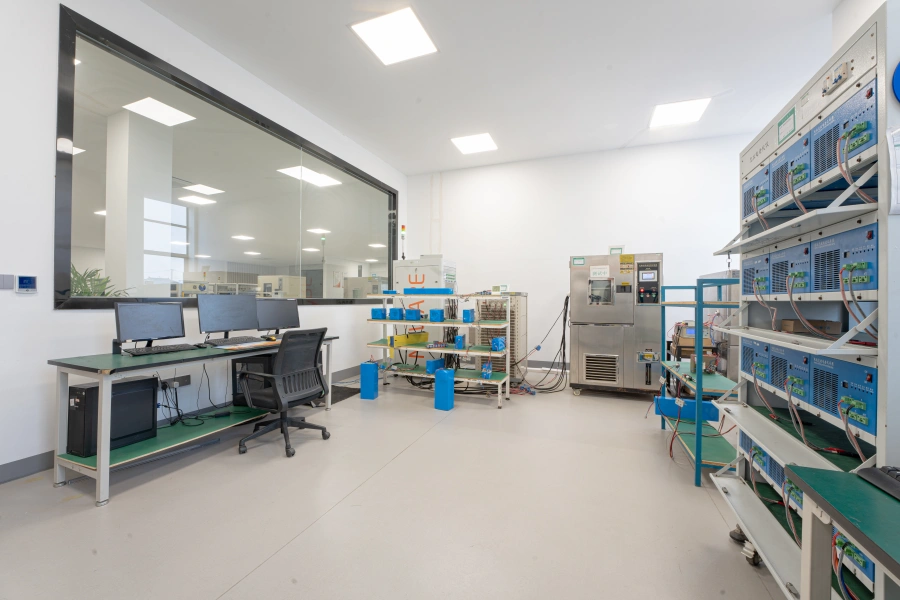
Key Testing Capabilities include:
High-temperature charge/discharge cycling simulation
Real-time voltage and internal resistance monitoring
Load fluctuation stress testing
Capacity decay tracking under continuous thermal exposure
This ensures that every battery pack deployed in off-grid solar lights for UAE and Saudi Arabia projects maintains stable output even under sustained thermal stress.
Zero-Tolerance Quality Control: Inside Our Failure Case Protocol
In most manufacturing environments, defect analysis is hidden. In our system, it is mandatory.
We operate a Failure Case Protocol, where any deviation is documented, analyzed, and permanently excluded from production release.
Critical Defects We Reject Without Exception:
High-temperature environments accelerate chemical leakage risks, which can trigger cascading failures.
Water ingress in battery pack
Leads to corrosion and unstable discharge behavior.
This strict filtering ensures only heat-stable units qualify for shipment.
Why Heat Resistant Solar Street Light Suppliers Win Tenders
Government and EPC tenders in the Middle East and Africa are increasingly focused on lifecycle reliability rather than upfront cost. Contractors comparing all in one solar street light wholesale solutions should therefore evaluate battery testing, thermal management, sealing performance, and climate-specific engineering before making a procurement decision.
Manufacturing and Compliance Strength
Our production system operates under:
ISO9001 Quality Management System
ISO14001 Environmental Management System
40,000 m² industrial manufacturing facility
This ensures compliance with strict municipal procurement requirements in Saudi Arabia, UAE, and other GCC countries.
Lower Total Cost of Ownership (TCO)
Heat-resistant solar street lighting systems significantly reduce:
Over a 5–10 year project lifecycle, this directly improves contractor margins and tender competitiveness.
Conclusion: Engineering Reliability for Extreme Environments
Solar lighting in 50°C climates is not a standard product application—it is an engineering challenge.
Only systems built with validated battery testing, strict QC protocols, and climate-specific design can ensure long-term stability.
Call to Action
Are you bidding for a solar street light project in the Middle East or Africa?
If you are sourcingstandalone solar street lights for high temperatures, contact us for:
High-Temperature Specification Sheet
Project-based engineering support
Customized OEM/ODM pricing
Contact us today to secure reliable lighting performance in extreme desert conditions.

 English
 français
 Español
 العربية
 Pilipino
 ไทย
ไทย tiếng việt
 Malay
Malay русский