Modern outdoor lighting projects are no longer limited to a single solar street light configuration. Municipal authorities, EPC contractors, developers, distributors, and infrastructure planners can choose from all-in-one, all-in-two, split solar, AC-powered, hybrid, and smart lighting architectures. Each configuration combines energy generation, storage, lighting, control, and structural components in a different way.
The most suitable architecture depends on much more than LED wattage. Road width, pole height, local solar conditions, required operating hours, grid availability, maintenance strategy, project scale, autonomy requirements, and remote management needs can all affect system selection.
Understanding the differences between these architectures helps buyers move beyond simple price comparisons and evaluate which system structure is actually suitable for a specific road, parking area, industrial facility, municipality, or infrastructure project.
What Is Included in a Complete Solar Street Lighting System?
A complete solar street lighting system normally consists of an LED luminaire, photovoltaic module, rechargeable battery, solar charge controller, pole, mounting structure, cables, connectors, and operating controls. Depending on the product architecture, these components may be integrated into one housing or installed separately.
The solar panel generates electricity during daylight hours. The battery stores energy for nighttime operation, while the controller manages charging, discharging, lighting schedules, and battery protection. The LED luminaire converts stored electrical energy into useful illumination for roads and outdoor spaces.
In more advanced systems, additional functions may include motion sensing, scheduled dimming, remote monitoring, fault detection, energy management, and wireless communication.
For buyers comparing different solar street lighting systems, system architecture should therefore be considered an engineering decision rather than simply a difference in product appearance.

All-in-One Solar Street Lights Simplify Installation
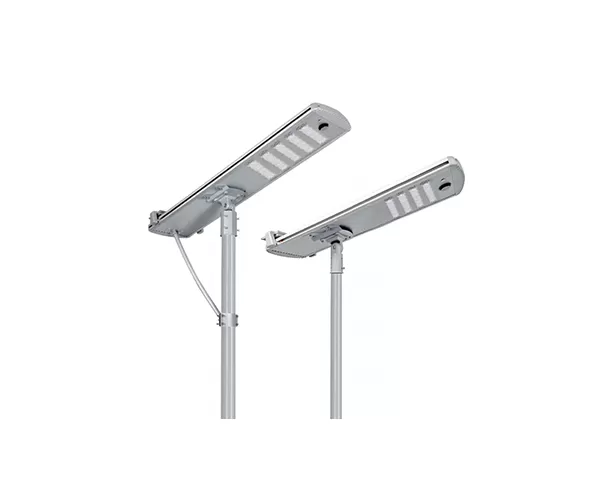
All-in-one solar street lights integrate the main lighting and energy components into a compact structure. The solar panel, LED luminaire, battery, and controller are designed to operate together as one coordinated unit.
One of the main advantages of this architecture is simplified installation. Because most components are integrated before delivery, fewer parts need to be mounted and wired at the project site. This can reduce installation time and make large-scale deployment more efficient.
All-in-one systems are commonly considered for residential streets, pathways, parks, campuses, secondary roads, parking areas, and other projects where compact design and installation efficiency are important.
However, the integrated structure can place practical limits on solar panel size and battery capacity. If a project requires very long backup autonomy, unusually high lamp output, or a large photovoltaic module, another architecture may provide more configuration flexibility.
Buyers should therefore evaluate the relationship between lamp power, battery storage, solar panel capacity, and local solar conditions rather than selecting an integrated lamp only because installation appears simpler.
All-in-Two Systems Balance Integration and Flexibility
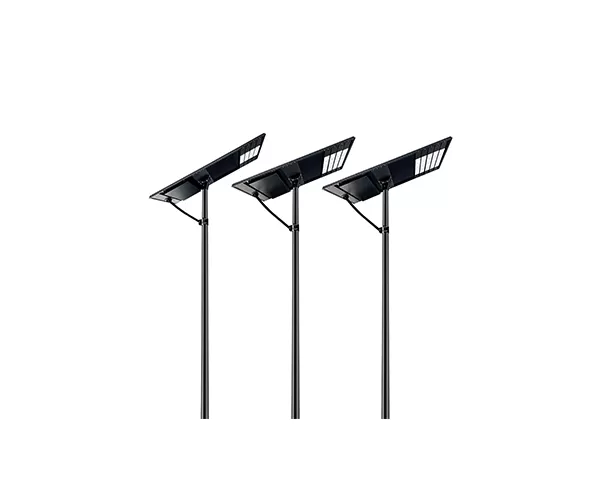
An all-in-two solar street light typically separates the solar panel from the lighting assembly while keeping major components such as the battery and controller integrated with the luminaire.
This arrangement allows the solar panel to be positioned independently from the direction of the lamp. The panel angle and orientation can therefore be optimized according to solar exposure without significantly affecting the required road-lighting direction.
This can be particularly useful when the road runs in a direction that is not ideal for solar collection. It may also help when nearby buildings, trees, or other structures create partial shading around the installation area.
Compared with a fully split system, all-in-two architecture still reduces the number of separate components installed on the pole or at ground level. It can therefore provide a useful compromise between compact design and photovoltaic flexibility.
This configuration may suit municipal roads, industrial parks, commercial areas, parking facilities, and other projects where solar panel orientation needs more flexibility than a fully integrated product can provide.
Split Solar Street Lights Provide Greater Engineering Freedom
In a split solar street light, the luminaire, photovoltaic panel, battery, and controller can be installed as separate components. This gives engineers greater freedom to determine the size and position of each major part of the system.
A larger solar panel can be used when greater charging capacity is required. Battery storage can also be increased without being restricted by the physical dimensions of the lamp housing.
The battery may be installed on the pole, inside a dedicated box, or in another suitable location depending on the project design and maintenance strategy. The solar panel can also be oriented independently from both the road and luminaire.
This flexibility can make split systems suitable for demanding road projects, highways, industrial zones, logistics parks, mining areas, large parking facilities, or locations with higher nighttime energy requirements.
The trade-off is greater installation complexity. More mounting points, wiring connections, and system interfaces must be managed correctly. Detailed drawings and clear installation instructions therefore become especially important for EPC and municipal projects.
AC LED Street Lights Remain Important Where Grid Power Is Available
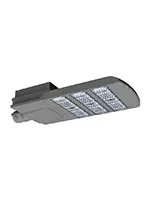
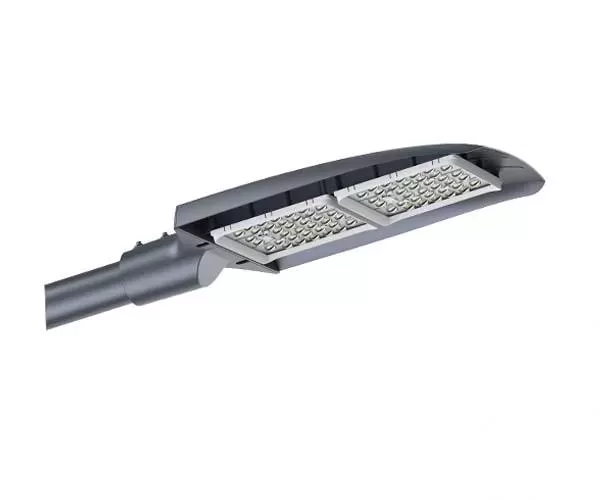
AC LED street lights are not solar-powered systems, but they remain an important part of outdoor lighting architecture. They rely on grid electricity rather than local photovoltaic generation and battery storage.
Where dependable electrical infrastructure already exists, AC lighting may provide a practical solution for high-traffic roads, urban streets, industrial areas, and other applications requiring stable and continuous illumination.
The decision between grid-powered LED lighting and solar lighting should therefore consider the complete project environment. Important factors include access to electrical infrastructure, trenching requirements, cabling costs, utility connection expenses, electricity prices, maintenance, construction complexity, and long-term operation.
A remote road without grid access may strongly favor solar lighting, while an established urban road with existing underground power infrastructure may benefit from AC LED luminaires.
Some countries' energy department provides guidance for purchasing energy-efficient exterior lighting, including roadway and area luminaires. Such guidance reinforces an important procurement principle: outdoor lighting should be evaluated through measurable performance requirements rather than lamp wattage alone.
Hybrid Street Lighting Adds Energy Backup
Hybrid street lighting combines solar power with an additional energy source. In many projects, this may be grid electricity, while certain systems may combine solar generation with other renewable energy technologies.
The primary purpose of hybrid architecture is to increase energy availability. Solar energy can remain the main source while the backup source supports the lighting system when solar generation or stored battery energy is insufficient.
This approach may be useful in regions with long periods of poor weather, seasonal changes in solar radiation, or critical infrastructure where continuous lighting availability is a high priority.
Hybrid architecture should not be selected simply because it appears more advanced. Additional power sources, controllers, wiring, and operating logic increase system complexity. Buyers should clearly define how energy sources are prioritized and under what conditions backup power can be activated.
For projects with strong grid availability, buyers should also compare whether a hybrid configuration provides sufficient operational value to justify the added components and maintenance requirements.
Smart Solar Street Lights Add Monitoring and Control
A smart solar street light is defined less by the physical location of its components and more by its control and communication capabilities. Smart functions can be combined with different solar street lighting architectures.
Typical features may include scheduled dimming, motion sensing, battery monitoring, fault reporting, remote switching, energy-use tracking, and centralized control.
For municipalities operating hundreds or thousands of street lights, remote monitoring can improve asset management. Maintenance teams can identify abnormal operation or system failures without relying entirely on manual inspections.
Adaptive dimming can also reduce unnecessary energy consumption. For example, lighting output may remain high during peak traffic periods and decrease during low-traffic hours.
When specifying smart lighting, procurement teams should evaluate communication technology, control platform, network coverage, software access, data ownership, cybersecurity, maintenance responsibilities, and long-term technical support.
Smart functions are most valuable when they solve a defined operational problem rather than simply adding more features to the product specification.
How Should Buyers Choose the Right Lighting Architecture?
The right architecture should follow project conditions. Buyers should first determine the type of road or outdoor area, required lighting level, mounting height, available solar resource, grid conditions, operating hours, autonomy requirement, environmental exposure, maintenance accessibility, and control needs.
An all-in-one system may be appropriate where fast installation and compact design are priorities. An all-in-two system may provide greater solar panel positioning flexibility. A split system may be better when larger panels or batteries are needed.
AC lighting can remain highly practical in locations with established electrical infrastructure, while hybrid configurations may improve reliability where both renewable energy use and backup power are important. Smart control can then be added where monitoring and adaptive operation create measurable value.
The key is to avoid selecting architecture based only on appearance or advertised wattage. System structure should reflect real project conditions and long-term operational requirements.
Solar Street Lighting Systems FAQs
What is the difference between all-in-one and split solar street lights?
All-in-one systems integrate most major components into a compact assembly, while split systems install the solar panel, luminaire, and battery separately. All-in-one products simplify installation, whereas split systems offer more flexibility for component sizing and positioning.
When should an all-in-two solar street light be considered?
An all-in-two architecture can be suitable when buyers want a relatively integrated system while still being able to adjust the solar panel independently for better solar exposure.
Are AC LED street lights part of a solar lighting system?
No. AC LED street lights use grid electricity. They are nevertheless important when comparing outdoor lighting architectures because not every project requires an off-grid solar solution.
What is the main advantage of hybrid street lighting?
Hybrid systems can improve power availability by combining solar energy with another energy source, making them useful where lighting reliability is especially important.
What makes a solar street light smart?
Smart systems add control, sensing, communication, or monitoring functions such as remote fault detection, scheduled dimming, energy tracking, or centralized management.
Conclusion
All-in-one, all-in-two, split, AC, hybrid, and smart lighting systems serve different project needs. Their differences are not simply cosmetic; each architecture changes how energy is generated, stored, controlled, installed, and maintained.
Municipal buyers and EPC contractors should therefore begin with road conditions, lighting requirements, energy availability, solar resources, operating schedules, environmental conditions, and maintenance expectations. Once those requirements are understood, the appropriate architecture becomes easier to identify.
A system-level approach makes it possible to compare outdoor lighting solutions on engineering suitability, lifecycle operation, and project value rather than relying only on nominal wattage or initial price.














 English
 français
 Español
 العربية
 Pilipino
 ไทย
ไทย tiếng việt
 Malay
Malay русский