A 20W solar street light can be sufficient for pathways, rural lanes, community roads, courtyards, and other light-duty outdoor applications, but wattage alone cannot determine whether a project will receive enough light. LED efficacy, lumen output, optical distribution, mounting height, pole spacing, pathway width, required illumination, and nighttime control strategy all influence the final result.
This distinction is important for project buyers because two fixtures both labeled “20W” may deliver very different lighting performance. A high-efficiency LED system can produce substantially more useful lumens than a lower-efficiency product, while an appropriate roadway or pathway optic can place more of those lumens onto the target surface instead of wasting light outside the required area.
The best way to decide whether 20W is enough is therefore to start with the application and photometric requirement, then verify the result through a lighting calculation.
What Does 20W Actually Tell You?
The 20W value describes electrical power used by the LED luminaire under its rated operating condition. It does not directly describe brightness on the road or pathway.
Light output is normally expressed in lumens. If one 20W luminaire operates at 120 lm/W, the theoretical output is approximately 2,400 lumens. At 170 lm/W, 20W corresponds to approximately 3,400 lumens.
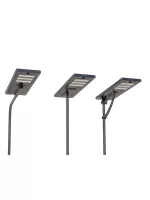
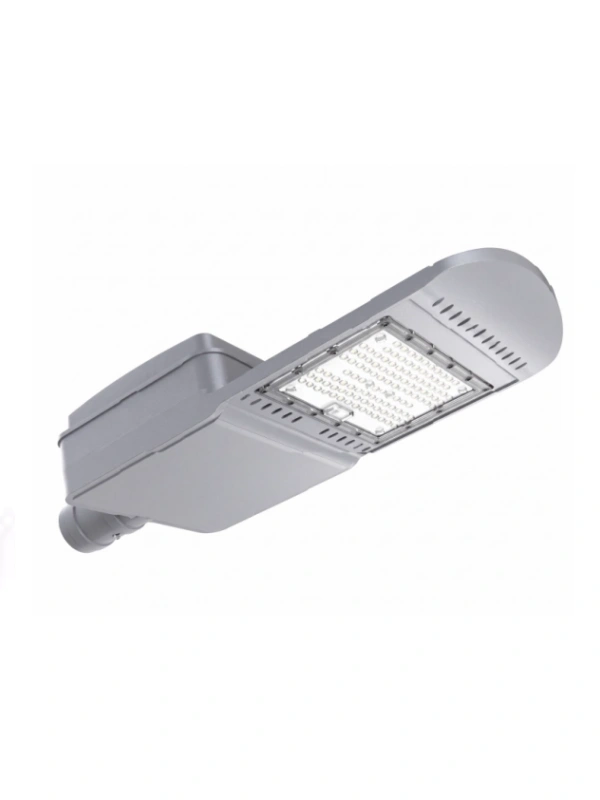
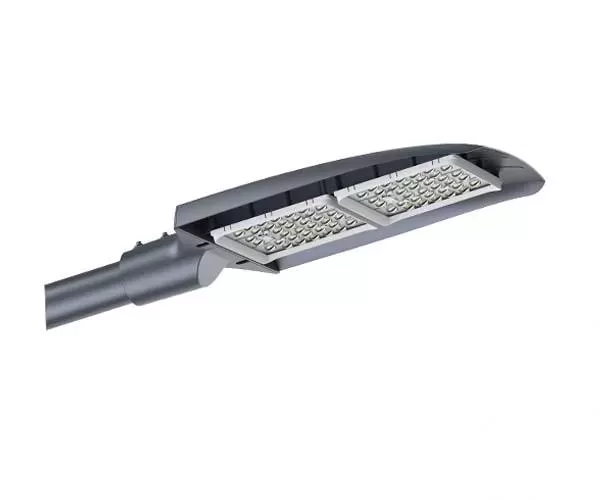
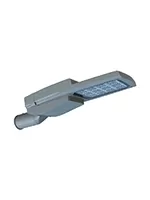
Inbrit's current 20W solar street light range identifies model-dependent efficacy of up to 180 lm/W and a representative output range of approximately 3,200–3,600 lumens, with a typical project mounting range of 3–5 meters.
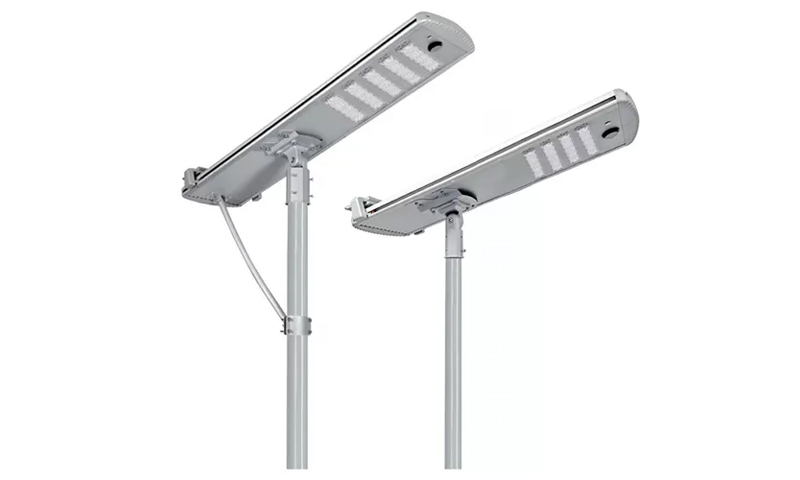
These figures provide a useful starting point, but the lumens still need to be distributed correctly over the intended pathway or road.
Lumens Matter More Than Comparing Wattage Labels
A buyer comparing 20 watt solar street light proposals should check both rated LED power and delivered lumen output.
The U.S. Department of Energy defines luminaire efficacy as the ratio of light output to electrical input power, expressed in lumens per watt. Its exterior lighting procurement guidance uses luminaire efficacy as an important performance measure for outdoor pole- and arm-mounted luminaires.
This is especially relevant to solar lighting because every watt of LED consumption must eventually be supplied by the photovoltaic panel and battery.
A more efficient luminaire can provide the required light with lower electrical consumption, reducing pressure on battery storage and solar-panel capacity. However, efficacy should still be considered together with optics, thermal management, driver performance, and actual photometric output.
When Is 20W Well Suited to Pathway Lighting?
Pedestrian pathways are among the most practical applications for a 20W solar light because they are usually narrower than municipal traffic roads and can often use lower mounting heights.
Typical examples include park paths, campus walkways, garden roads, villa communities, pedestrian access routes, and recreational trails.
A 3–5 meter mounting range can provide useful design flexibility for these applications, but the exact height should follow the pathway width and required distribution.
For a narrow pathway, mounting the luminaire unnecessarily high may spread the light beyond the target surface. Mounting it too low can create bright areas immediately around the pole while limiting spacing and increasing the number of poles required.
Optical distribution should therefore be selected so adjacent fixtures create a reasonably continuous illuminated path.
Can 20W Work for Rural Lanes?
Yes, a 20W system can be appropriate for some rural lanes, particularly narrow, low-speed routes where the required lighting level is moderate and utility trenching is difficult or expensive.
Applications may include village access lanes, farm roads, remote residential routes, estate roads, and local connections between small communities.
However, “rural road” covers many different geometries. A narrow single-lane access route is very different from a two-lane road carrying regular vehicle traffic.
Before specifying 20W, buyers should provide lane width, traffic function, pole location, mounting height, spacing, and target lighting requirement.
If the road is wider, traffic speed is higher, or larger pole spacing is required, a higher lumen package or different optical solution may be more appropriate.
Pole Height Changes the Illuminated Area
Mounting height affects both coverage and intensity.
A higher pole generally allows the optical distribution to spread over a larger area, but the luminaire is also farther from the target surface. A lower pole can provide stronger local illumination but may require shorter spacing to maintain continuity along a road or pathway.
This is why the 3–5 meter range should be treated as a typical project range rather than a fixed rule.
A 3-meter installation might suit a narrow pedestrian path or courtyard. A 4- or 5-meter mounting height may be more appropriate for a wider lane or community access road if the optic and lumen output support the required distribution.
The final height should be tested with the exact luminaire photometric file.
Pole Spacing Cannot Be Calculated From Wattage Alone
Buyers often ask whether a 20W solar street light can be installed every 15, 20, or 25 meters. There is no universal spacing figure.
Spacing depends on mounting height, optical distribution, lumen output, target illumination, minimum lighting level, uniformity, road width, pole setback, and whether poles are arranged on one or both sides.
A luminaire with a well-designed elongated distribution may support more useful longitudinal spacing than a fixture that concentrates most of its light directly below the pole.
The key point is not to maximize spacing at any cost. Excessive spacing can create bright zones around each pole and dark zones in between.
Photometric simulation should therefore determine how the light from adjacent poles overlaps.
Optics Determine Where the 3,000-Plus Lumens Go
Total lumen output does not tell buyers whether the light reaches the desired surface.
A pathway luminaire should place useful light along the path rather than equally in every direction. A rural lane may require a broader roadway-oriented distribution.
If the optic wastes significant light behind the pole, into vegetation, or beyond the pathway boundaries, increasing LED wattage may not solve the real problem efficiently.
For this reason, buyers should request an IES or other photometric file for the proposed model and ask for a lighting simulation when pole spacing or target lux matters.
Optical performance becomes particularly important at lower wattages because the project has fewer lumens available to waste.
Do Not Use 20W for Every Small Road Automatically
A 20W product is positioned toward light-duty applications, but project dimensions still matter.
A small road with high lighting requirements, unusually wide geometry, tall poles, large spacing, or poor optical placement may need more than 20W.
Conversely, a narrow pathway does not necessarily require a higher wattage simply because another project used 40W.
The better approach is to define the illumination target first and select the lowest practical power level that meets it with acceptable uniformity.
This improves solar energy efficiency and avoids oversizing the photovoltaic panel and battery merely to support unnecessary LED consumption.
Dimming Can Make 20W More Practical Over a Full Night
A 20W fixture does not need to consume 20W continuously throughout the entire night.
For example, it may operate at full output during the first few hours when pedestrian or vehicle activity is higher and then reduce output during low-traffic periods.
This staged control reduces nightly Wh consumption while preserving higher lighting levels during the hours when they are most useful.
For pathways with intermittent use, motion-based control may also be considered where appropriate. A lower standby level can be increased temporarily when movement is detected.
The dimming strategy should still respect minimum project lighting requirements and should be included in the battery and solar-panel calculation.
Check Solar Conditions Before Finalizing the Product
Even when 20W provides enough illumination, the complete system still needs adequate solar energy.
A location with strong year-round sunlight can require a different panel and battery configuration from a project with long cloudy seasons or weak winter solar radiation.
Shading from trees, buildings, mountains, or utility infrastructure can further reduce charging energy.
For this reason, project coordinates should be reviewed before confirming the photovoltaic module and battery capacity. The same 20W luminaire may use different energy-system specifications in different countries.
What Information Should Buyers Provide for a Lighting Calculation?
A useful project request should include country or coordinates, pathway or road width, pole height, intended spacing, pole arrangement, required operating hours, target lighting level where available, traffic or pedestrian function, expected rainy-day autonomy, and project quantity.
The supplier can then select a suitable optic and simulate the proposed luminaire layout.
This is more reliable than asking whether “20W is bright enough” without providing any road dimensions.
20W Solar Street Light FAQs
How many lumens should a 20W solar street light produce?
It depends on luminaire efficacy. For example, 20W at 160 lm/W corresponds to approximately 3,200 lumens, while 180 lm/W corresponds to approximately 3,600 lumens. Actual product output should be verified from photometric data.
What pole height is suitable for a 20 watt solar street light?
A 3–5 meter range is common for Inbrit's current 20W project category, but final height should follow pathway width, optics, spacing, and required lighting performance.
Can 20W illuminate a rural road?
It can suit narrow, low-speed rural lanes and access roads. Wider or higher-traffic roads may require a different lumen package after photometric evaluation.
How far apart should 20W solar lights be installed?
There is no fixed spacing. Mounting height, optics, road width, lumen output, target lux, minimum illuminance, and uniformity all affect the appropriate distance.
Is 20W suitable for pedestrian pathways?
Yes, it can be a strong fit for pathways, park trails, campus walkways, garden roads, and similar applications when the pole height and optical distribution are correctly matched.
Should I choose 40W instead to be safe?
Not automatically. Oversizing increases nighttime energy consumption and may require larger batteries and panels. The wattage should follow the actual photometric requirement.
Conclusion
A 20W solar street light can be enough for pathways, residential access areas, courtyards, and many narrow rural lanes, but the decision should not be made from wattage alone. Lumens, efficacy, optical distribution, mounting height, spacing, road width, and target lighting performance determine whether the fixture can illuminate the required area effectively.
For project buyers, the most reliable approach is to provide the actual site dimensions and request a photometric calculation. If a 20W luminaire can meet the lighting requirement with acceptable uniformity, using a higher wattage may simply increase battery and photovoltaic requirements without adding meaningful project value.
When wattage, optics, pole geometry, and energy-system sizing are evaluated together, 20W becomes a defined engineering option rather than just the smallest number in a solar street light catalog.

 English
 français
 Español
 العربية
 Pilipino
 ไทย
ไทย tiếng việt
 Malay
Malay русский