Buying a solar street light for a road project is different from buying a standalone luminaire. For municipal, EPC, rural infrastructure, and commercial road projects, the real procurement unit is often a complete system that includes the LED fixture, photovoltaic panel, battery, controller, pole, arm, brackets, anchor bolts, foundation requirements, cables, and installation hardware.
If these components are specified separately without checking their interfaces, problems can appear during installation. The panel bracket may not fit the pole, the arm may position the luminaire incorrectly, the foundation may not match the supplied anchor bolts, or the battery enclosure may interfere with maintenance access.
A better approach is to prepare one coordinated technical package and bill of quantities before production. This allows the supplier, EPC contractor, structural engineer, and installation team to work from the same system configuration.
Start With Road Data Before Selecting the Pole Package
The specification should begin with the road rather than the catalog model. Important inputs include road width, number of lanes, required mounting height, proposed pole spacing, pole location, project coordinates, operating hours, required lighting performance, and local environmental conditions.
The photometric requirement determines the luminaire output and optical distribution. These decisions then influence pole height, arm length, arm angle, and spacing.
At the same time, the project location affects photovoltaic sizing, battery capacity, corrosion protection, and structural requirements. A coastal road, desert highway, mountain route, and residential street may all require different system configurations even when the nominal LED wattage is similar.
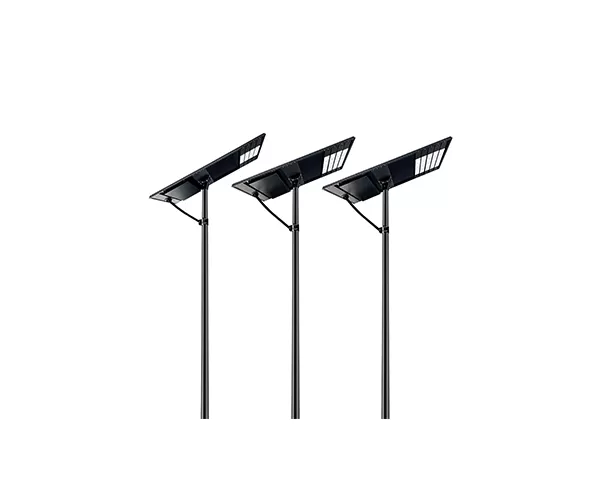
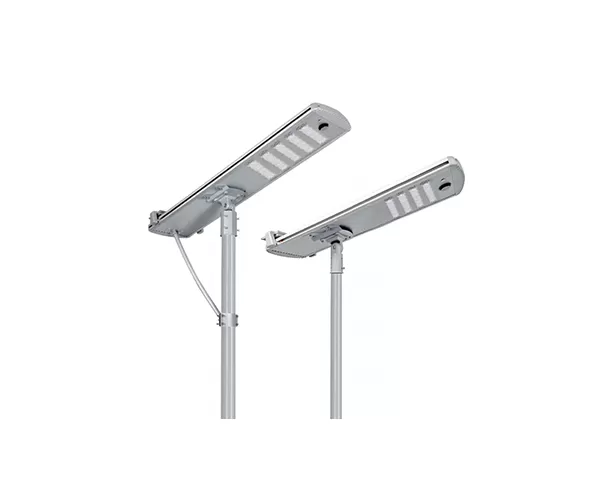
For professional procurement, a solar street light with pole should therefore be specified as a complete lighting, energy, and structural system rather than as a lamp plus a generic pole.

Define the Luminaire Before Finalizing Pole Height and Arm Geometry
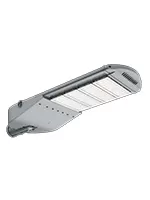
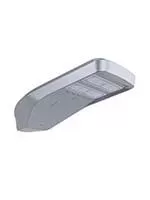
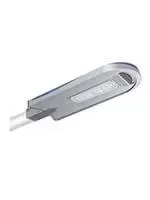
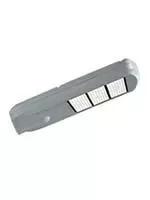
The LED luminaire should be selected according to the road-lighting target. Wattage alone is not sufficient because optical distribution, lumen output, efficacy, mounting position, and road geometry determine how much useful light reaches the pavement.
Once the photometric design is approved, the pole and arm arrangement can be finalized around the tested luminaire position.
The specification should state mounting height, arm outreach, arm angle, luminaire mounting diameter or interface, and any required tilt. If a double-arm configuration is required, both luminaires and their orientation should appear in the drawing.
The U.S. Federal Highway Administration's FHWA Lighting Handbook provides roadway-lighting design recommendations for public agencies and lighting designers. For EPC procurement, the same principle is useful: pole geometry should support the required lighting layout rather than being selected independently of it.
Specify the Pole as a Structural Component
The pole specification should include more than height. Depending on the project, relevant information may include steel grade, pole shape, top and bottom dimensions, wall thickness, section arrangement, welding, galvanizing, surface finish, base plate dimensions, handhole details, cable entry, and mounting interfaces.
The design also needs to account for everything installed on the pole. A solar system can add a photovoltaic module, panel bracket, luminaire arm, battery enclosure, controller equipment, cables, and other accessories.
The photovoltaic panel is particularly important because it adds a relatively large area exposed to wind. Structural review should therefore use the actual panel dimensions and installation angle rather than treating the pole as if it supported only an LED fixture.
Where the project specification defines a design wind speed or structural standard, this information should be included in the RFQ so the supplier can propose the appropriate pole configuration.
Coordinate the Solar Panel and Bracket With the Pole
Solar panel wattage is an electrical parameter, but panel dimensions and mounting arrangement are structural parameters.
The technical package should identify photovoltaic wattage, module dimensions, electrical characteristics, number of panels, installation angle, panel orientation, and bracket design.
The bracket should be designed for the selected pole diameter and section. Its attachment points should not interfere with the luminaire arm, battery enclosure, handhole, or maintenance access.
The panel position should also allow installers to orient the module according to the project's solar-resource assumptions. If the bracket provides adjustable tilt or orientation, the permitted adjustment range should be shown in the installation drawing.
For larger panels, the project team should also verify whether the increased wind area changes the required pole or foundation design.
Size the Battery From the Real Nighttime Load
The battery should be specified in watt-hours rather than comparing only ampere-hours between suppliers. Battery energy depends on both voltage and Ah capacity.
Before selecting storage, calculate the actual nighttime load from the LED operating schedule. A light operating at full output for part of the night and reduced output during low-traffic hours will consume less energy than the same nominal fixture operating at 100% throughout the night.
The battery specification should identify chemistry, nominal voltage, Ah or Wh capacity, usable discharge range, protection or BMS functions, temperature range, enclosure location, and required autonomy.
Battery location should also appear in the package drawing. Depending on system architecture, it may be integrated near the luminaire, mounted on the pole, or placed in another enclosure.
The important requirement is that the selected position is compatible with cable routing, maintenance, security, environmental protection, and the complete pole structure.
Match the Controller to the Panel, Battery and Lighting Schedule
The controller connects solar generation, battery storage, and the LED load. The BOM should therefore provide more information than a generic description such as “solar controller.”
The proposed controller should match battery voltage and chemistry, photovoltaic input, charging current, LED load, and required control functions.
The approved operating program should also be documented. This may include dusk-to-dawn operation, multi-stage dimming, motion sensing, battery protection, or other project-specific logic.
For procurement comparison, the controller schedule is important because two suppliers can quote the same lamp wattage and battery Wh while using very different nightly energy profiles.
Buyers should confirm that the battery and panel calculations use the same operating schedule that will actually be programmed into the delivered controller.
Include Anchor Bolts and Base Plate Details in the Supply Scope
A common installation problem occurs when the pole arrives before the civil team has confirmed the anchor-bolt arrangement.
The pole base plate, anchor bolts, bolt circle or bolt spacing, bolt diameter, projection, nuts, washers, and template should be coordinated before foundation construction.
If anchor bolts are supplied with the lighting package, they should be identified clearly in the BOQ. The supplier should provide an approved foundation interface drawing early enough for the civil contractor to prepare the concrete work.
Changing the anchor pattern after the foundation has been poured can create significant delays. For this reason, base plate and anchor-bolt drawings should be treated as approval documents rather than minor accessories.
Foundation Drawings Should Be Project-Specific
A manufacturer may provide a typical foundation drawing, but the project should distinguish between a reference drawing and a final structural design.
Actual foundation requirements depend on pole height, wind load, panel area, equipment weight, foundation type, soil capacity, groundwater, frost conditions where applicable, and local structural requirements.
The technical package should therefore state who is responsible for final foundation verification. In many EPC projects, the lighting supplier provides pole reactions, base plate details, anchor bolts, and a reference foundation concept, while the project structural or civil engineer confirms the foundation for local conditions.
This prevents a generic foundation size from being used at sites with significantly different soil or wind conditions.
Build a Complete BOQ Instead of Ordering a Lamp and Pole Separately
The final bill of quantities should list every component required to turn the shipment into an operational lighting system.
Typical items may include LED luminaire, photovoltaic module, lithium battery, solar controller, pole, arm, panel bracket, battery enclosure where required, anchor bolts, foundation template, cables, connectors, fasteners, fuse or protection components, and installation accessories.
The BOQ should also clarify what is not included. Concrete, reinforcing steel, excavation, crane work, local conduits, grounding materials, commissioning labor, and civil works may remain within the EPC contractor's scope.
This separation is important because a quotation described as a “complete solar street light system” can still exclude significant installation items.
Every bidder should quote against the same scope so purchasing teams can compare systems accurately.
Request Drawings Before Approving Mass Production
The final technical submittal should bring the complete package together.
Useful documents may include luminaire datasheet, photometric file, lighting calculation, pole drawing, arm drawing, photovoltaic bracket drawing, battery specification, controller program, base plate drawing, anchor-bolt template, wiring diagram, foundation interface drawing, installation instructions, and applicable test or compliance documents.
The BOM and drawings should refer to the same approved configuration.
If a pole diameter, panel size, arm length, or battery enclosure changes after technical approval, related drawings should be reviewed again because one modification may affect several other components.
Solar Street Light with Pole Package FAQs
What should be included in a complete solar street light pole package?
A typical package can include the LED luminaire, solar panel, battery, controller, pole, arm, photovoltaic bracket, anchor bolts, cables, connectors, mounting hardware, and related electrical or mechanical accessories.
Should the foundation be included in the manufacturer's quotation?
The supplier can provide anchor details and a reference foundation concept, but concrete construction is often completed locally. Final foundation design should reflect actual structural and soil conditions.
Should pole height be selected before the LED luminaire?
The two should be coordinated through photometric design. Road width, optics, lighting requirements, mounting height, and spacing influence one another.
Why should photovoltaic panel dimensions be included in the pole specification?
The panel adds weight and wind-exposed area to the pole assembly. Its size and mounting angle can therefore affect bracket, pole, and foundation requirements.
Why is the anchor-bolt template important?
It ensures the concrete foundation is constructed with the correct bolt position for the supplied pole base plate, reducing installation mismatch.
What should EPC buyers approve before production?
Buyers should normally confirm the final system BOM, luminaire and energy specifications, pole and arm drawings, solar-panel bracket, anchor-bolt details, controller program, wiring, and relevant project documentation.
Conclusion
A complete solar street lighting package should be engineered as one coordinated system. The luminaire determines the required lighting performance, the panel and battery provide the energy, the controller manages operation, and the pole, arm, brackets, anchor bolts, and foundation support the complete assembly.
For EPC and municipal projects, the strongest procurement approach is to define these interfaces before production and turn them into an approved BOQ and drawing package. This reduces the risk of discovering incompatible brackets, anchor bolts, cable routes, or structural requirements during installation.
When the lighting, energy, structural, and civil components are reviewed together, buyers can compare quotations more accurately and receive a package that is easier to transport, install, commission, and maintain throughout the project lifecycle.


 English
 français
 Español
 العربية
 Pilipino
 ไทย
ไทย tiếng việt
 Malay
Malay русский