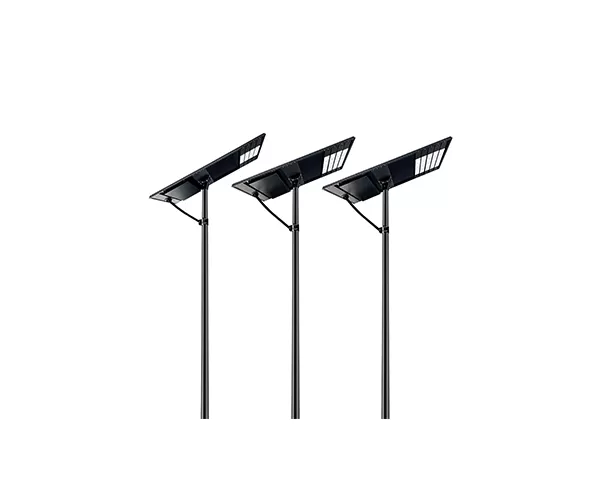
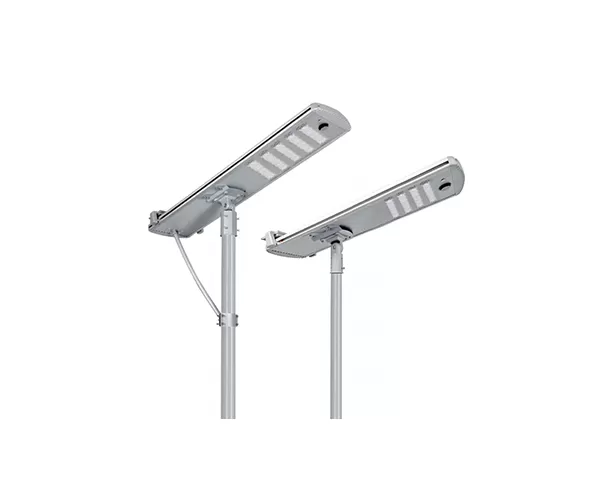
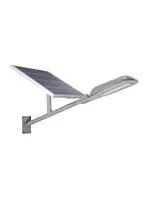
Low-sun projects require a different approach to solar street light sizing. A panel that is adequate for a high-irradiation location may not generate enough daily energy during the weakest solar months in another region. For an all-in-two street light, the separate photovoltaic module provides useful flexibility because panel capacity, orientation, and tilt can be selected with fewer constraints from the direction of the LED luminaire.
However, simply increasing panel wattage is not a complete engineering method. Correct sizing starts with the actual nighttime energy load, then considers local solar radiation, seasonal conditions, system losses, battery recharge requirements, panel orientation, shading, and available mounting area.
For EPC contractors and municipal buyers working in cloudy, high-latitude, rainy, or seasonally low-irradiation regions, the following process provides a more reliable basis for selecting photovoltaic capacity.
Start With Nightly Energy Consumption, Not Panel Wattage
The photovoltaic module exists to replace the energy consumed by the lighting system. The first sizing input should therefore be daily energy demand.
If an LED luminaire operates at 40W for ten hours at full output, its simplified nightly consumption would be approximately 400Wh before controller and conversion losses are considered.
Most modern solar street lights do not necessarily operate at full power throughout the entire night. A typical project may use staged dimming, with higher output during evening traffic periods and reduced output after midnight.
For example, four hours at 40W represents 160Wh. Another six hours at 20W represents 120Wh. The theoretical LED load would therefore be approximately 280Wh for the night.
When sizing the photovoltaic module for an all in two solar street light, engineers should calculate each operating stage instead of multiplying nominal LED wattage by the total number of nighttime hours.

Use Location-Specific Solar Radiation Data
After determining daily energy demand, the next requirement is understanding how much solar energy is realistically available at the installation location.
Generic assumptions such as “five peak sun hours” should not be applied to every project. Solar radiation changes according to latitude, season, cloud cover, local climate, terrain, and other environmental conditions.
The European Commission Joint Research Centre's Photovoltaic Geographical Information System (PVGIS) provides solar-radiation and photovoltaic-performance information for locations around the world. It allows project teams to examine location-specific and seasonal solar conditions rather than depending on one generic annual assumption.
For an off-grid street light, the weakest design period is often more important than the annual average. A system that produces excess energy during sunny months may still experience charging shortages during the lowest-irradiation season.
The project team should therefore review monthly solar resource information and determine the design assumptions appropriate for the required level of lighting reliability.
Why Low-Sun Projects Need More Than a Simple Watts Calculation
A simplified photovoltaic sizing calculation may divide daily energy demand by available equivalent solar hours. For example, if the system requires 300Wh per night and the project has three equivalent peak sun hours under the selected design assumption, a theoretical calculation would begin around 100W of photovoltaic capacity.
That number should not be treated as the final panel size.
Real systems include charging losses, controller losses, wiring losses, temperature effects, dirt on the module, manufacturing tolerances, battery charging characteristics, and other practical factors. The system may also need enough excess charging capacity to recover battery energy after several poor-weather days.
Low-sun projects therefore require an appropriate engineering margin above the simple theoretical result.
The purpose of the margin is not to make the specification unnecessarily large. It is to ensure that the system can maintain energy balance under realistic operating conditions rather than only under ideal laboratory assumptions.
Panel Orientation Becomes More Important When Solar Energy Is Limited
When solar resources are abundant, a small orientation error may still leave enough energy available to charge the battery. In low-sun projects, the same error can represent a more significant portion of the daily energy budget.
This is where separate-panel architecture becomes particularly useful.
The LED luminaire must be positioned according to roadway geometry and optical distribution, but the photovoltaic panel can be aimed according to available solar exposure. The two requirements do not have to use exactly the same orientation.
Project teams should consider latitude, panel azimuth, tilt angle, seasonal solar path, nearby obstructions, and the practical adjustment range of the mounting bracket.
The selected position must also remain structurally appropriate. Increasing panel tilt can change wind loading, so solar optimization and structural design should be evaluated together.
Installation drawings should clearly identify the intended orientation rather than leaving each installer to choose an angle independently in the field.
Shading Must Be Evaluated Before Increasing Panel Capacity
If a solar street light is underperforming in a low-sun location, increasing panel wattage may appear to be the obvious solution. However, a larger photovoltaic module may not solve a major shading problem.
Trees, buildings, overhead infrastructure, advertising signs, mountains, and other obstacles can reduce the sunlight reaching the module during important charging periods.
Before increasing panel size, determine whether the proposed pole location has adequate solar access. Site photos, sun-path analysis, project drawings, or field inspection can help identify obstructions.
One advantage of a separate panel is that its direction may be adjusted to reduce certain local shading effects without changing the luminaire position.
However, if the site remains heavily shaded for much of the day, project teams may need to reconsider pole placement, energy consumption, autonomy requirements, or even the suitability of standalone solar lighting for that location.
Battery Capacity and Panel Capacity Must Be Sized Together
A larger battery does not create energy. It only stores energy generated by the photovoltaic module.
This is an important principle in low-sun projects. Buyers sometimes request very large batteries to achieve several rainy days of autonomy but leave the solar panel unchanged. After an extended discharge period, an undersized panel may require too long to recharge the enlarged battery while simultaneously supplying the next night's load.
Battery Wh, usable depth of discharge, nightly consumption, desired autonomy, and photovoltaic recharge capacity therefore need to be evaluated together.
If the project requires multiple nights of reserve, engineers should consider not only whether the battery can store enough energy but also how the system will recover after poor weather.
A balanced configuration may involve increased panel capacity, optimized dimming, appropriate battery storage, and a controller strategy that protects the energy reserve.
Controller Limits Can Restrict the Useful Panel Size
Increasing photovoltaic wattage without checking the controller is another common specification problem.
The solar controller has defined electrical input limits. Panel voltage and current must remain compatible with those limits and with the battery architecture.
A buyer cannot simply replace an 80W panel with a much larger module and assume the existing controller will use the additional energy correctly.
When panel capacity is increased for a low-sun project, confirm the module's electrical characteristics, controller input range, charging-current capability, battery voltage, and charging strategy.
The manufacturer should be able to show that the photovoltaic module, controller, and battery form one matched charging system.
This is especially important when comparing quotations because two suppliers may offer the same nominal panel wattage but use different voltages, controllers, and battery configurations.
Consider Recovery After Several Cloudy Days
Autonomy and recovery are different design questions.
Autonomy asks how long the battery can continue supporting the lighting load during insufficient charging. Recovery asks how quickly the photovoltaic system can restore the battery afterward.
Suppose a battery has been partially discharged during several cloudy nights. When sunny conditions return, the solar panel must supply the current daytime charging requirement while preparing enough stored energy for the next nighttime cycle.
If the panel was sized only to replace one normal night's energy under ideal conditions, battery recovery may be slow.
For projects where lighting continuity is critical, the design should therefore include a recovery strategy. This may involve photovoltaic oversizing, intelligent dimming, battery reserve management, or another energy architecture where appropriate.
Procurement teams should ask manufacturers how their proposed configuration behaves after multiple low-generation days instead of looking only at the advertised number of autonomy nights.
Do Not Ignore Temperature and Seasonal Conditions
Low-sun locations are not always cold, and cloudy climates can occur in warm regions. Nevertheless, seasonal temperature should be considered together with solar radiation.
Battery charging and discharge performance can vary with temperature, while photovoltaic module output and controller behavior are also influenced by operating conditions.
The project specification should therefore include expected ambient-temperature range rather than providing only solar radiation data.
For very cold regions, the manufacturer should confirm whether the selected battery chemistry, battery-management system, controller, and charging strategy are suitable for winter conditions.
For hot climates with seasonal rain or cloud cover, thermal management of the lamp housing and battery remains important even though the sizing concern is described as a “low-sun” problem.
A complete design should reflect the combined climate profile rather than treating irradiation as the only environmental variable.
Check Whether a Larger Panel Changes Pole and Bracket Requirements
Increasing photovoltaic capacity often means increasing module dimensions. This affects more than electrical performance.
A larger panel increases surface area exposed to wind and may require a stronger mounting bracket, different pole dimensions, or additional structural verification.
The panel should also remain accessible enough for installation, cleaning, inspection, and replacement.
For high-wind roads, coastal regions, islands, and open terrain, the structural effect of photovoltaic oversizing should be considered before finalizing the BOM.
This illustrates one of the main engineering trade-offs in low-sun design: a larger panel can improve energy collection, but it can also increase cost, wind loading, weight, shipping volume, and installation complexity.
The best solution is therefore not necessarily the largest module that can physically fit on the pole. It is the smallest practical system configuration that can satisfy the required energy balance and reliability under the project's design conditions.
How Should Buyers Verify a Low-Sun Solar Panel Proposal?
Ask the supplier to show the calculation chain rather than only the final panel wattage.
The technical proposal should identify actual LED operating power, nighttime schedule, daily Wh consumption, battery voltage and Wh, required autonomy, design solar resource, photovoltaic module wattage and voltage, controller parameters, panel orientation, and relevant system losses or design margins.
The project team should then check whether these assumptions reflect the real installation location.
For example, a calculation based on strong annual-average irradiation may not be appropriate when the project requires reliable operation during a much weaker winter month.
Similarly, a large photovoltaic module may look reassuring on a specification sheet but provide limited benefit if its proposed orientation is shaded or if the controller cannot use its available charging current.
A transparent calculation makes technical comparison between suppliers considerably easier.
All-in-Two Solar Panel Sizing FAQs
How do I calculate the minimum solar panel wattage for a street light?
Start with actual daily energy consumption in Wh and divide it by an appropriate local solar-resource assumption, then account for system losses, charging requirements, weather conditions, and design margin. The simple mathematical result should only be treated as a starting point.
Should I use annual average solar radiation for panel sizing?
Not always. Off-grid street lighting may need to operate reliably during lower-irradiation periods, so monthly or seasonal solar data can be more relevant than the annual average.
Can I solve low-sun performance by installing a bigger battery?
Not by itself. A battery stores energy but does not generate it. The photovoltaic module must still provide enough energy to support normal operation and recharge the battery after poor weather.
Why is a separate panel useful in low-sun regions?
The panel can be oriented and tilted independently from the LED luminaire, giving engineers greater flexibility to improve solar exposure while maintaining the required roadway-lighting direction.
Does doubling panel wattage double charging performance?
Not necessarily. Actual charging depends on available irradiation, panel orientation, shading, temperature, controller limits, battery state, and system efficiency.
Should panel oversizing be checked against the pole design?
Yes. A larger photovoltaic module can increase wind loading and may require changes to the bracket, pole, or structural design.
Conclusion
Sizing a separate photovoltaic panel for a low-sun street lighting project begins with energy balance, not a fixed panel-to-lamp wattage ratio. Engineers should first calculate the real nighttime Wh load, then use location-specific and seasonally relevant solar data to determine how much photovoltaic capacity is required.
All-in-two architecture offers an important advantage because the solar panel can be positioned independently from the road-lighting fixture. This flexibility can improve panel orientation, help avoid certain shading constraints, and make larger photovoltaic configurations easier to integrate when additional charging capacity is required.
However, panel wattage must remain coordinated with battery capacity, controller limits, autonomy, recovery requirements, wind loading, and installation conditions. For EPC and municipal projects in low-sun regions, a transparent calculation based on actual site conditions provides a much stronger design basis than simply specifying a larger panel or battery.

 English
 français
 Español
 العربية
 Pilipino
 ไทย
ไทย tiếng việt
 Malay
Malay русский