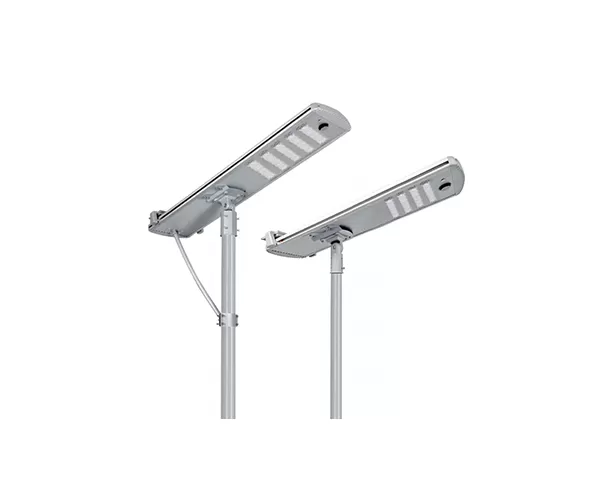
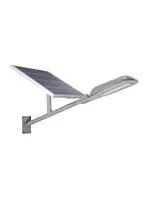
All-in-two and all-in-one solar street lights may use similar LED, lithium battery, controller, and photovoltaic technologies, but their physical architecture creates important differences in installation and long-term operation. The most significant distinction is that an all-in-two design separates the solar panel from the luminaire while typically integrating the battery and controller into the lamp body. In an all-in-one product, the solar panel and lighting assembly are integrated more closely into one compact structure.
For EPC contractors and municipal projects, this difference matters when the road direction does not provide ideal solar exposure, when nearby trees or structures create shading, or when maintenance teams want to service the photovoltaic module independently. The comparison should therefore focus less on which architecture is universally “better” and more on how panel positioning, heat management, installation, and maintenance affect a specific project.
Why Separate Solar Panel Architecture Changes the Design Process
In an all-in-one street light, the physical relationship between the luminaire and solar panel is largely determined by the product design. The fixture must illuminate the road while the photovoltaic surface must collect enough solar energy to recharge the battery. In straightforward installations, these requirements may work well together.
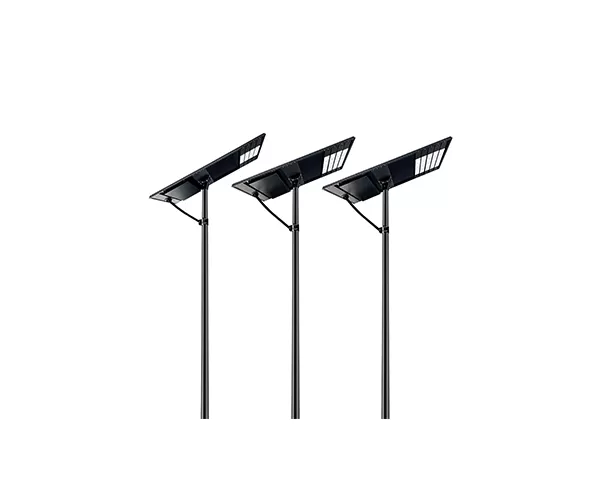
An all in two solar street light separates these two functions more clearly. The lamp can be aimed according to the required road-lighting distribution, while the panel can be positioned according to available sunlight.

This distinction becomes particularly useful when the orientation that produces the best roadway illumination is not the orientation that provides favorable solar exposure. Instead of forcing the complete integrated fixture into a compromise position, installers have more freedom to optimize the panel and luminaire separately.
For engineering projects, that flexibility can influence not only daily charging but also pole-bracket design, cable routing, installation labor, wind loading, and future maintenance access.
Panel Orientation Is One of the Strongest Reasons to Choose All-in-Two
A photovoltaic panel generates energy according to the solar radiation reaching its surface. Its location, tilt, orientation, shading, and local weather conditions all influence the amount of usable solar energy available for charging.
The energy organizations' Solar Photovoltaic System Design Basics notes that fixed PV structures are designed around factors including local latitude, orientation, and electrical load requirements. This principle is especially relevant to solar street lighting because the panel must generate enough daily energy to support a defined nighttime load.
Consider a road running in a direction that forces the LED fixture to face an orientation unsuitable for maximum solar exposure. With a compact integrated lamp, the available adjustment range may be constrained by the product structure. An all-in-two system allows the photovoltaic module to be rotated or tilted separately while the luminaire remains aligned with the roadway.
This does not mean that every separate panel automatically performs better. The final result still depends on the selected angle, local solar resource, panel capacity, shading, controller efficiency, and installation accuracy.
All-in-Two Designs Can Be More Adaptable Around Local Shading
Shading is another reason why panel independence can matter. Trees, buildings, signs, utility structures, terrain, or nearby infrastructure may block sunlight during certain periods of the day.
A small amount of flexibility in panel position can help installers avoid some local obstructions. For example, the luminaire may need to remain above a specific road position, while the solar module can be mounted at another angle on the same pole to improve exposure.
This is particularly relevant for retrofit projects where pole positions already exist and cannot easily be moved. The designer may have limited control over the pole location but greater control over the separate solar-panel bracket.
However, buyers should not assume that adjustable orientation can solve severe shading. If a site is heavily shaded for much of the day, the design may require a larger photovoltaic module, a different pole position, altered energy consumption, or another lighting architecture.
Site photos and shading information should therefore be provided during project design rather than leaving panel positioning entirely to the installation team.
Thermal Design Should Be Evaluated Differently in the Two Architectures
Solar street lights combine several components with different thermal considerations. LED modules generate heat during operation, lithium batteries are affected by environmental temperature, controllers contain power electronics, and photovoltaic panels are continuously exposed to solar radiation during daylight hours.
In an all-in-one architecture, these functions are packaged within a more integrated structure. Good mechanical design must therefore consider heat transfer between the LED section, battery compartment, electronics, and solar-facing surfaces.
With an all-in-two design, the photovoltaic module is physically separated from the lamp body. This gives the manufacturer greater freedom to design the solar collector and lighting housing as different mechanical sections. However, because the battery may still be integrated inside the luminaire, thermal management of the battery, driver, LED board, and controller remains important.
Procurement teams should therefore avoid simple statements such as “all-in-two runs cooler.” Instead, request information about housing materials, heat-dissipation design, battery operating-temperature range, LED thermal path, controller protection, and any applicable temperature testing.
The real question is whether the complete product is engineered for the ambient conditions expected at the installation site.
Field Maintenance Is More Modular but Not Necessarily Simpler
One practical advantage of a separate photovoltaic module is that the panel can potentially be inspected or replaced independently from the luminaire assembly. If the panel is physically damaged, heavily degraded, or requires a different capacity during a project upgrade, service teams may not need to replace the complete lighting unit.
The same separation also makes individual component inspection easier in some installations. Maintenance staff can visually check the panel bracket, cable connection, and panel surface independently from the lamp body.
However, separation creates additional interfaces. The system needs a cable connection between the photovoltaic module and the luminaire or controller. External connectors, cable routing, brackets, and mounting hardware therefore need adequate environmental protection and correct installation.
An integrated all-in-one design eliminates some of these separate installation interfaces. For smaller projects or locations where maintenance teams prefer minimal external wiring, that simplicity can be valuable.
All-in-two architecture should therefore be viewed as more modular rather than automatically easier to maintain.
Installation Flexibility Comes With Additional Mounting Decisions
All-in-one solar street lights are attractive partly because installation can be relatively straightforward. The installer mounts the complete lighting assembly, confirms the required orientation, and completes the mechanical installation with fewer separately positioned components.
An all-in-two design requires additional decisions. The solar panel bracket must be positioned correctly, panel tilt and direction must be confirmed, cable routing must be protected, and the panel must remain structurally secure under local wind conditions.
For professional projects, these are manageable requirements, but they should be reflected in installation drawings and instructions.
Wind loading deserves particular attention. A separate solar panel presents a significant surface area above the ground. Panel angle affects not only energy collection but also aerodynamic loading on the panel bracket and pole. A panel should therefore not be repositioned purely for solar optimization without considering structural requirements.
This is especially important for coastal roads, highways, islands, open terrain, and other locations exposed to strong winds.
Which Architecture Works Better for Retrofit Projects?
Retrofit applications can strongly favor flexibility. Existing poles may have fixed locations and orientations that were originally designed for grid-connected LED or conventional street lights rather than solar equipment.
An all-in-two system allows the lighting fixture and separate photovoltaic panel to be adapted around some of these existing constraints. The LED luminaire can serve the required road area while the panel is positioned to obtain better sunlight.
Before choosing this approach, engineers should still verify whether the existing pole can support the additional panel area and wind load. Pole condition, wall thickness, bracket strength, foundation condition, and mounting interface may all need to be checked.
The ability to retrofit is therefore not simply a product feature. It depends on whether the complete existing structure is suitable for the proposed solar assembly.
When Does an All-in-One System Still Make More Sense?
All-in-two architecture is valuable where orientation flexibility and modularity matter, but many projects do not need that additional complexity.
An all-in-one system may remain a strong option for pathways, residential roads, campuses, parks, secondary streets, and other applications where solar exposure is favorable and rapid installation is a priority.
Compact integrated products can also simplify purchasing, logistics, site inventory, and assembly because fewer separately mounted components need to be managed.
For large-volume projects, reducing installation steps across hundreds or thousands of poles can have practical value.
The selection should therefore start with project constraints. If solar orientation is straightforward and the integrated energy system meets the required autonomy, there may be little reason to add a separate panel. If road direction, shading, higher panel capacity, retrofit conditions, or maintenance strategy demand more flexibility, all-in-two architecture becomes more attractive.
How Should Buyers Compare All-in-Two and All-in-One Quotations?
Begin with the same lighting and energy requirements for both quotations. Compare actual LED operating power, luminaire output, battery Wh, solar panel wattage, autonomy assumptions, dimming schedule, and photometric performance.
Then compare architecture-specific details. For all-in-two products, check panel dimensions, bracket design, adjustment range, cable length, connector protection, wind-load considerations, and installation requirements.
For integrated products, examine whether the available panel area and battery storage are sufficient for the project and whether the installation orientation provides adequate solar exposure.
Maintenance should also be considered. Ask how the battery, solar panel, LED module, controller, and connectors can be serviced or replaced after installation.
This approach keeps the comparison focused on project suitability instead of treating all-in-two and all-in-one as competing technologies where one must always be superior.
All-in-Two Solar Street Light FAQs
What is the main structural difference between all-in-two and all-in-one solar street lights?
An all-in-two system installs the photovoltaic module separately from the lamp assembly, while an all-in-one product integrates the major lighting and solar components more closely into one unit.
Why is a separate solar panel useful?
It allows installers to adjust panel orientation and tilt according to sunlight while keeping the LED luminaire positioned according to road-lighting requirements.
Does an all-in-two solar street light always generate more solar energy?
No. Energy generation depends on panel size, efficiency, orientation, local irradiation, shading, temperature, and controller performance. The architecture simply gives designers more flexibility to optimize panel placement.
Is an all-in-two system easier to maintain?
It can be more modular because the photovoltaic module is separate, but it also introduces additional cables, connectors, brackets, and mounting points that must be maintained correctly.
Is all-in-two better for shaded roads?
It can provide more flexibility where limited shading can be avoided through panel positioning. Severe shading may still require a larger panel, different pole position, lower energy consumption, or another system design.
Which system is better for EPC projects?
The better architecture depends on solar exposure, road geometry, installation constraints, energy demand, maintenance strategy, wind conditions, and project documentation requirements.
Conclusion
The most important difference between all-in-two and all-in-one solar street lights is architectural flexibility. Separating the photovoltaic module allows engineers to treat road illumination and solar collection as two related but independently adjustable design requirements.
This can create meaningful advantages in projects affected by road orientation, partial shading, retrofit constraints, or the need for independent photovoltaic maintenance. At the same time, separate panels introduce additional brackets, wiring, connectors, and structural considerations that must be designed and installed correctly.
For municipal and EPC buyers, the decision should therefore be based on site conditions rather than product format alone. When flexible panel positioning solves a real engineering constraint, all-in-two architecture can provide a practical advantage. Where solar exposure is straightforward and rapid installation is more important, a compact all-in-one configuration may remain the more efficient choice.


 English
 français
 Español
 العربية
 Pilipino
 ไทย
ไทย tiếng việt
 Malay
Malay русский