A 60W solar street light operating from dusk to dawn needs more than a battery and solar panel selected from a standard product table. The correct energy configuration depends on actual LED operating power, dimming schedule, system losses, usable battery capacity, required autonomy, local solar radiation, seasonal weather, and the controller's charging limits.
For project buyers, the most useful calculation starts with watt-hours. Once the expected nighttime energy consumption is known, battery Wh can be sized around the required reserve, and photovoltaic wattage can be calculated around the amount of energy that must be restored during daylight.
The calculations below are project references intended to explain the engineering method. They are not fixed battery or panel specifications for every 60W installation.
Start With the Full-Power Nighttime Load
A 60W solar street light operating continuously at rated LED power for 12 hours has a theoretical LED energy requirement of:
60W × 12 hours = 720Wh per night.
For a 10-hour operating period:
60W × 10 hours = 600Wh per night.
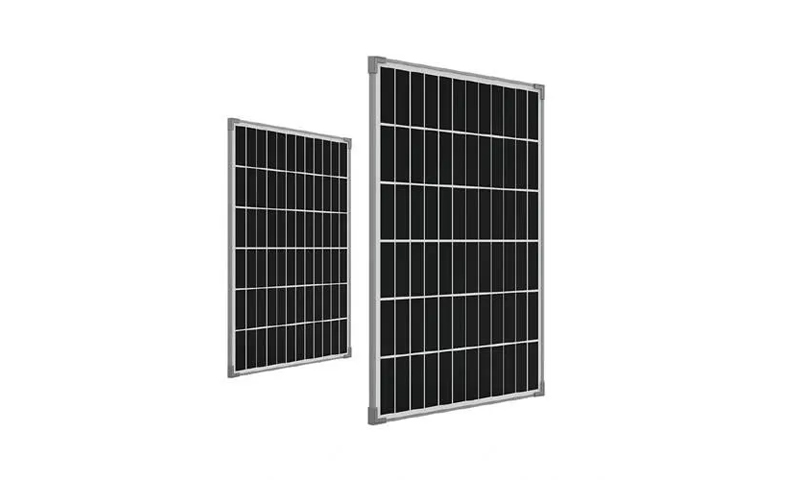
These values describe only the theoretical LED load. The complete system may also consume energy through the controller, LED driver, sensors, communication equipment, and other electronics. Electrical conversion and wiring losses should therefore be included when developing the final system energy balance.
Dimming Can Change Battery Requirements Significantly
Most road projects do not necessarily need full LED output throughout the entire night. Traffic is often highest during the early evening and decreases later.
Consider a simplified 12-hour profile:
60W × 4 hours = 240Wh
36W × 4 hours = 144Wh
18W × 4 hours = 72Wh
Total theoretical LED energy would be:
240 + 144 + 72 = 456Wh per night.
Compared with 720Wh for continuous 60W operation, this example reduces theoretical LED energy consumption by approximately 37%.
This is only an illustrative control schedule. The actual dimming percentages and hours should be determined from road use, traffic patterns, minimum lighting requirements, and project safety criteria.
Add an Allowance for Complete System Consumption
Battery sizing should use expected total DC energy demand rather than LED consumption alone.
Suppose the staged lighting schedule requires approximately 456Wh. If an illustrative 15% allowance is temporarily used for controller consumption, driver losses, wiring, and other system effects:
456Wh × 1.15 = approximately 524Wh per night.
The 15% figure is not a universal specification. Actual design losses should be based on the components used in the proposed system.
This calculation simply demonstrates why a battery sized exactly to the LED Wh requirement may provide insufficient practical reserve.
Convert Battery Ah to Wh Before Comparing Quotations
Battery amp-hours cannot be evaluated correctly without knowing battery voltage.
The basic relationship is:
Battery Wh = nominal battery voltage × battery Ah.
For example:
12.8V × 60Ah = 768Wh nominal energy.
A different configuration could use:
25.6V × 30Ah = 768Wh nominal energy.
The Ah values differ significantly, but nominal stored energy is the same.
For B2B procurement, converting every battery proposal into Wh makes systems with different voltages easier to compare.
Nominal Battery Wh Is Not Fully Usable Energy
The battery should not normally be planned as though every nominal watt-hour will always be available to the LED load.
Usable energy depends on battery chemistry, BMS settings, controller cutoffs, discharge rate, operating temperature, aging allowance, and the battery manufacturer's limits.
For illustration only, if a 900Wh nominal battery were designed around 80% normally usable energy:
900Wh × 0.80 = 720Wh usable energy.
The 80% figure is not a fixed recommendation. The project should use the actual permitted depth of discharge and operating strategy of the selected battery.
EPC buyers should ask suppliers to state both nominal Wh and the usable-capacity assumption used in autonomy calculations.
Calculate Autonomy From Actual Nightly Wh
If the complete estimated nighttime demand is approximately 524Wh, one theoretical night without charging requires approximately 524Wh of usable stored energy.
Two nights would represent:
524Wh × 2 = 1,048Wh usable energy.
Three nights would represent:
524Wh × 3 = 1,572Wh usable energy.
Real cloudy-day calculations are more complex because photovoltaic modules usually continue producing some energy even under weak conditions. Smart controllers may also activate an approved lower-energy lighting profile as battery SOC declines.
Nevertheless, calculating load in Wh provides a useful method for checking whether a supplier's claimed autonomy is physically consistent with the proposed battery.
Calculate Solar Panel Wattage From Daily Energy Demand
The photovoltaic module must restore the energy consumed overnight.
Suppose the system needs approximately 550Wh of daily charging energy after the selected design assumptions. A simplified calculation using equivalent peak-sun hours would be:
At 5 hours:
550Wh ÷ 5h = 110W theoretical PV capacity.
At 4 hours:
550Wh ÷ 4h = 137.5W.
At 3 hours:
550Wh ÷ 3h = approximately 183W.
These are theoretical reference values before additional allowance for module temperature, dirt, controller losses, battery charging efficiency, orientation, shading, seasonal variation, aging, and battery recovery.
This explains why there is no universal panel wattage for every 60W LED street light.
Use Project-Specific Solar Radiation Data
Solar panel sizing should use the installation location rather than an assumed number of sunshine hours.
The European Commission Joint Research Centre's PVGIS off-grid PV calculation tool models systems that rely on batteries and uses electricity-consumption profiles together with solar-radiation data to simulate energy flow into and out of storage.
This reflects the key principle for solar street lighting: daily load, photovoltaic capacity, battery capacity, and local solar resources need to be assessed together.
For year-round road projects, monthly or seasonal low-solar periods are usually more useful for reliability assessment than one favorable annual-average figure.
Do Not Size the System From the Best Month
A photovoltaic system may easily replace 550Wh during a sunny season but struggle during months with shorter days, higher cloud cover, or weaker solar radiation.
If the street light must operate reliably throughout the year, designers should investigate the period most likely to create a persistent energy deficit.
This does not mean every system must be sized for the most extreme weather event ever recorded. The project owner needs to define an acceptable reliability target and autonomy requirement.
The important point is that the sizing basis should be transparent rather than relying on unspecified “average sunshine.”
Battery Capacity and Panel Capacity Need to Recover Together
Adding a larger battery increases stored reserve, but it does not create additional energy.
If several cloudy nights discharge a large battery substantially, the photovoltaic module must eventually restore that energy. An undersized panel may take many favorable days to recover while continuing to support each new night's lighting load.
For this reason, autonomy and recovery should be calculated together.
A balanced system needs enough battery storage to support the required low-solar period and enough photovoltaic capacity to return the battery toward its normal SOC once solar conditions improve.
Panel Orientation and Shading Can Change Real Output
The calculated photovoltaic wattage assumes that the panel receives appropriate solar exposure.
Trees, buildings, mountains, utility equipment, signs, and future vegetation growth can reduce charging energy. Poor orientation can create another loss.
Project teams should therefore review the panel position before compensating for a shaded location by simply increasing battery size.
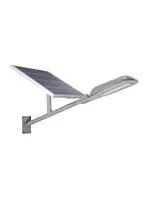
Where necessary, a solar architecture with a separately mounted photovoltaic module may provide greater flexibility for panel orientation.
Check Controller Limits Before Enlarging the Panel
Increasing photovoltaic capacity is only useful when the solar controller can accept the module's electrical characteristics.
Relevant parameters include maximum PV input voltage, charging current, battery-system voltage, controller power limits, and supported battery chemistry.
If a low-solar project requires substantially greater panel capacity than a standard configuration, the controller may also need to be upgraded.
Panel, battery, controller, and LED load should therefore be approved as one electrical system.
Panel Size Can Affect the Pole Structure
A larger solar module also creates a larger wind-exposed surface.
When PV capacity is increased, the project should check panel dimensions, mounting angle, bracket design, pole structure, base plate, anchor bolts, and foundation requirements.
This becomes increasingly important for 60W systems because the energy requirement can lead to larger photovoltaic modules than those used for lower-power pathway lights.
Electrical sizing should therefore be coordinated with structural design before mass production.
A Practical 60W Energy-Sizing Workflow
First, calculate the approved nighttime lighting profile in Wh rather than using only rated wattage.
Second, include realistic controller and system losses.
Third, define the required autonomy and battery usable-energy limits.
Fourth, convert the proposed battery voltage and Ah into nominal Wh and confirm how much of that energy is treated as usable.
Fifth, evaluate location-specific solar radiation and calculate the required photovoltaic capacity during relevant seasonal conditions.
Finally, check battery recovery, controller input limits, shading, panel orientation, temperature, panel dimensions, and pole structural requirements.
60W Solar Street Light Battery and Panel Sizing FAQs
How much energy does a 60W solar street light use in 12 hours?
At continuous rated LED power, 60W × 12 hours equals 720Wh of theoretical LED consumption. Dimming can reduce this significantly.
How many Wh should the battery have?
There is no universal value. Battery Wh depends on the actual nighttime load, usable discharge range, required autonomy, losses, temperature, battery chemistry, and controller settings.
How do I convert battery Ah into Wh?
Multiply nominal voltage by Ah. For example, 12.8V × 60Ah equals 768Wh of nominal stored energy.
What size solar panel does a 60W street light need?
Panel wattage depends on daily Wh consumption, local solar radiation, seasonal conditions, losses, orientation, shading, controller capacity, and required battery-recovery time.
Is a bigger battery always better?
No. A larger battery can provide greater reserve, but the solar panel still needs enough charging capacity to recover it after low-solar periods.
Should panel sizing use annual average sunlight?
Annual averages are useful for context, but year-round lighting reliability should also consider weaker monthly or seasonal solar conditions.
Conclusion
A 60W solar street light operating for 12 hours would theoretically consume 720Wh if it remained at full rated power throughout the night, but real projects often reduce this substantially through staged dimming. The approved control schedule should therefore be the starting point for every battery and panel calculation.
Battery storage should be evaluated in Wh, with usable capacity, autonomy, temperature, and protection limits clearly identified. Photovoltaic capacity should then be calculated from the actual daily energy requirement and local solar resource, while also providing reasonable recovery after weak-weather periods.
For EPC buyers, the strongest 60W proposal is not the one with the largest battery or panel on a datasheet. It is the one that provides a transparent energy balance connecting LED Wh, usable battery Wh, PV W, local solar conditions, controller limits, and autonomy assumptions into one verifiable system design.





 English
 français
 Español
 العربية
 Pilipino
 ไทย
ไทย tiếng việt
 Malay
Malay русский