A 40W solar street light is often considered for community roads, residential streets, rural roads, parking areas, and other medium-duty outdoor lighting applications. However, selecting a 40W fixture does not automatically determine the correct pole height, road width, spacing, or battery autonomy.
For project buyers, the better approach is to treat wattage as one input within a complete lighting and energy design. LED efficacy determines how many lumens are available, optics determine where those lumens reach the roadway, mounting height and spacing influence uniformity, and the battery and solar panel determine whether the required lighting schedule can be maintained throughout the night.
The following checklist uses 5–6m poles as a practical project reference. All numerical examples are illustrative rather than fixed specifications and should be verified against the actual road, photometric requirements, local solar resource, and selected product configuration.
Start With Lumens Rather Than the 40W Label
A 40W solar street light describes LED electrical power, not the amount of useful light that reaches the road.
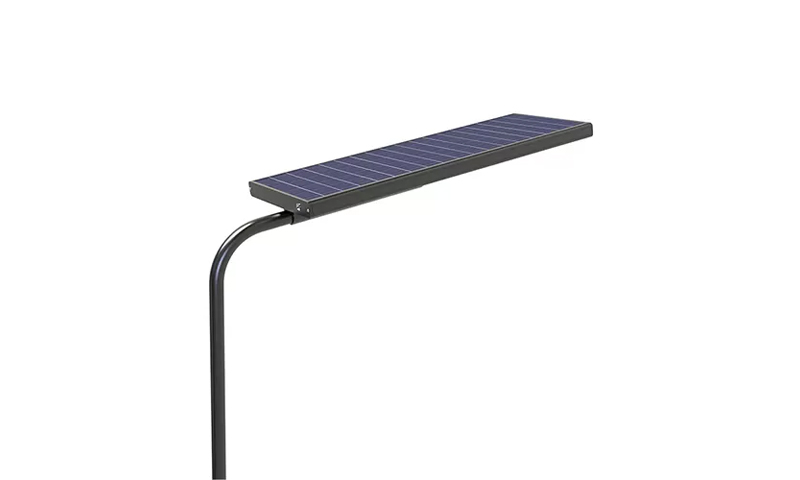
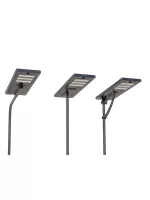
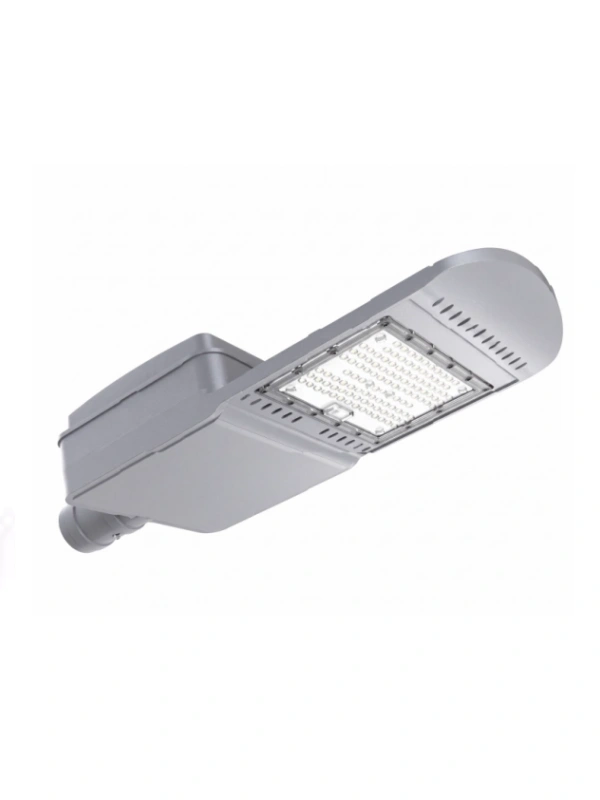
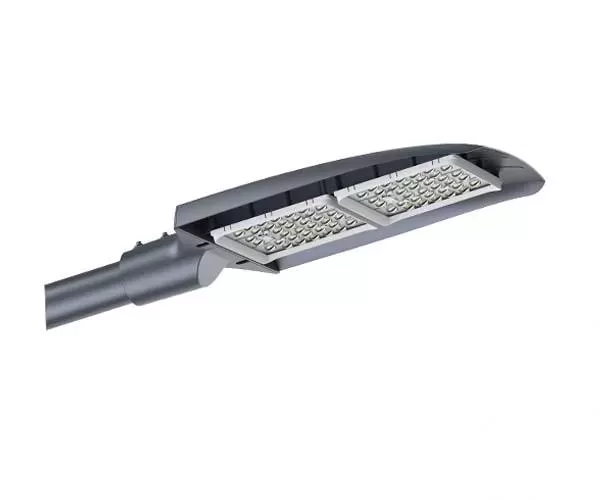
As a project reference, Inbrit's current 40W range identifies approximately 5,200–6,800 lumens at 130–170 lm/W for representative models, while model-dependent efficacy can be higher. These figures should not be treated as universal values for every 40W product.
Two 40W luminaires can therefore produce very different photometric results. A fixture producing 5,200 lumens and another producing 6,800 lumens both consume approximately the same rated LED power, but their available light output differs considerably.
Optical distribution then determines how effectively those lumens are placed on the target roadway.
Use 5–6m as a Project Reference, Not a Fixed Pole Height
Inbrit currently identifies 5–6m as a typical mounting range for its 40W project category. This is useful for preliminary design, but the final pole height should still follow road geometry and the required lighting result.
A 5m mounting height may work well for a community road, residential street, or narrower rural route where moderate coverage is required.
A 6m pole can potentially provide broader distribution, but the luminaire is also farther from the road surface. The optical system must therefore deliver adequate intensity and uniformity at the increased distance.
Higher is not automatically better. If a project moves substantially beyond the intended mounting range, the lighting designer should check whether the 40W lumen package remains sufficient.
Road Width Should Be Checked Together With Pole Position
Road width alone cannot determine whether 40W is suitable.
A 6m-wide road illuminated from poles installed immediately beside the carriageway creates a different optical requirement from the same road where poles are set back behind sidewalks, drainage channels, or landscaping.
Pole setback increases the horizontal distance the luminaire must cover. Arm outreach can move the fixture closer to the road, but arm length also changes the structural design of the pole.
For preliminary project evaluation, buyers should provide road width, number of lanes, sidewalk dimensions, pole setback, proposed arm length, and mounting height.
These inputs allow the supplier to determine whether the selected optic can place sufficient light on both the near and far portions of the roadway.
Do Not Use One Fixed Spacing for Every 5–6m Pole
There is no reliable rule stating that a 40W luminaire on a 5m or 6m pole should always be installed at one specific spacing.
Spacing depends on lumen output, optical distribution, mounting height, road width, pole arrangement, required average illumination, minimum illumination, and uniformity.
For example, increasing spacing can reduce the number of poles and foundations, but excessive spacing may create darker areas halfway between adjacent luminaires.
Reducing spacing improves overlap but increases the quantity of poles, foundations, solar systems, transportation, and installation work.
The preferred spacing is therefore the largest practical distance that still satisfies the project's lighting criteria—not the longest distance at which some light remains visible.
Photometric Uniformity Is More Important Than Maximum Brightness
A road can appear very bright beneath each pole but still perform poorly if large dark sections occur between poles.
This is why average lux alone should not be used to approve a layout. Minimum illumination and uniformity can reveal whether the light distribution is reasonably continuous along the road.
The U.S. Department of Energy's guidance for energy-efficient exterior lighting emphasizes verified photometric performance and notes the importance of accurate performance data when comparing exterior luminaires.
For a 40W project, an IES or other photometric file should therefore be used to simulate the actual road geometry before mass procurement.
Choose Optics Before Increasing Wattage
If a proposed 40W layout produces weak illumination on the far side of the road, increasing wattage is only one possible solution.
The first check should be whether the optical distribution is suitable for the road.
A roadway-oriented asymmetric or bat-wing distribution can place more useful light along and across the carriageway than a broad uncontrolled beam. This can improve uniformity without increasing electrical consumption.
Other adjustments may include arm outreach, pole setback, mounting height, or spacing.
Only after the geometry and optics have been optimized should the project move to a larger wattage if the lighting target still cannot be achieved.
Calculate the Real Nighttime Operating Profile
A 40W lamp does not necessarily operate at 40W throughout the entire night.
Consider an illustrative 12-hour schedule:
40W × 4 hours = 160Wh
28W × 4 hours = 112Wh
16W × 4 hours = 64Wh
The theoretical LED consumption would be approximately 336Wh rather than 480Wh for continuous 40W operation over 12 hours.
This example is not a recommended universal control profile. Actual dimming percentages and hours should reflect traffic patterns and minimum lighting requirements.
However, it demonstrates why operating schedule matters when determining panel and battery capacity.
Autonomy Should Be Defined in Energy Terms
Project buyers frequently request “two or three rainy days,” but autonomy should be linked to actual nightly Wh consumption.
If the lighting system consumes 350Wh per night, the energy needed to support several low-solar nights is different from a system consuming 480Wh.
The battery must also maintain an appropriate usable capacity reserve rather than being assumed to provide 100% of its nominal Wh under every condition.
Battery chemistry, discharge limits, temperature, aging allowance, controller settings, and system losses can all affect usable energy.
For procurement comparison, buyers should therefore ask suppliers to state nominal battery Wh, assumed usable Wh, nightly consumption, and the calculation behind the claimed autonomy.
Check Whether the Solar Panel Can Recover the Battery
Battery autonomy describes how long stored energy can support the load. Solar recovery describes how quickly that energy can be replaced afterward.
A large battery paired with an undersized photovoltaic panel may operate through several weak days but take too long to recover afterward.
The panel should therefore be sized not only to support an average night but also to provide a practical recovery strategy after low-solar periods.
Project location, seasonal solar radiation, panel orientation, shading, temperature, controller efficiency, and system losses all influence charging performance.
A 40W street light installed in two different countries may therefore require different panel and battery configurations even when the road geometry is identical.
Check Panel Size Against the Pole Structure
Increasing photovoltaic wattage usually means increasing panel area or using a different module configuration.
This has structural consequences. A larger panel adds wind-exposed area above ground and can change loading on the pole, bracket, base plate, anchor bolts, and foundation.
For 5–6m installations, the final panel dimensions and mounting angle should therefore be included in the pole review rather than added after structural design is complete.
This is particularly important in exposed roads, coastal areas, or high-wind projects.
Use a Complete Project Checklist Before Confirming 40W
Before approving the wattage, provide the project coordinates, road width, number of lanes, proposed pole height, pole setback, arm length, target spacing, lighting requirements, nightly operating hours, dimming schedule, autonomy target, and environmental conditions.
The supplier can then evaluate luminaire output and optics through a photometric simulation and size the battery and photovoltaic module from the approved operating profile.
This prevents the project from beginning with an arbitrary 40W specification and trying to make every other component fit it afterward.
40W Solar Street Light for 5–6m Poles FAQs
Is a 40W solar street light suitable for a 5m pole?
It can be. Inbrit currently identifies 5–6m as a typical project range for its 40W category, but final suitability depends on road width, optics, lumen output, spacing, and required lighting performance.
Can I use 40W on a 6m pole?
Yes, for suitable medium-duty applications, but a photometric calculation should confirm that the selected luminaire and optic meet the required road-level performance.
How far apart should 40W solar street lights be installed?
There is no universal spacing. Pole height, road width, optics, lumen output, setback, required lux, and uniformity determine the appropriate layout.
Is 40W suitable for rural roads?
It can suit many local rural roads and community routes, but wider or higher-speed roads may require greater output depending on the project lighting requirements.
How many hours can a 40W solar street light operate?
Operating time depends on battery Wh, controller program, actual LED power, dimming schedule, solar charging, and system losses. A claimed runtime should be supported by an energy calculation.
Does a 40W light need the same battery in every country?
No. Local solar radiation, seasonal weather, autonomy requirements, temperature, operating profile, and panel orientation can all change the required energy configuration.
Conclusion
A 40W solar street light can be a practical choice for many 5–6m community-road, residential, parking, and rural-lighting projects, but wattage should never be used as the only design criterion.
Road width, pole setback, spacing, optical distribution, lumen output, uniformity, operating schedule, battery autonomy, solar recovery, and structural conditions all need to be coordinated. The numerical ranges used during preliminary design should be treated as project references rather than fixed specifications.
The strongest procurement process is to provide actual road and site data, verify the layout through photometric simulation, and then calculate the battery and photovoltaic configuration around the approved nighttime load. This turns “40W” from a catalog label into a project-specific lighting and energy solution.

 English
 français
 Español
 العربية
 Pilipino
 ไทย
ไทย tiếng việt
 Malay
Malay русский