An infrastructure revolution is underway. As smart-city roadmaps accelerate through 2026, many municipalities and developers are moving away from grid-tied lighting—and toward self-contained, solar-powered systems that can be deployed fast, scaled easily, and monitored remotely.
For project managers and municipal engineers, the pain points are familiar: trenching and reinstatement costs keep climbing, copper theft remains a risk, and electricity bills lock you into decades of operating expense. The “plug-and-play” answer for many applications is the all-in-one LED solar street light—a compact luminaire that combines solar generation, storage, and high-efficiency LED lighting in one streamlined unit.
At Inbrit, we’ve spent 15+ years engineering and supporting solar lighting deployments across diverse climates and road classes. This guide lays out the real-world advantages, the honest limitations, and the technical decision factors that most strongly impact ROI.
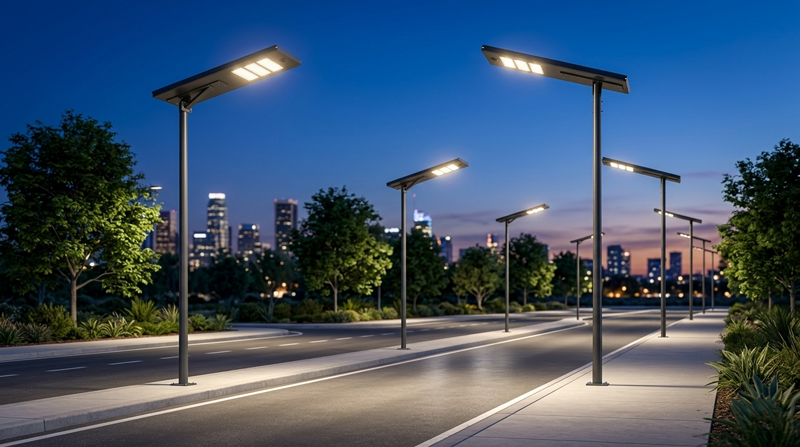
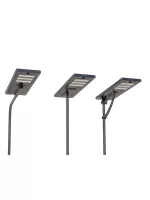
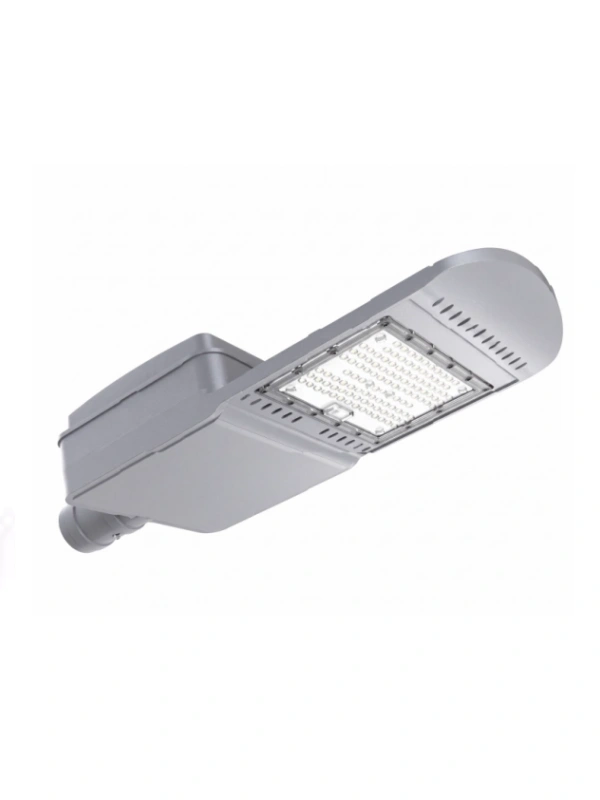
Inbrit Plate All-in-one Integrated Solar Street Light
What Exactly is an All-in-One (Integrated) Solar Street Light?
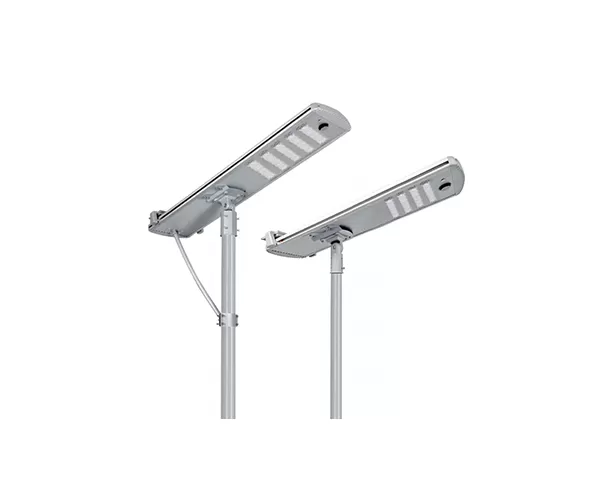
An all-in-one (AIO) solar street light—also called an integrated solar street light—is a self-contained outdoor lighting system that integrates these core components into a single housing:
Monocrystalline silicon solar panel (often high-efficiency, space-optimized)
LiFePO4 battery (Lithium Iron Phosphate) for energy storage
MPPT controller (Maximum Power Point Tracking) to maximize charging efficiency
LED light engine designed for high efficacy and long lumen maintenance (e.g., L70 performance targets)
2026 tech update: IoT monitoring + adaptive lighting
In 2026, higher-performing projects increasingly specify IoT-enabled monitoring (for fault alerts, battery health, and performance analytics) and adaptive lighting systems—such as ALS 3.0 strategies—to maintain reliability across seasonal variability and extended cloudy periods. These intelligence layers help design teams target 365-night operation with fewer surprises in the field.
The Advantages of Integrated Solar Street Lights
Zero-Trenching & Easy Installation Solar Street Light
The biggest advantage is also the easiest to quantify: no trenching and no underground cabling.
Eliminating trenching, ducting, pull boxes, and restoration can reduce civil scope significantly—often cutting related civil labor costs by up to 60% on suitable sites.
AIO units are commonly deployed as “set pole, mount light, commission” workflows—making rapid rollout feasible for rural roads, villages, and remote industrial sites.
Why this matters: when you remove trenching from the critical path, you reduce schedule risk, permitting complexity, and the downstream maintenance burden associated with buried infrastructure.
Lower Total Cost of Ownership (TCO)
The all in one solar street light price is typically higher than a conventional grid-tied LED luminaire—but the total ownership picture often flips in favor of AIO when you account for:
Zero electricity bills
No cabling and no utility connection costs
Reduced exposure to copper cable theft
Faster deployment (lower project overhead and traffic control time)
For many municipalities evaluating all in one solar street light wholesale options, the best ROI often comes from selecting a slightly higher-quality unit with a stronger battery and MPPT controller, because it can reduce maintenance visits and extend the system’s useful service life.
Resilience & Aesthetics
Integrated lights are popular for urban parks, pathways, and public spaces because they deliver:
A sleek, minimal streetscape profile
A more tamper-resistant configuration (battery is internal)
Better continuity of service during grid outages (critical for safety lighting)
The Disadvantages of All-in-One Solar Street Lights (and How to Mitigate Them)
Power & Panel Size Constraints
Because the solar panel is mounted to the fixture body, panel area is inherently limited. That creates real constraints for high-lumen requirements, tall poles, or low-sun environments, where a hybrid street light may be considered for more reliable power support.
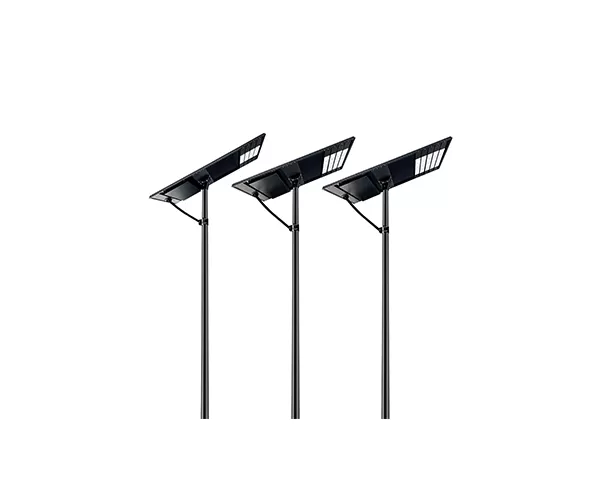
Mitigation: Choose designs that increase solar harvest despite limited area—such as Inbrit's OWL series with adjustable solar panel angles, helping teams optimize tilt for local latitude and seasonal sun paths.
Sensitivity to Shading
AIO systems can be less forgiving when shading is present—because you can't relocate the panel away from a tree canopy or a building shadow the way you might with a split-type system.
Solution:
Conduct a site survey (including shading analysis across seasons)
Use high-efficiency monocrystalline cells (22%+ efficiency) where appropriate
Specify smart dimming profiles to preserve autonomy during poor irradiance weeks
Technical Deep-Dive: Solar Street Light Lifespan and Battery Space
The battery factor: why LiFePO4 is the 2026 standard
For professional-grade solar lighting, LiFePO4 is widely favored because it supports stable cycling performance, improved thermal safety, and long-term capacity retention compared to older chemistries used in low-cost systems. In practice, battery quality and BMS (battery management system) design are often the difference between a light that “works in summer” and one that performs year-round.
Battery space vs. autonomy (rainy-day performance)
AIO design creates a packaging challenge: battery capacity must fit inside the luminaire body. That internal volume directly affects autonomy—how many nights the light can operate without meaningful charging.
Inbrit optimizes internal housing layouts to support higher-capacity packs sized for 3–5 days of rainy-day autonomy (application-dependent), balancing:
Required lumen output and run time
Local Peak Sun Hours (PSH)
Seasonal temperature and charging conditions
Smart dimming profiles (adaptive schedules)
Maintenance of AIO solar street lights (2026 best practice)
Integrated doesn't have to mean “replace the whole unit.” The best modern systems use modular access to key components.
Look for service-friendly designs where the battery/controller module can be accessed quickly.
Inbrit’s BRETT series, for example, is designed to support fast maintenance access so field teams can troubleshoot without swapping the entire luminaire.
(Internal link suggestion: create a dedicated guide on Solar Street Light Maintenance and another comparing LiFePO4 vs. Lead Acid for procurement teams.)
Decision Matrix: Is It the Right Choice for Your Project?
Ideal scenarios for all-in-one systems
AIO is usually a strong fit for:
Residential streets and local roads
Village roads and rural development programs
Parking lots and campuses
Parks, pathways, and public squares
Industrial zones and perimeter lighting
Less ideal scenarios (where split-type may win)
Consider split-type solar street lights, hybrid systems, or an ac led street light for the following project conditions:
High-speed highways or major arterials requiring very high lumen packages (often >15,000 lumens)
Sites with unavoidable shade where panel relocation is necessary
Extreme wind-load locations where pole + fixture loading requires special engineering
Buyer checklist (engineering-ready)
Before selecting an all-in-one solar street light supplier, confirm that the luminaire is compatible with the planned pole structure. A qualified solar street light pole factory should be able to provide the structural specifications needed to evaluate pole height, wind load, mounting method, and fixture sail area. Also confirm:
Wind load and pole structural requirements (including sail area considerations)
Local Peak Sun Hours (PSH) and seasonal variability
Required mounting height, spacing, and target illuminance/uniformity
Optical distribution (roadway type) and glare control
Minimum battery autonomy requirement + dimming schedule assumptions
Environmental rating (aim for IP65/IP66) and corrosion protection for coastal sites
Why Inbrit is Your Trusted All-in-One Solar Street Light Supplier
Choosing a supplier isn't just about datasheets—it's about whether the system is engineered for your climate, roadway class, and maintenance reality.
The Inbrit advantage (series highlights)
LYRA: Self-cleaning approach for dusty environments to help sustain solar harvest
OWL: IP66-grade protection and adjustable panels to maximize energy capture
PLATE: Cost-effective option for rural and budget-sensitive deployments
Compliance and procurement trust
For public-sector and large-scale procurement, compliance matters. Inbrit supports common expectations around ISO, CE, and RoHS practices—helping teams reduce qualification risk and improve long-term service confidence.
Conclusion: Making a Future-Proof Investment
For most modern projects, an all-in-one LED solar street light is a practical way to cut trenching scope, avoid recurring electricity costs, and deploy resilient lighting quickly. While the upfront all in one solar street light price may be higher than a basic LED luminaire, the avoided civil works, utility bills, and theft risk often make AIO the stronger long-term financial decision.
External trend reference (renewables context): The International Energy Agency highlights continued record growth in renewables and solar PV expansion, reinforcing why self-contained solar infrastructure is increasingly aligned with 2026 energy direction.
FAQs
How long do solar street lights last?
A well-specified solar street light can deliver multi-year performance, but real lifespan depends on LED lumen maintenance (L70 design targets), battery cycle life, thermal management, and environmental conditions. In most systems, the battery is the first major component likely to require service, while the LED engine can last longer if properly cooled and driven.
What is the maintenance for AIO solar street lights?
Maintenance typically includes periodic panel cleaning (site-dependent), checking mounting hardware, and scheduled battery health inspections. Choosing a modular AIO design can reduce service time by allowing battery/controller access without replacing the full luminaire.

 English
 français
 Español
 العربية
 Pilipino
 ไทย
ไทย tiếng việt
 Malay
Malay русский