Cities and communities worldwide are upgrading to smarter, safer, and more efficient streets—and one of the fastest wins starts at ground level: lighting. Rising electricity prices, aging grids, and the high labor cost of trenching/cabling have accelerated demand for reliable off-grid illumination.
If you’re evaluating integrated solutions, an all in one solar street light is often the simplest, most cost-effective path to modern, sustainable lighting—especially for parks, residential roads, pathways, campuses, and municipal upgrades.
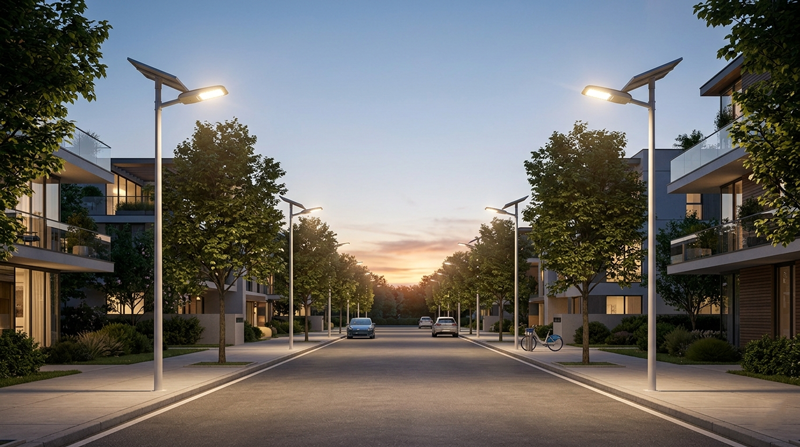
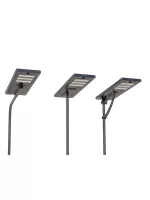
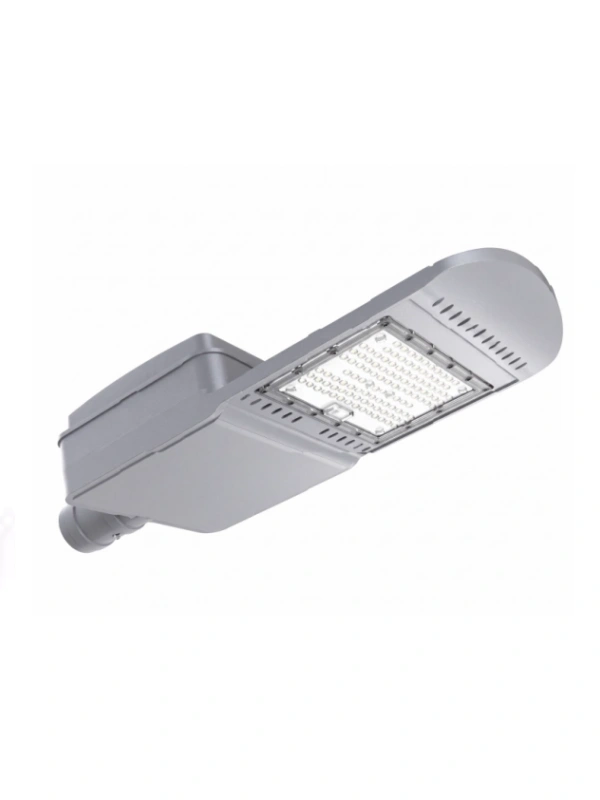
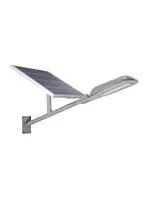
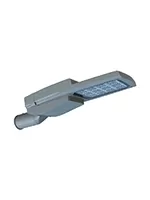
Inbrit BRETT All-in-one Solar LED Light
Integrated Solar Street Light Definition (Direct Answer)
An all-in-one solar street light (also called a self-contained solar street light or integrated solar street light) is a single, compact lighting unit that combines the solar panel, battery, LED light engine, and smart controller into one housing—delivering plug-and-play installation without trenching, cabling, or grid electricity.
Introduction: The Evolution of Urban Lighting
Traditional grid-tied street lights, including an ac led street light, solve the basic need for illumination, but they can create long-term cost and maintenance burdens:
High energy bills year after year
Complex wiring and trenching, especially expensive in retrofits
Grid dependence, where outages become safety issues
Ongoing electrical maintenance (cables, breakers, corrosion points)
For municipalities and contractors comparing all in one solar street light wholesale solutions, the modern approach is a standalone photovoltaic lighting system that captures sunlight, stores energy, and intelligently delivers light when and where it is needed.
I. What Is an All-in-One Solar Street Light?
The “Plug-and-Play” Concept
All-in-one systems are built for speed and simplicity: mount the unit (pole-top or arm bracket), set the angle if applicable, configure the lighting mode, and power on. There’s no external battery box, no separate controller cabinet, and typically no underground electrical work.
The “All-in-One” Philosophy
Integrating key components into one enclosure changes the entire lifecycle of a streetlight:
Installation becomes faster and more predictable
Maintenance points are reduced (fewer exposed connections)
Aesthetics improve with a clean, modern profile
Reliability increases because the system is engineered as a matched set (panel + battery + optics + controller)
Industry Synonyms (for clarity)
If you’re searching specs or tenders, these terms often refer to the same category:
II. Components of an AIO Solar Street Light: The 5 Key Parts That Determine Performance
A high-performance AIO unit isn’t “just a solar panel and a lamp.” It’s an engineered system. These five components determine real-world brightness, runtime, and longevity.
1) High-Efficiency Solar Panel (Photovoltaic Conversion)
Modern AIO street lights increasingly use monocrystalline silicon panels due to higher photovoltaic conversion efficiency compared to older polycrystalline options. Better conversion matters most in:
What to look for: stable output, weather-resistant lamination, and strong glass/encapsulation suitable for outdoor thermal cycling.
2) LiFePO4 Battery (Lithium Iron Phosphate)
Battery quality determines autonomy (nights of backup) and lifecycle cost. LiFePO4 is widely preferred for solar lighting because it offers:
long cycle life (often 5–8+ years in typical outdoor duty cycles)
improved thermal stability vs many standard lithium chemistries
consistent discharge behavior that supports reliable lumen output
Why Inbrit uses LiFePO4: it’s the best fit for long-life, daily-cycling street lighting where safety and durability matter.
3) Professional-Grade LED Module (Luminous Flux + Optics)
Not all “watts” are equal. What matters is luminous efficacy (lm/W) and optics design:
Higher lm/W means more light from the same energy budget.
Proper light distribution patterns (lens/reflector design) improve uniformity, reduce glare, and match roadway/pathway requirements.
Pro tip: evaluate the lighting by illuminance targets and uniformity, not just raw lumen claims.
4) Intelligent MPPT Controller (The Brain of the System)
An MPPT (Maximum Power Point Tracking) controller continuously optimizes charging, improving energy harvest—especially during low-light conditions.
A quality controller also manages:
overcharge/over-discharge protection
temperature-aware charging behavior
lighting schedules + dimming profiles
battery health strategy over years of cycling
5) PIR/Microwave Motion Sensor (Smart Dimming for Longer Runtime)
Smart sensing extends autonomy on poor-weather days by reducing power draw when nobody is nearby.
Typical strategy:
Dim to a baseline (e.g., 20–30%)
Boost to higher output when motion is detected
Return to baseline after a set time
This can materially improve “rainy day backup,” especially for low-traffic roads, parks, or perimeter lighting.
Information Gain: Thermal Management in Integrated Units (Often Overlooked—Critical in the Field)
Because the battery, controller, and LEDs share a compact enclosure, thermal management becomes a make-or-break engineering factor.
A well-designed AIO unit uses:
heat-sink architecture (LED board thermal path to housing)
thermal isolation strategies that prevent LED heat from accelerating battery aging
materials and housing geometry that reduce heat soak in high-sun climates
Why this matters: heat accelerates battery degradation and can reduce controller efficiency. Good thermal design protects lumen maintenance, charging stability, and service life—especially in hot, coastal, or desert environments.
III. All-in-One vs. Split-Type Solar Street Light: Which Is Better?
Below is a practical comparison used by project planners and contractors.
| Factor | All-in-One (AIO) | Split-Type (Panel/Battery Separate) |
|---|
| Installation time | 15–30 minutes typical | 2–4 hours typical |
| Civil/electrical work | Minimal (no trenching) | More mounting, wiring runs, boxes |
| Cost efficiency (TCO) | Lower labor + fewer failure points | Can be higher due to complexity |
| Aesthetics | Sleek integrated design | Bulkier (battery box + external cabling) |
| Wind resistance | Compact profile can perform better in high winds | More surface area + mounting points |
| Maintenance | Simplified inspection | More connectors and exposed parts |
When to Choose AIO (Best-Fit Scenarios)
All-in-one is often the best choice when you need:
fast deployment with limited labor
clean design for modern streetscapes
reliable lighting for parks, residential roads, pathways, campuses
reduced long-term maintenance complexity
Split-type can still be useful when you need highly customized panel placement (e.g., complex shading) or extremely high power configurations. But for most standard roadway and area-lighting applications, AIO is the fastest route to value.
IV. The Inbrit Advantage: Engineering the Future of Integrated Lighting
Inbrit designs integrated solar lighting with a system-level approach: PV harvesting + storage + optics + control strategy—all tuned to real outdoor conditions.
Experience You Can Specify Into a Project
With 25+ years of engineering leadership, the team designs for what planners and contractors face in the field: harsh weather, inconsistent sun hours, and the need for predictable lighting performance.
Product Spotlight (Examples of Where the Engineering Shows Up)
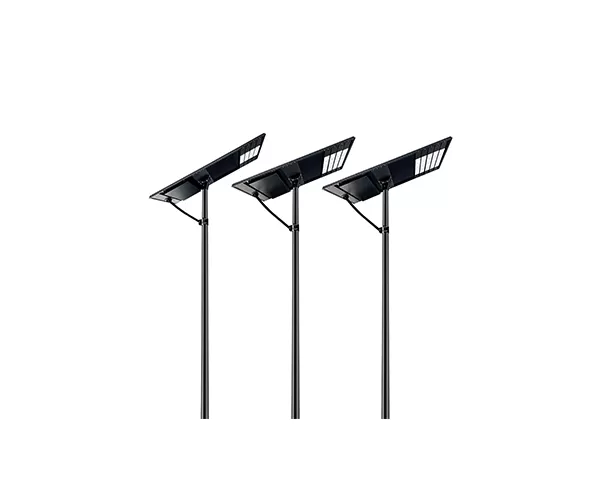
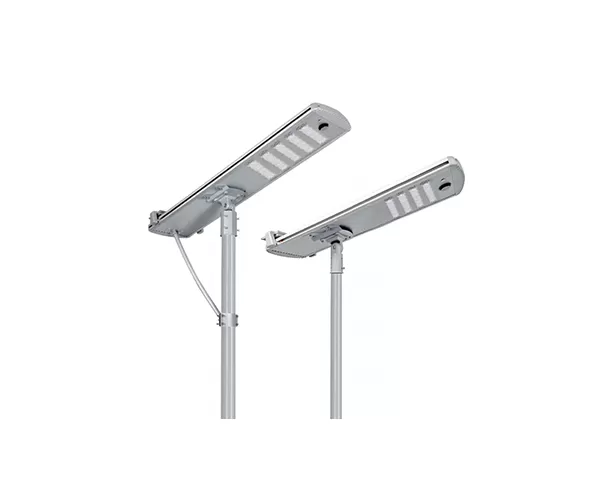
BRETT Series: A versatile, “all-rounder” option covering common needs from 10W–80W.
LYRA Series: Features an innovative self-cleaning system, helping maintain panel efficiency in dusty environments.
OWL Series: Built for harsh conditions with an IP66 rating, ideal for extreme coastal or high-exposure weather.
Sustainability Without Compromising Safety
Integrated solar street lighting reduces operational emissions by cutting grid consumption, while improving resilience during outages—helping protect public areas, pedestrians, and traffic routes.
V. Installation & Maintenance: A Pro’s Perspective
Simplified Setup (Typical Steps)
Before installation, confirm that the fixture, mounting arm, and pole structure are compatible. A qualified solar street light pole factory should be able to provide pole height, arm dimensions, base plate specifications, and wind-load information for project review.
Confirm site conditions: sun exposure, pole height, roadway width, mounting direction.
Choose mounting method:
Secure the fixture: torque bolts to spec and ensure anti-loosening measures.
Set the panel angle (if adjustable): optimize for sun path and seasonality.
Configure mode: time-based schedules and/or motion-sensing profiles.
Commission at dusk: verify sensor response, output levels, and runtime strategy.
Maintenance Myth-Busting: “Self-Contained” Doesn’t Mean “Zero Care”
All-in-one lights reduce maintenance—but you still want a simple checklist:
Clean the panel periodically (dust, salt mist, pollen can reduce output).
Check sensor lenses for obstruction or insect buildup.
Inspect mounting hardware after storms/high winds.
Review operating modes seasonally (winter profiles vs summer profiles).
Internal linking suggestion: Add links to supporting resources like Solar Battery Maintenance and How to Calculate Lumens for Street Lighting to help buyers spec correctly and to strengthen topical authority.
Simple ROI Example: How AIO Solar Can Save Real Money
A typical grid-tied street light can accumulate major costs over 5 years:
In many projects, an integrated solar unit can avoid thousands in energy and labor costs over its lifetime, especially in new developments or areas where trenching is expensive. If you want, Inbrit can offer a project-based payback estimate using pole count, installation labor rates, and local electricity prices.
Interactive element suggestion: embed a Savings Calculator (inputs: number of lights, kWh rate, installation labor hours, trenching cost) to provide instant TCO comparisons.
Conclusion: Why All-in-One Solar Street Lights Are the Future
An all-in-one solar street light is one of the most practical upgrades for modern outdoor lighting: it’s faster to install, lower in lifetime cost, and more resilient than traditional grid-tied systems—while supporting long-term sustainability goals.
Ready to upgrade your project? Explore Inbrit's All-in-One Solar Street Light Range today.
FAQs
Do all-in-one solar street lights work on cloudy days?
Yes. They store energy in the battery and operate at night from that stored power. Performance on consecutive cloudy/rainy days depends on battery capacity, MPPT charging efficiency, and whether the light uses smart dimming (motion-sensing modes can significantly extend autonomy).
How long does an AIO solar battery last?
Quality LiFePO4 batteries commonly deliver 5–8 years of service life in solar lighting duty cycles, depending on depth of discharge, temperature, and charging strategy. Thermal management and controller programming play a major role in long-term battery health.
Can the solar panel angle be adjusted in an AIO light?
Some models support adjustable mounting brackets, allowing you to optimize tilt and direction for better solar harvest. If panel-angle optimization is critical (high latitude, seasonal variation, partial shade), choose an AIO model designed with adjustability in mind.

 English
 français
 Español
 العربية
 Pilipino
 ไทย
ไทย tiếng việt
 Malay
Malay русский