Traditional outdoor lighting looks simple on paper: put up a pole, run power, turn it on. But for most commercial sites, the biggest “hidden cost” isn’t the electricity bill—it’s the trenching, conduit, wiring, restoration, and electrical labor required to get power to each lighting location.
That’s why more property owners are considering solar street light poles: they can bypass a large part of the infrastructure work entirely. Still, the skepticism is valid—and common:
“Will it actually stay on all night?”
“What happens in winter or during a week of rain?”
“Is it a real ROI win, or just a sustainability vanity project?”
This guide takes a consultative, site-qualification approach so you can decide (confidently) whether solar street light poles are a fit for your parking lot, campus, industrial yard, or remote facility.
How Modern Solar Street Light Poles Work (And Why Today's Systems Are Different)
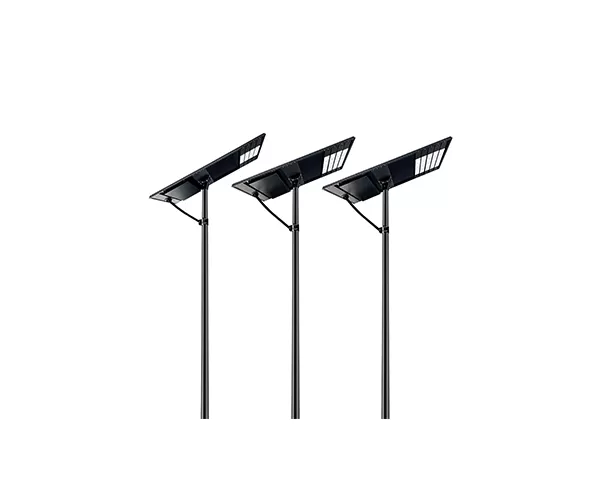
Modern solar street light poles are not the underpowered garden lights people remember. A properly engineered solution is a self-contained outdoor lighting system built around a solar street light pole, with power generation, storage, and controls designed for dusk-to-dawn reliability.
The “Big Three” Components That Determine Performance
1) High-efficiency monocrystalline PV panels
A solar street light pole system harvests solar energy through photovoltaic (PV) conversion. Commercial-grade monocrystalline panels matter because they typically deliver higher output per square foot—helpful in:
limited mounting area (pole-top constraints)
hazier regions or seasonal low-angle sun
shoulder seasons with shorter daylight windows
2) LiFePO4 batteries (the current commercial standard)
In most commercial deployments, real-world success comes down to battery quality and sizing. LiFePO4 battery configurations are widely preferred because they generally provide:
longer cycle life than legacy lead-acid solutions
more stable performance at higher Depth of Discharge (DoD)
more predictable long-term maintenance planning
3) MPPT charge controllers (the “brain”)
An MPPT controller (Maximum Power Point Tracking) continuously optimizes how the panel charges the battery. This is especially important during:
Put simply: MPPT helps you harvest more usable energy when conditions aren’t perfect.
All-in-One vs. Split-Type Solar Street Light Poles (What You’re Actually Buying)
All-in-one solar street light systems (pole-mounted)
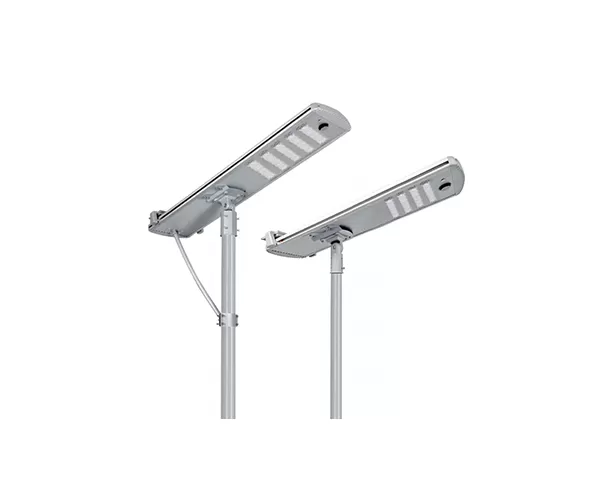
For property owners comparing all in one solar street light wholesale options, all-in-one configurations integrate the panel, battery, controller, and LED fixture into one compact unit, which is typically mounted at the top of the solar street light pole. Benefits commonly include:
Trade-off: less flexibility for custom sizing (panel/battery/fixture) on unusual sites.
Split-type solar street light pole systems
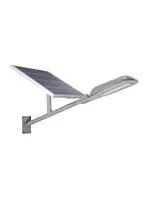
Split-type designs separate major components (for example, panel and fixture separate, battery in a lockable compartment on/inside the solar street light pole). Benefits:
easier customization for high-output requirements
potentially simpler servicing or battery replacement
more options for optimizing tilt/orientation
Trade-off: more components and design decisions (which is fine—if engineered properly).
The 4 Critical Factors That Decide If Solar Street Light Poles Are Viable (Use This Checklist)
If you’re comparing off-grid lighting using solar street light poles to conventional grid-tied lighting, these four factors are the difference between “excellent investment” and “regret.”
A) Geographic location: peak sun hours (PSH)
Not every site has the same solar resource. You don’t need perfect sun to succeed, but you do need a realistic view of Peak Sun Hours and seasonal swings.
Rule of thumb: solar street light poles work best when your site has consistent exposure and your design accounts for the worst month (not the best month).
Helpful resource: Use credible solar radiation datasets (like NREL solar resource data) to estimate PSH for your zip code before you finalize specifications.
B) Shading analysis (often the #1 deal-breaker)
Shading isn’t a minor efficiency hit—it can be a system killer. One tree, parapet wall, or nearby building can reduce energy harvest dramatically, especially when it blocks the panel during key charging hours.
In commercial projects, treat shading as a yes/no gate:
If the mounting area can’t get consistent sun, you either redesign placement/height or solar street light poles may not be the right solution for that specific location.
C) Battery autonomy: the “3-day rule” for commercial reliability
Battery autonomy is how long the light can run if charging is poor (storms, smoke, heavy overcast). A common target is ~3 nights of autonomy without meaningful charging.
This is where under-sized solar street light pole systems fail: they may look bright at 9:00 PM, then dim early—or shut off—at 2:00 AM.
D) Lighting requirements (security vs. decorative)
A solar street light pole is not a generic product; it’s an engineered lighting system. Your required light level changes everything:
High-security areas often need higher, more uniform illumination and longer runtime
Pathways and landscaping can use lower output with smarter optics
If you’re evaluating vendors, ask for design details like:
target illumination levels (often expressed in foot-candles)
photometric distribution and spacing recommendations
LED luminous efficacy (lm/W)
control strategy (dimming profiles, motion sensing, dusk-to-dawn sensors)
Solar Street Light Pole ROI: Solar vs. Traditional Grid-Tie (Where the Money Actually Moves)
Initial investment: solar is usually higher per lighting point
A quality solar street light pole package often costs more upfront than a conventional pole paired with an ac led street light. That is normal because the solar package also includes power generation, battery storage, and intelligent control components.
Installation costs: often 70–80% lower (because you avoid trenching)
This is the core commercial advantage. Traditional lighting often requires:
trenching and conduit
copper wiring and pull boxes
restoration (asphalt, concrete, landscaping)
electrical permits and inspections
longer project schedules (and more site disruption)
A solar street light pole installation usually needs:
Maintenance planning: batteries are the main lifecycle item
A well-built pole can last decades, but batteries are consumables. Expect a battery replacement cycle (commonly in the mid single-digit years, depending on operating profile, DoD, temperature, and battery quality).
This is why the cheapest system is often the most expensive system: early battery failure destroys ROI and creates operational headaches.
Break-even: sometimes “day one” in trench-heavy sites
If your site would require long trench runs, boring under pavement, or extensive restoration, the avoided infrastructure cost can be so large that solar street light poles effectively “pay back” immediately in project budget terms—even before energy savings.
Common Pitfalls to Avoid (What Causes Most Commercial Failures)
1) Under-specifying the battery (the classic 2:00 AM problem)
Battery sizing is the most common failure point. If a vendor won’t clearly state:
battery chemistry (LiFePO4 vs. alternatives)
usable capacity and assumed DoD
expected autonomy nights at your runtime profile
…you’re not buying engineered lighting—you’re buying hope.
2) Ignoring wind load and foundation requirements
Panels act like sails. A solar street light pole can require a different foundation design than a standard pole because wind load, height, and mounting geometry all change the forces involved.
If the project is located in a coastal or high-wind corridor, work with a qualified solar street light pole factory that can provide pole specifications and foundation recommendations aligned with the project’s local wind-loading requirements.
3) Buying a “lighting product” instead of a “site solution”
For commercial sites, solar street light poles should be selected as part of an engineered system. If you want to review pole options engineered for load requirements, start here: Inbrit’s galvanized solar street light poles (for pole configurations and specifications).
Real-World Commercial Applications Where Solar Street Light Poles Excel
Remote parking lots and overflow areas
If your lighting plan extends beyond the nearest power source, solar street light poles can eliminate costly extensions and minimize disruption.
Parks, green spaces, and campuses
Solar supports renewable street lighting without tearing up landscaping, pathways, or sensitive areas—especially valuable when restoration costs are high or excavation is restricted.
ESG and sustainability branding (with real operational value)
Solar street light poles can support ESG goals while also improving deployment speed and reducing long-term exposure to grid extension costs—particularly for new developments and remote expansions.
Conclusion: The Final Verdict on Solar Street Light Poles
Solar isn’t for every site. Deeply shaded corridors, tight urban canyons, and locations with unavoidable obstructions can make performance unreliable.
But for open-air commercial lots, campuses, industrial yards, and remote facilities, solar street light poles are often the superior option—especially when trenching would be expensive or disruptive.
Next step: Ready to see if solar is right for your zip code? Browse our range of solar street light poles or contact our engineers for a custom lighting simulation.
FAQs
How long do solar street light batteries last?
In commercial-grade systems using LiFePO4, battery life is commonly around 5–8 years, depending on temperature, Depth of Discharge (DoD), and nightly runtime/dimming strategy.
Do solar street light poles work in the winter?
Yes—solar street light poles can work in winter, but winter design must account for shorter days and lower solar gain. Cold temperatures also affect battery behavior, so proper battery chemistry (LiFePO4), enclosure design, and correct autonomy sizing matter.
How much wind can a solar street light pole withstand?
It depends on pole height, panel area, mounting geometry, and foundation design. For commercial projects, ask whether the pole/foundation design aligns with local wind-loading requirements and the project’s specified criteria.


 English
 français
 Español
 العربية
 Pilipino
 ไทย
ไทย tiếng việt
 Malay
Malay русский