Choosing a light pole material isn't a cosmetic decision—it's a lifecycle ROI decision. In most commercial projects, a pole is expected to perform for 20–30 years (or more). But if the material-to-environment match is wrong, you'll see it fast: corrosion at the base, premature finish failure, leaning from wind fatigue, or full replacement well before the pole should be “due.”
As someone who's reviewed pole failures and maintenance records across parking lots, roadways, and industrial sites, here’s the reality: there is no perfect light pole material—only the right material for the climate and exposure conditions. The galvanized steel light pole remains the industry standard for strength and value, but it’s not automatically the best choice in every environment (especially aggressive coastal air or chemical exposure).
1) Why Material Selection Is the #1 Factor in ROI
Most projects focus on fixture performance and photometrics (important), but the pole itself is the long-term asset. Material choice determines:
Corrosion rate (especially at the base plate/anchor bolt zone)
Structural capacity under wind load (and long-term fatigue)
Install complexity and cost (equipment, crew time, handling)
Maintenance frequency (touch-up cycles, coatings, replacement timing)
If your environment is humid, coastal, or uses deicing salts, the “right” pole material can mean the difference between a 50-year asset and a 5–10 year headache.
2) The Powerhouse: Galvanized Steel Light Poles (Strength + Value)
A galvanized steel light pole is often the best all-around choice for projects that need high structural capacity at a predictable cost—especially when wind and impact resistance matter.
When to use galvanized steel
High-traffic areas (parking lots, campuses, distribution centers)
High-wind regions (open terrain, plains, hurricane-prone inland zones)
Budget-conscious, large-scale rollouts (standardization across properties)
Industrial zones where physical durability is a priority
Why galvanizing works (the expert explanation)
Most quality steel poles are protected with hot-dip galvanizing (HDG)—a process where fabricated steel is dipped into molten zinc. That zinc coating does two important things:
Barrier protection: it separates steel from oxygen/moisture.
Sacrificial (cathodic) protection: zinc corrodes before the steel does, helping protect small scratches or minor damage.
This “sacrificial anode” behavior is exactly why galvanized coatings can outperform many paint-only systems in real jobsite conditions—where nicks and abrasion happen during transport and installation.
Pros
Highest structural integrity (excellent yield strength and stiffness)
Lowest initial cost in many standard commercial pole packages
High impact resistance (better in vandalism-prone areas)
Cons
Heavier material (more equipment and handling effort)
In aggressive salt/chemical environments, base-area detailing matters more (standing water + salts is a known failure accelerant)
Best climate match
Inland cities
Windy corridors / open terrain
Industrial and logistics sites
Cold regions if base protection and drainage details are done right
3) The Coastal Specialist: Aluminum Light Poles (Salt-Air Advantage)
If your project is in a coastal region, aluminum often wins—not because it’s “stronger,” but because it’s naturally corrosion resistant in salt-air exposure.
When to use aluminum
Why aluminum resists corrosion
Aluminum forms a thin, protective oxide layer when exposed to air. This oxide layer helps prevent the kind of deep, rust-driven section loss you see in unprotected steel. It’s a major reason aluminum is widely used in marine-adjacent applications.
Pros
Excellent corrosion resistance in coastal/salt-air environments
Lightweight (faster handling and easier installation logistics)
Sleek appearance (often preferred for architectural streetscapes)
Cons
Best climate match
Beachfront / coastal commercial properties
Marinas, boardwalks, coastal resorts
Humid tropical regions with persistent moisture exposure
4) Comparative Matrix: Climate vs. Material (Quick-Reference)
| Environment / Project Condition | Best Choice | Why |
|---|
| High wind / open terrain / “Tornado Alley” | Galvanized steel | Highest strength and stiffness; cost-effective at scale |
| Coastal / beachfront / salt-air | Aluminum | Superior corrosion behavior in salt-air exposure |
| Heavy snow + deicing salts | Galvanized steel (with proper detailing/coatings) | Proven structural performance; base-zone detailing reduces salt-driven corrosion risk |
| Architectural urban streetscape | Aluminum (often) | Finish quality + corrosion resistance + lighter handling |
5) Beyond Material: EPA and Wind Load Are Non-Negotiable
Material selection alone does not “solve” longevity—engineering does.
What is EPA (Effective Projected Area)?
EPA is the effective wind-catching area of the entire assembly: pole + brackets + luminaires (and sometimes banners/cameras). Two poles of the same height can have totally different wind demands depending on fixture size and arm configuration.
Why it matters
A pole can be “the right material,” yet still fail or deflect excessively if the wind load (and resulting moment) wasn’t designed correctly.
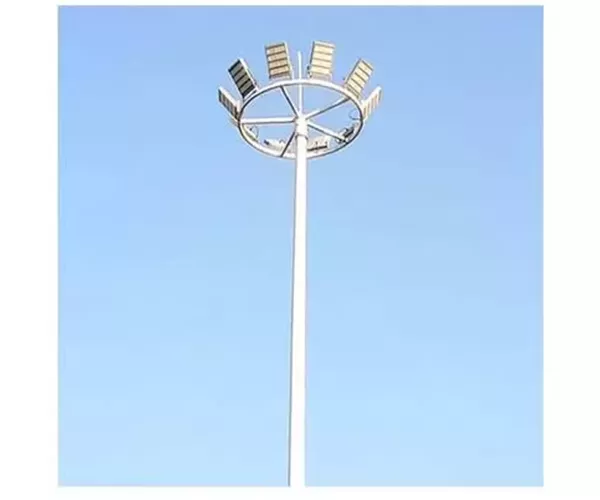
A high mast pole or another tall pole carrying large fixtures and extended arms may require thicker walls, a reinforced base plate, or a different structural class to meet the calculated wind load.
Trust-building advice (what to ask for)
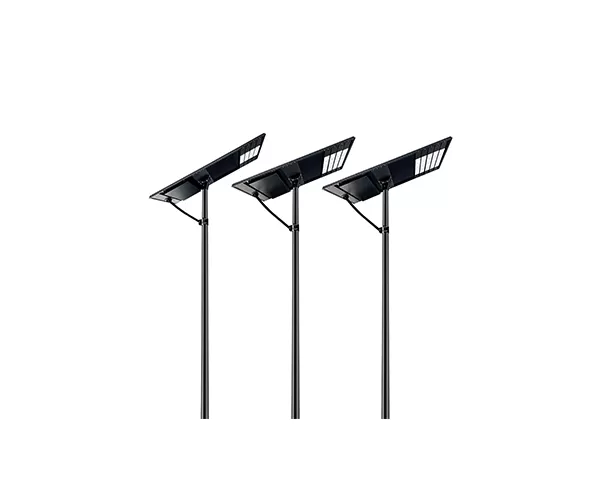
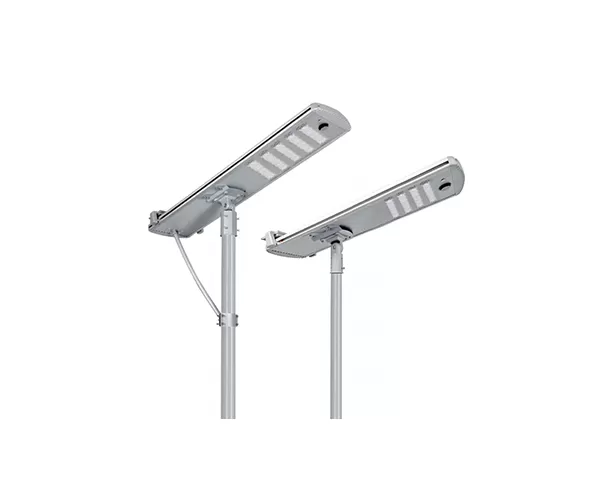
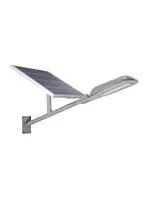
For solar lighting projects, don’t guess. Consult a solar street light pole factory that can provide engineering calculations based on the project’s wind conditions, exposure category, and fixture EPA. Also confirm the complete structural system, including anchor bolts, base plate design, and foundation details.
Entities that signal real spec-level competency (and help your submittals):
Hot-dip galvanizing (HDG)
ASTM standards (commonly referenced for galvanizing and structural steel)
Yield strength
Powder coating (as a topcoat option over galvanizing)
Anchor bolts and bolt circle
Wind speed maps / exposure categories
AASHTO (roadway-oriented guidance in many jurisdictions)
Pro-Tip from the Field (Experience That Prevents Early Base Corrosion)
When installing galvanized steel light poles in areas that use heavy road salt, elevate the base plate slightly on leveling nuts and grout properly so water doesn’t pond against the base. The most common corrosion failures I see start at the base plate/anchor bolt zone—not mid-shaft—because that’s where salty water sits and dries repeatedly.
6) Conclusion: Making the Final Call (Steel vs. Aluminum)
If you want the most reliable default for strength and value, galvanized steel is hard to beat—especially for parking lots, roadways, and high-wind regions. If you’re near the ocean or in constant humidity, aluminum often delivers better long-term corrosion performance with easier handling and cleaner aesthetics. When specifying a solar street light with pole, buyers should also consider the additional wind area created by the solar panel and fixture. In every case, correct wind design, base detailing, and corrosion protection determine whether the project delivers a long-life asset or an early replacement problem.
FAQs
How long does a galvanized steel light pole last?
In many inland environments, a hot-dip galvanized steel pole can last 50+ years with minimal maintenance, assuming proper specification and installation details (especially at the base).
Is aluminum or steel better for parking lot lights?
For most large parking lots, steel is typically the go-to due to cost efficiency and structural performance at common heights. If the parking lot is in a coastal/salt-air environment, aluminum is often preferred to reduce corrosion risk.

 English
 français
 Español
 العربية
 Pilipino
 ไทย
ไทย tiếng việt
 Malay
Malay русский