Solar street lighting is often sold with a promise that sounds simple: charge by day, shine at night. But if you manage municipal roads, industrial parks, or large-scale infrastructure, you already know the real test isn't a sunny week—it's consecutive rainy or overcast days.
In this guide, you'll learn why many systems dim too early in bad weather—and how smart dimming profiles and intelligent power management help modern systems deliver over 300 days of reliability.
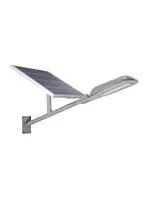
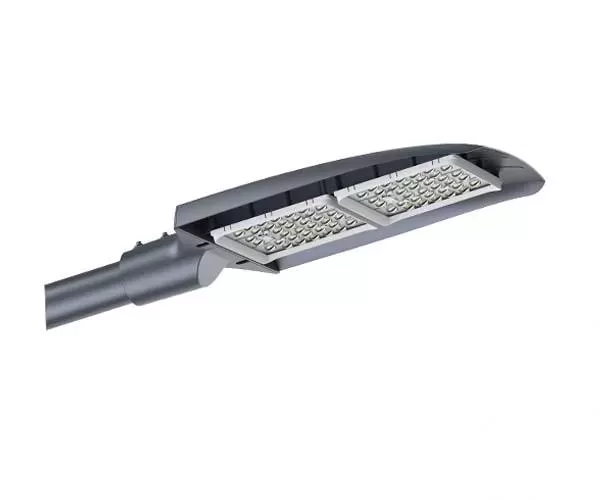
As a leading all in one solar street light manufacturer, Inbrit designs integrated lighting systems engineered for resilience in demanding outdoor environments, including rainy seasons and coastal climates.
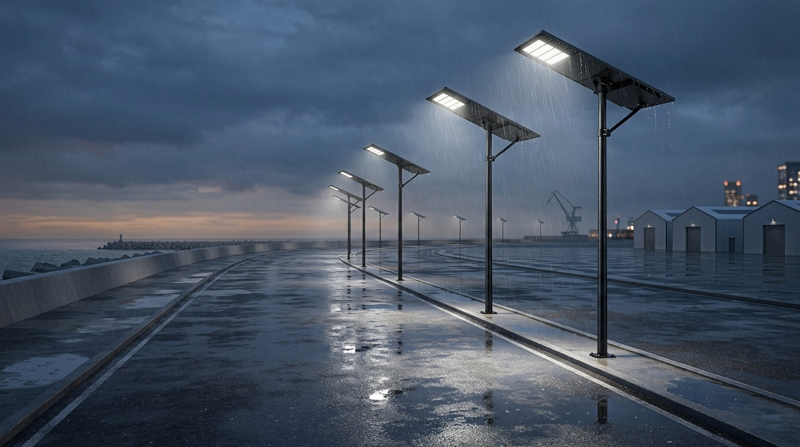
Introduction: The “Rainy Day” Challenge for Solar Lighting
Why standard solar lights fail in rainy seasons
During prolonged cloud cover, traditional solar street lights can:
For project owners, that creates a very expensive “hidden cost”: safety risks, maintenance callouts, and public complaints.
The goal: move from “standard” to intelligent lighting
Rainy-weather performance isn't only about a bigger panel or a larger battery. For project owners evaluating all in one solar street light wholesale solutions, it is important to manage energy like a system engineer: allocate power based on what the battery can truly sustain until dawn, rather than relying on a fixed brightness setting.
Understanding the Core: How Rainy Weather Impacts All-in-One Systems
The physics: reduced PV intake under overcast skies
Rainy and cloudy conditions reduce photovoltaic (PV) conversion efficiency because less irradiance reaches the panel. Even when it's daytime, the available charging current can be a fraction of what the system gets under full sun.
The battery strain: deep discharges shorten lifespan
When the battery is repeatedly pulled down to very low state-of-charge during multiple dim days, it creates stress cycles that can reduce LiFePO4 battery cycle life over time—especially if power draw is not intelligently controlled.
Why hardware alone isn't enough
A “bigger battery” can extend autonomy, but it doesn't solve wasted output. Without smart control, lights may run too bright early in the night and lose the ability to maintain safe illumination later.
That’s why smart dimming and power logic are the real differentiators.
The Science of Smart Dimming & Intelligent Power Management
Dynamic energy allocation: brightness that thinks ahead
A modern intelligent solar street light system can monitor:
remaining battery capacity through voltage or SOC estimation,
expected runtime from the current time to dawn,
output demand based on LED power levels and sensor triggers,
and then adjust brightness to maintain dusk-to-dawn operation without sudden blackouts.
MPPT efficiency: better charging in low light
In poor weather, every watt matters. Controllers using MPPT (Maximum Power Point Tracking) can extract more usable charging current from the panel than basic PWM designs—especially under diffused or variable irradiance.
PIR/microwave sensors: save energy without sacrificing safety
Motion-sensing (PIR/Microwave) technology enables a powerful strategy:
keep a low “base” brightness when no one is present,
jump to high output instantly when motion is detected.
In real deployments, motion-based dimming can preserve a large portion of nightly energy while still keeping roads and walkways safe.
Designing Effective Dimming Profiles for Performance
Beyond “On/Off” – the power of custom profiles
A fixed brightness setting is rarely optimal. A profile-based approach lets you prioritize the times that matter most—while protecting autonomy during rainy stretches.
Energy saving mode: a practical “Rainy Day Profile”
A widely used pattern for weather resilience is:
This keeps the site illuminated for orientation and security while preserving battery for bursts of full visibility when people or vehicles are present.
Time-phase dimming: match light to real traffic
Traffic patterns are not constant. Many B2B projects perform better with staged output:
Adaptive brightness: battery-protect logic
A robust system can automatically reduce base brightness when battery drops below a defined threshold (for example, 30% remaining) to avoid late-night shutdowns and reduce stress on the battery.
Hardware Advantages: Why Inbrit Leads the Market
High-conversion mono-crystalline panels
Mono-crystalline panels generally perform better than many alternatives in real-world conditions, helping capture more energy even when light is diffused by cloud cover.
LiFePO4 durability with BMS protection
In a lithium battery solar street light, LiFePO4 chemistry is widely valued for its stability and long service life. A well-designed battery management system (BMS) helps protect the cells during low-charge and rainy-day operation by preventing damaging operating conditions.
IP65+ waterproofing for reliable electronics
Rainy-weather performance isn't only about power—it's also about survival. Strong waterproofing helps ensure controllers, sensors, and wiring stay protected while the system operates continuously in wet environments.
Expert Tips: Optimizing Your Installation for Rainy Climates
1) Tilt angle optimization (and self-cleaning benefits)
A practical tilt helps in two ways:
improves seasonal solar harvest depending on latitude,
helps rain wash dust and residue off the panel (dust blocks light and reduces charging).
2) Clear obstructions (shadows are worse than you think)
In rainy seasons and winter months, sun angles are often lower, making shadows longer. Even partial shading can significantly reduce charging, so avoid nearby trees, poles, signage, and roofline shadows.
3) Use firmware updates and remote control where possible
With smart lighting control systems, you can adjust dimming profiles remotely—useful when a site enters its rainy season or when traffic patterns change (construction zones, new facilities, seasonal demand).
Standard Solar Lights vs. Inbrit Smart All-in-One Lights (Quick Comparison)
| Feature | Standard Solar Lights | Inbrit Smart All-in-One Lights |
|---|
| Autonomy (days without sun) | Often limited / inconsistent | Typically engineered for 3–5 days (project-dependent) |
| Controller type | PWM (common) | MPPT with intelligent power logic |
| Dimming customization | Fixed / basic | Programmable profiles + sensor strategies |
Real-World Use Case: Preventing Monsoon-Season Blackouts
In rainy coastal regions (such as monsoon-prone installation zones), projects that combine MPPT charging + motion-based dimming + adaptive brightness thresholds are far less likely to experience late-night shutdowns. Instead of attempting full-brightness all night, the system maintains a stable baseline and reserves high output for when it's needed most—helping keep routes functional even during multi-day storms.
Conclusion: Reliability Is a Choice, Not a Chance
Rainy seasons expose the weaknesses of “set-and-forget” solar lighting. The most dependable approach is a system that combines:
efficient charging (MPPT),
protected storage (LiFePO4 + BMS),
and smart output control (custom dimming + motion sensing + adaptive thresholds).
If you want year-round lighting that performs through bad weather, choose an intelligent all-in-one solar street light, not just a larger battery.
FAQs
Can solar lights work in heavy rain?
Yes—if the system is built for outdoor exposure (typically IP65+ or higher) and uses smart dimming/power management so it can survive consecutive low-charge days without shutting down.
What is the best dimming profile for solar street lights?
A common high-performance approach is the 30% / 100% motion-sensing rule: keep a low base brightness, then switch to full brightness when motion is detected. Many sites also benefit from time-phase dimming (brighter early evening, lower after midnight).
How long do Inbrit solar lights last without sun?
Depending on configuration and site conditions, systems are commonly designed for about 3–5 days of autonomy—and smart dimming can significantly extend real-world uptime during prolonged cloudy weather.

 English
 français
 Español
 العربية
 Pilipino
 ไทย
ไทย tiếng việt
 Malay
Malay русский